Wednesday, 27 July 2011

My 7 links

A slight digression from my usual posting topics as I appear to have joined the world of the bloggersphere by being tagged in this '7 links' thing that's doing the rounds.

Thanks to Rob W of the South America Blog (this is the chap who runs Woodward language school which brought me up to a passable level of Spanish, Chilenismos and all) I have to rifle through the archives of my blog for 7 posts that are the most beautiful, popular, controversial, helpful, surprisingly successful, lacking the attention they deserved and that I am most proud of.

This actually turned out to be quite a fun task, as I got to rediscover stories I'd forgotten about and I enjoyed feeling incredibly proud of my blog and realising what an interesting historical record it is for me. So without further ado, onto the 7 links.

My most beautiful post
Difficult to define a beautiful blog post. Although on the whole I am pleased with how I write, I'm not sure any of the posts are exquisitely crafted literary masterpieces. So if we take beautiful to mean photography and subject matter, it doesn't get more perfect than A sprinkle of magic - the story of Frutillar and one volcano that made a last minute appearance to give us the most phenomenal setting for a pastel coloured sunset.

My most popular post

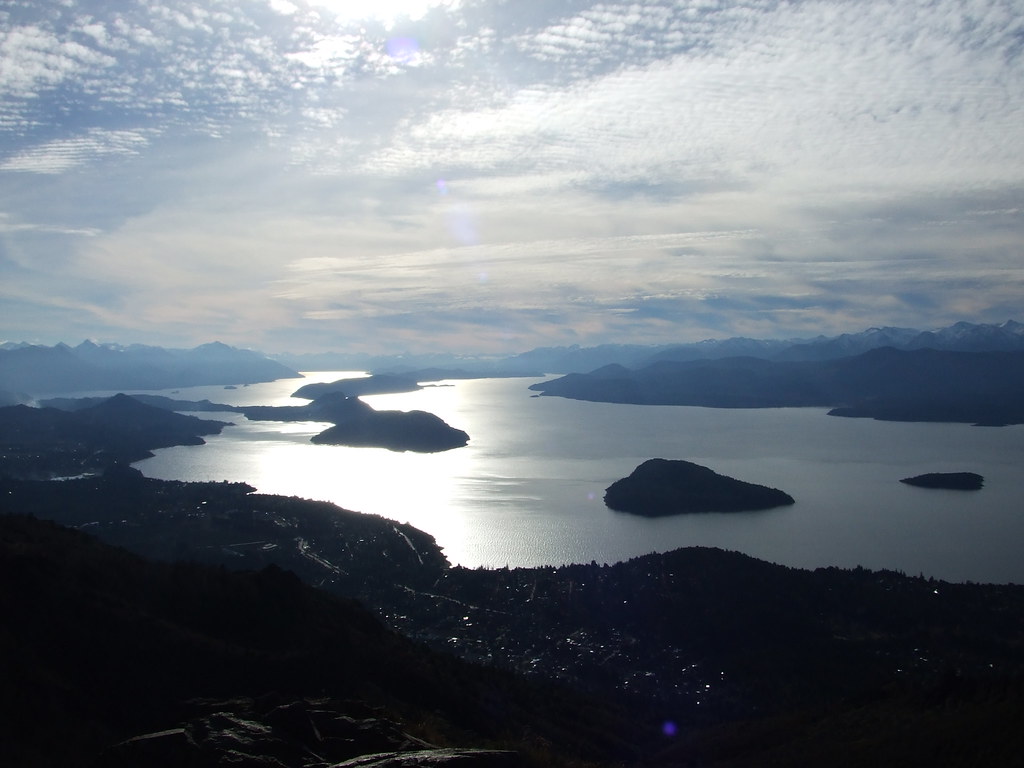
Judging by stats alone, this award goes to The most beautiful place on earth about our visit to Bariloche in Argentina, before it got covered in ash from Volcan Puyehue. A worthy winner. That said, I never tire of this view has been hanging around at the top of my most visited list since I wrote it way back on 20th October, so I think it deserves a mention too.

My most controversial post

I don't really do controversy on this blog, but I guess that Civil unrest is the closest I've come to any kind of political statement, or for that matter, to writing anything negative about my experiences here. 

My most helpful post
My very first posts, First impressions and A day of small victories stand out for me simply because various friends I have met here have told me that they felt reassured reading about my rather wobbly experiences in Chile at the beginning. So I'm nominating these for helping people know that they weren't alone in feeling adrift in this strange new place.

A post whose success surprised me


New heroes was the first time I received feedback from Chileans about my blog, with many of them in agreement with my admiration for Michele Bachelet. This was a turning point for me, where I discovered that my blog was being read as much by my new friends here as by my old friends back home. The amount of attention my Food post got was also a genuine surprise - it seems eating is what my readers are really interested in!

A post I feel didn't get the attention it deserved
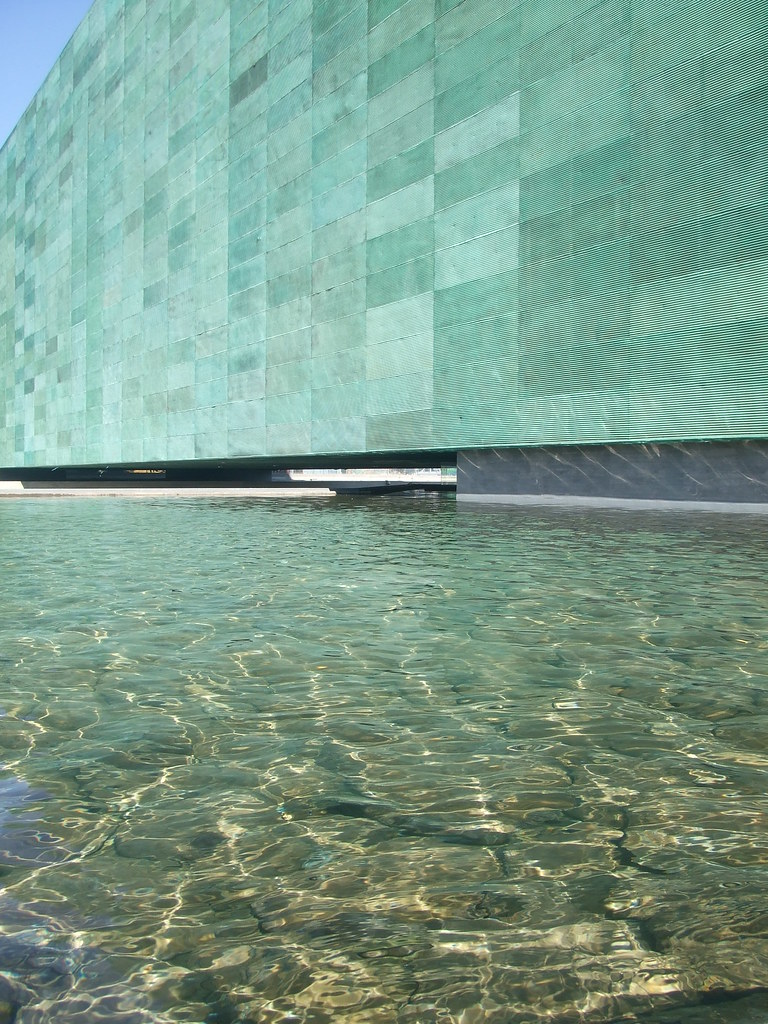
Looking through my archives I found it difficult to find a post that didn't get attention, but eventually I opted for Museum of Memory and Human Rights because I don't remember getting much direct feedback on it. Maybe the subject matter was too painful for some, or maybe the history is too distant for others. Either way, I thought this post would get more of a reaction than it did.

The post that I'm most proud of

Trying not to sound too cheesy, I can honestly say that I am incredibly proud of my entire blog. I only started writing it because I fancied having a go at blogging and a couple of people had suggested it might be an interesting thing to do. But as I said at the beginning, it's turned into fascinating record of my time here; I love reading it and I hope others do too. Selecting one post, therefore, is pretty hard, but I think I'm going to plump for Immigration. Partly because it made me and a lot of other people laugh, partly because I enjoyed writing it and working on getting the humour across, and partly because I'm really proud of what I achieved that morning!

So now I have to pass on the tag to five other bloggers. So 7 links on their way to:
  1. Callie Mills - Ruffle Your Feathers
  2. Carolina Leseigneur - GoodCatt's Random Musings
  3. Pepe's Chile Adoration Page

    Next was going to be fellow Chile blogger Angie Clifford with Angie's life, but she's already been tagged so instead we change topic to...

  4. Ruth Lund - Cherry Coloured Twist
  5. Emma Fassio - Emma Fassio Knitting

Sunday, 24 July 2011

Tango

Buenos Aires. City of my dreams. You did not disappoint me.

I don't remember when it was exactly, but at some point during my childhood/adolescence I got the idea into my head that I wanted to experience tango in Buenos Aires. Somewhere between seeing the musical Evita and watching the original 'Come Dancing' I imagine it happened. A little seed lodged deep in my brain that as I grew-up I guess I never really thought would grow to fruition.

But this is a time in my life where childhood dreams come true and I finally had the opportunity to visit the Argentine capital. And oh what a magnificent city you are.

Tango 'graffiti'
Tango is simply everywhere in Buenos Aires. It oozes out of window panes, is splashed across walls and sparkles in shop windows adorned with shoes. The city is tango. A red and black sultry haze that burns into life as night descends.

We spent an evening at one of the many tango show and dinner places that litter the city. Taconeando was our bar of choice, located in San Telmo, one of the oldest and most historic barrios or neighbourhoods of Buenos Aires. We entered a small, dimly lit room, furnished with plush antique rose fabrics and tables for dining surrounding a low central stage.

Dining came first. An entrada (starter) of very tasty pate, followed by, of course, a massive steak and chips. Dessert of a choc-ice filled with chocolate, caramel and vanilla ice cream had just been served as the lights went down and the show began.

Tango at Taconeando
The show covered the history of the tango, beginning with two men dancing in a rutting stag-like stand-off, followed by moves through romantic, fun and flirty and seriously sexy moods. The dancing was interspersed with singers performing tango classics (including audience participation) and backed by a brilliant quartet of piano, violin, double-bass and bandoneon - the accordion-like instrument that gives tango its signature sound.

It was an electrifying hour and a half of tango, where we were so close to the action that at times we had to duck to avoid being kicked in the head! A marvellous display of a beautiful dance that was simply a joy to behold.

More tango

But our tango experience did not stop there. Oh no! The next day, I was rather overexcited to discover that the world tango museum, which was on my list of things to do, was actually located within the national tango academy of Argentina! You can imagine my squealing.

We entered the 150 year old building, with its art nouveau style architecture, and found the museum on the first floor. It tells the chronological history of the tango, with various artefacts - from manuscripts, to records, to dancing shoes - to illustrate the different periods in the dance's life. It also demonstrated that tango is very much alive today, with the academy itself offering lessons at 30 Argentine pesos a go (that's about 4 quid) to anyone who wants them. Something for my next visit I think.

The bandoleon
After the museum, we headed on to another of the oldest tango buildings in Buenos Aires - Confiteria Ideal. Dating from 1912, the cafe / ballroom boasts more luscious art nouveau architecture, and judging by its website, seems to have been used for the film version of Evita starring Madonna. We supped a cafecito in the historic surroundings, while the sound of the afternoon milonga drifted downstairs.

More Taconeando tango
And more Taconeando tango

Sunday, 10 July 2011

If there was just one reason to come to Chile...

...it would be hot springs.

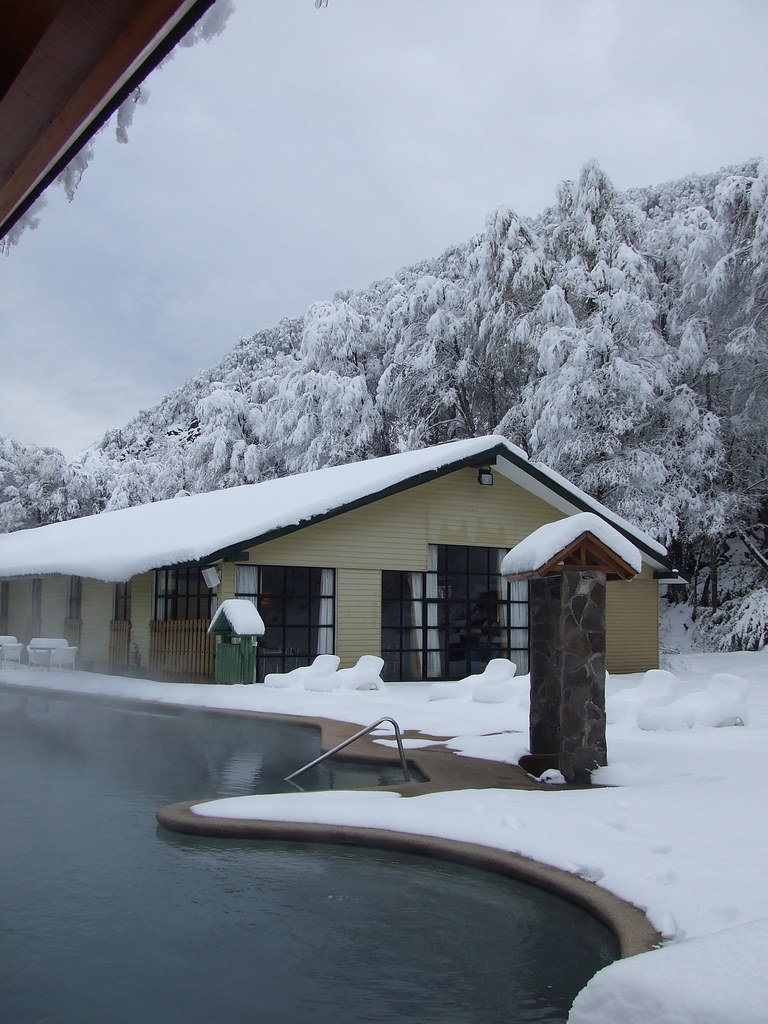
The most incredible thing I have done so far in Chile is to swim in a naturally heated swimming pool, outdoors, up in the mountains, while it was snowing. With an incredible bunch of girlfriends too.

Way, way back before Carlos and I had our southern Chile trip, I had my first taste of life outside of the metropolis at Nevados de Chillan.

Me and the girls exploring the winter wonderland.
Photo thanks to Bárbara Hermosilla
Nevados de Chillan is reported to be one of the best ski resorts in Chile. I wouldn't know because I have no intention of ever trying skiing, wobbly knee and all, but it certainly has a beautiful resort, spa, pool and restaurant complex up in the mountains - much more my style!

Chillan is reached from Santiago in five hours by train, I think still classified as being in Chile's central valley. The countryside is agricultural and apart from the spine of the Andes, very flat. It reminded me a lot of Lincolnshire (in a good way!)

Morning swim in the snow
The I Love Chile girls and I spent four days relaxing (and working a little!) in this paradise. The food was excellent, the jacuzzi was fun and the view was amazing, but by far the best thing was the pool. I'm talking naturally heated water, direct from volcanoes and other geological phenomena, that have been harnessed by man for bathing up in the mountains.

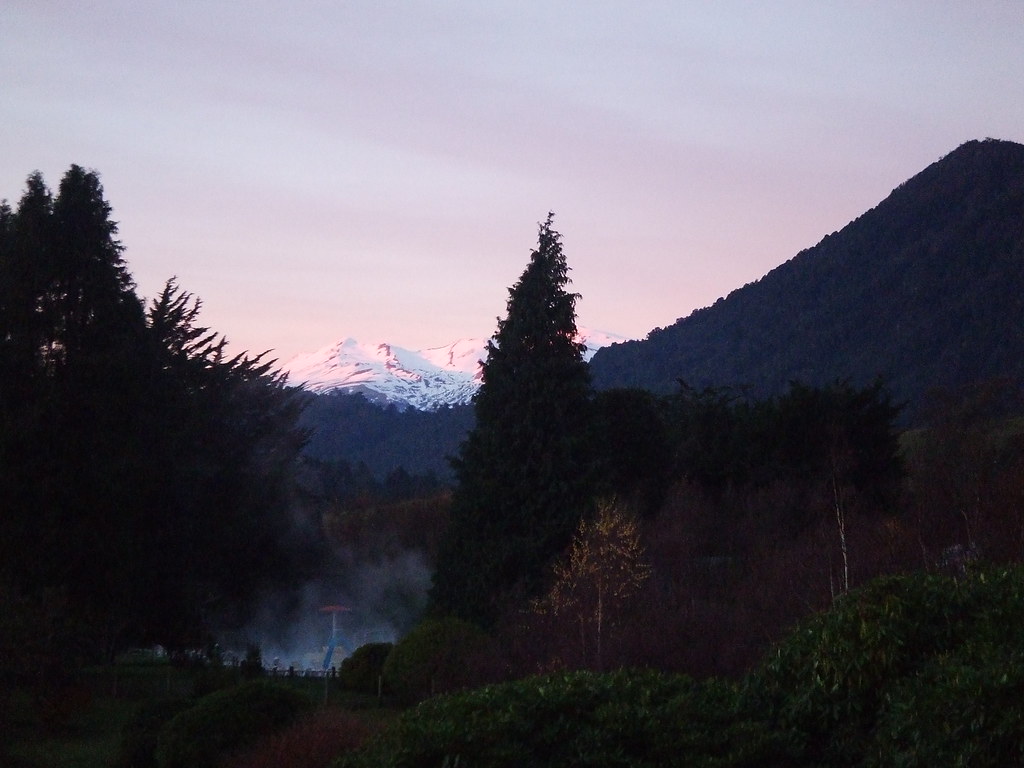
The night-time dip in the falling snow followed by a early morning swim as the sun rose on snow covered mountainsides I don't think can ever be beaten.

Sunday, 26 June 2011

Addendum: Volcán Puyehue

When I moved to Chile, I was aware that there were certain risks involved. Earthquakes for example. And so, I was prepared. I read up on what we needed to do, I made sure we had a stock cupboard full of emergency supplies, and I practised running under the table to make sure I'd fit. With time, I've become accustomed to feeling the ground shake and to hearing our apartment building go bang now and again.

What I wasn't prepared for, was volcanoes. Volcanoes to me are the stuff of legend. They happen in Pompeii, in ancient times, or in Iceland, where the whole landscape is volcanic. Of course I know that Chile is located on the Pacific ring of fire. That's why it has earthquakes, right? But duh, it also means it has volcanoes. Active ones.

So there we are, happily living the high life in Termas de Puyehue. From our balcony window we can see the snow-covered Volcán Puyehue, sitting in the Caulle volcanic range. It hasn't erupted in more than five decades. Carlos casually tells me that he saw a puff of smoke from the range during his cabalgata. This, he was told, is quite normal, especially in winter, where obviously the difference between the air temperature and that of the volcanic crater means more steam gets produced. It's when there's smoke in the heat of summer, or no smoke for days, that the locals start to worry.

 Volcán Puyehue, before it erupted

A couple of days later in Valdivia, we see on the morning news predictions of a seismic swarm for Puyehue - a series of smallish earthquakes in close succession. How exciting we think, and how funny that we were there just a few days before.

In Pucón, we giggle at a volcano warning system, joking to ourselves that we wouldn't be hanging around to watch the light change to red if there was smoke billowing from the crater of Volcán Villarrica. I lament that I've spent the whole week around volcanoes and have yet to see any smoke, annoyed but in good humour that Carlos has and I haven't.

Happily we return home from our holiday, go to sleep for a few hours before hooking ourselves back up to the internet to see what we've missed during the previous 9 days. It's then that I see the messages on Facebook. Where are you? Have you left Puyehue? Are you stuck waiting for a flight? It's then that I discover that as we were sitting in Pucón bus terminal, that volcano that from the hot volcanic springs of Puyehue we'd watch turn pink with the sunset, had exploded.

Over the coming days, as I return to my day job and start writing news stories about it, we discover that large parts of the region we had been staying in days before had been evacuated. The pass over the mountains to Argentina is closed. And the most beautiful place on earth is covered with ash, Bariloche's crystal blue waters grey with sediment.

It's then that I realise we've had a lucky escape, and that with a landscape of such great beauty, must come respect for the earth that created it.

Some of my stories about the Puyehue volcano:

And finally: Pucón

Leaving behind Valdivia, we arrived in tourist-central Pucón around midnight. We were met at the bus station by a man who claimed to be the owner of the hostel we were staying at. A little suspicious, as we weren't expecting anyone, we cautiously followed him into what did appear to be our hostel and onto a very windy cabaña-style annex.

Pucón, as I mentioned, is super-touristy, and the jury is still out as to whether I like it or not. A small town on the side of a lake, its grid-pattern streets are lined with picture-perfect log-cabin style buildings, most of which house tour and adventure companies. The main draw to Pucón is the looming Volcán Villarrica, which can be climbed (with a guide and special equipment). As we're not particularly fit, and it was late on in the season, we had decided before arriving against doing this.

The crater of Volcán Villarrica

Preferring to explore by ourselves, we had hoped to walk around the skirts of the volcano in the surrounding Villarrica national park. So, avoiding the ever-zealous sales reps, we enquired at the main tourist office about where we could go under our own steam. This was a mistake. We discovered to our dismay that the only way way to access the reserve on your own was with a car. Otherwise, you needed to join one of the many tours leaving Pucón (did I mention those?), all of which we'd missed as we didn't exactly wake up very early.

We were left then with two options - staying in Pucón (which would have ultimately meant hanging around in a bar with loads of other gringo backpackers) or heading out to a different national park which was accessible by public transport. We chose the latter.

Lago Villarrica, from Pucón

The bus to Parque Huerquehue took around an hour and was an exciting journey traversing a pretty steep hillside. Once there, we consulted the park ranger about routes we could complete in the three hours we had before the last bus left the site. Mildly ticked off by the ranger for not arriving early enough for a decent length walk, I handed over my extranjero (foreigner) entrance fee of 4000 pesos, while Carlos got away with the local fee of 2500 pesos thanks to his Chilean ID card, despite a comment from the ranger about his Spanish accent.

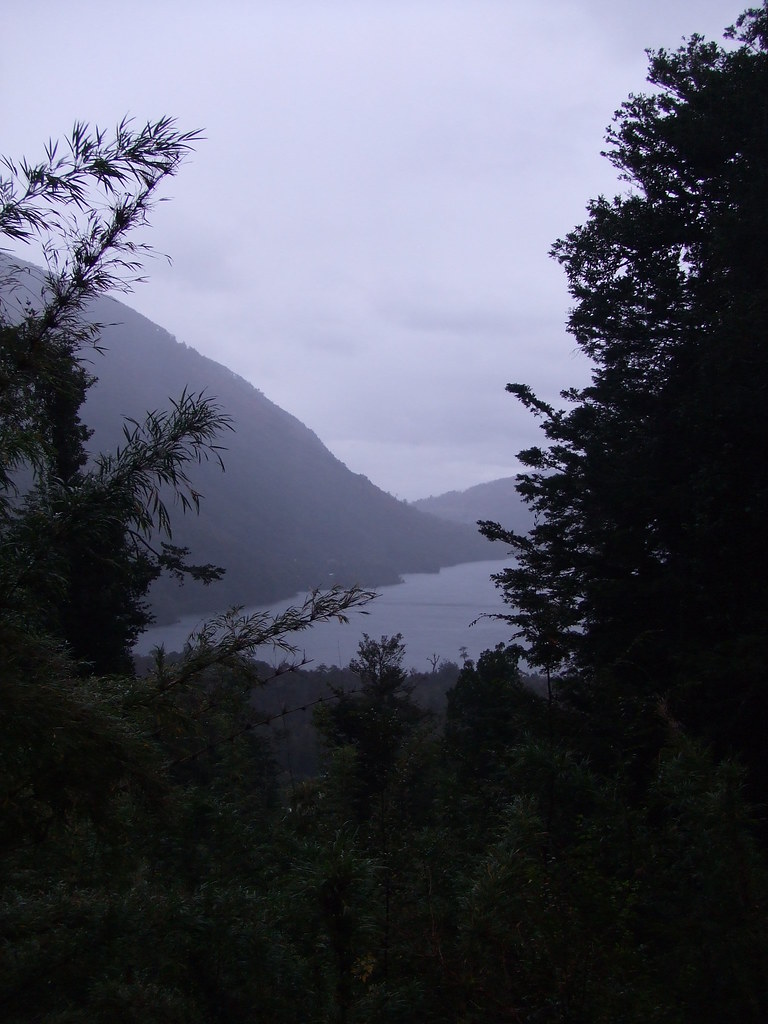
Parque Huerquehue, as the rain started to fall
As the rain started to fall, we set off on a walk through the native forest. It was lovely, but the increasing rain and time constraints meant that we indeed did not get very far at all before we had to turn back and slosh our way through the mud to be counted back on the bus.

Returning to Pucón, we finally had the chance to sample some local trout, which Carlos had been dreaming of ever since we noticed it on a menu in our first five minutes in Bariloche. We also had a starter of seafood soup (again local) which was just delicious.

And that was that, bar an hour or so knitting in the bus station while we awaited the ten hour return trip back to the smoggy city of Santiago. Thank you to the regions of Los Ríos, Los Lagos and La Araucanía, you definitely prove the saying here that "Santiago no es Chile" (Santiago isn't Chile).

Sunday, 19 June 2011

City of rivers

Pinnacle of the holiday finally achieved, we moved onto Valdivia - the urban centre and capital of Los Rios region. Valdivia is famous for being the location of the world's biggest ever recorded earthquake - a huge 9.5 on the Richter scale in 1960. It's also famous for its German influences, beer, fish market, rivers and sea lions!

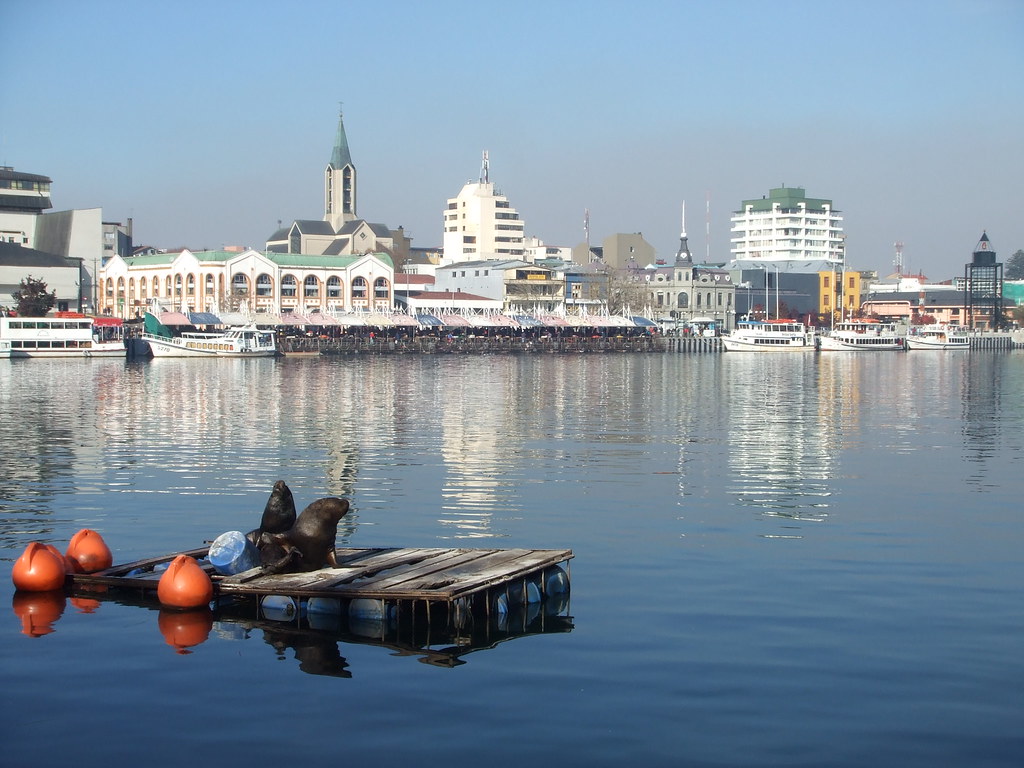
The day began shrouded in dense fog as we ambled along the waterfront trying to avoid the grasp of the plethora of pleasure boat trip sellers keen to seize on a couple of tourists. In addition to the rather yummy looking fish market (a pity we couldn't cook that night), the waterfront also boasts a massive submarine and a pendulum clock that tells the time based on the curvature of the earth. And how could I forget? The waterfront is also home to loads of (rather smelly) sea lions, who lounge around all day except for when the market clears up at night...

My picture postcard of Valdivia's waterfront (and sea lions)

While we were waiting for the skies to clear, we decided to take in a few museums. The first was the Kunstmann brewery (cerveceria) - which we took a short micro trip to get to. Now, we were expecting something on the scale of the Guinness Storehouse in Dublin. Not to be I'm afraid; the brewery has a small museum and shop and a large restaurant. Still, it was interesting to learn about this family business, started by German immigrants who first arrived in the mid 1800s, which now competes on a global sale. The honey ale is particularly nice.

Philippi (right) and friend.
I love this photo, nothing says 'Victorian
explorer' more.
Back in the town centre, the sun had broken through so we enjoyed our sandwiches on the riverside - at a safe distance away from the hungry lobos marinos (sea lions). Afterwards, we crossed the river to the university side of town (Valdivia is an important student city) and visited two more museums. The first was an historical and anthropological museum that contained artefacts from the region's various colonisers, from the Mapuches to the Spanish to the Germans.

The second was the Philippi museum of exploration. The observant amongst you will remember I mentioned Philippi in my post about Puerto Varas. Despite the sound of the name, Philippi was a German explorer who 'discovered' a large part of the regions of Los Rios and Los Lagos. A palaeontologist and zoologist, he worked extensively to categorise and document life in this exotic land, which at the time consisted mainly of dense forest.

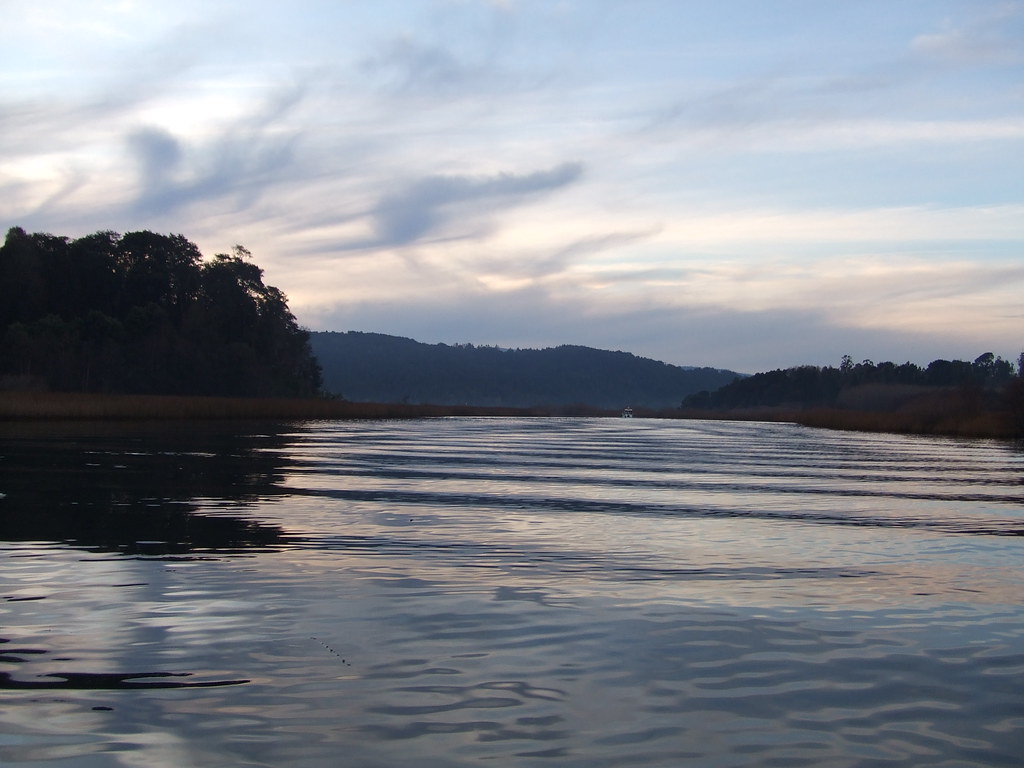
Full of information, we decided to finish off the day with one of the riverboat tours we had an initially been avoiding. Thankfully, we made a good choice - a sturdy boat, a very informative guide and a decent long tour along the Valdivia, Cau Cau and Cruces rivers. Another sunset in another romantic place.

Valdivia, city of rivers

More Valdivia photos on Flickr:

www.flickr.com

jaynescarman's Valdivia photoset jaynescarman's Valdivia photoset

Friday, 17 June 2011

A sprinkle of magic

By the time we reached Frutillar I was desperate to see Volcan Osorno. We'd spent the previous day on the shore of Lago Llanquihue under a damp blanket of low cloud and had woken up to hazy mist shimmering over the surface of the lake.

Frutillar
Having caught the micro (small bus) around the lake to Frutillar (a mere $900 pesos / £1.20 each), we alighted at Frutillar Bajo, on the lake side (Frutillar Alto being the main town slightly inland). We were presented with a beautiful view: a wide bay, lake waters lapping on a stretch of beach, an elegant wooden pier, tidy houses, more Germanic churches and the modern Teatro del Lago stretching out on stilts into the water. Still no volcano though.

So we sat down to have our lunch on the pier. Amusingly, we were joined by various other couples who divided into two clear groups. Chileans, dressed in normal daytime clothing, who walked straight to the end to take pictures of themselves with the view and partake in various public displays of affection. Then there were the internationals, dressed in their outdoor gear, who settled down on one of the side benches, opened up their backpacks and started assembling sandwiches from the various supplies stored within.

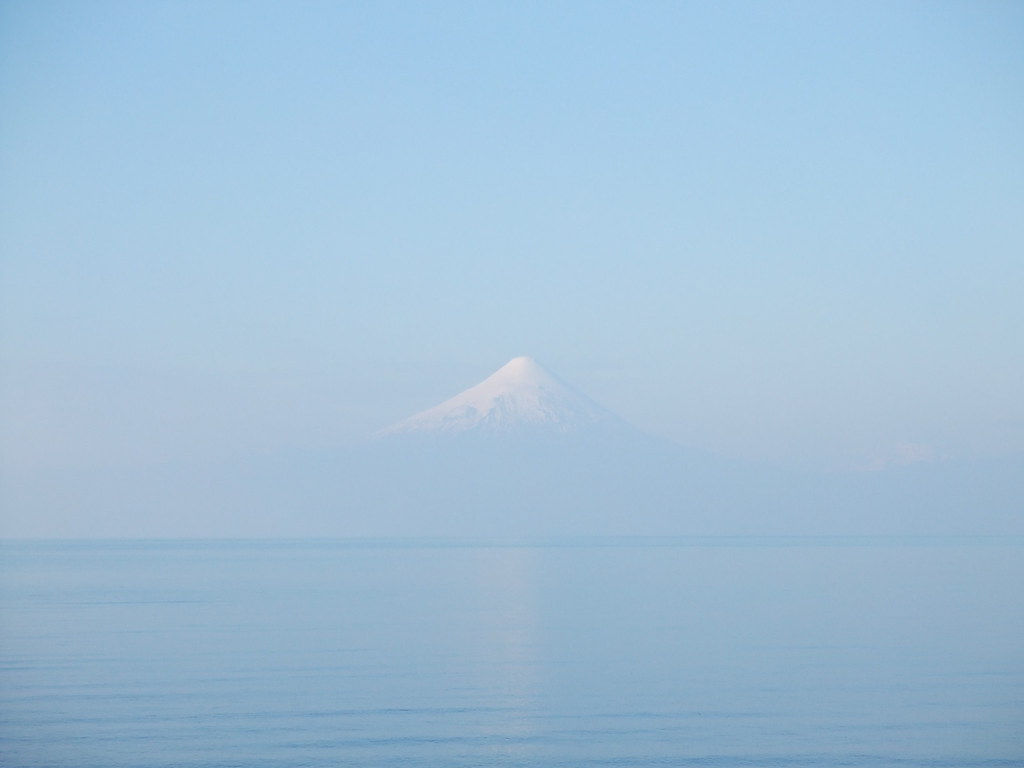
Ham and cheese hallulla (that's a bap to you and me) halfway to my mouth, I turned my head. "Mira!" I cried, "el volcán!" (Carlos and I spoke in Spanish the whole time we were on holiday in case you were wondering). Suddenly, the clouds began to part and, like a mirage, the shape of the volcano began to slowly appear out of the mist. It was a magical sight, and as the clouds rolled away and the sun shone brightly, we just sat and relaxed and admired this astonishing view of a perfectly symmetrical, snow-capped volcano seeming to rise out of the lake.

Thrilled that Volcan Osorno has appeared behind me


Volcan Osorno

Kuchen and hot chocolate
Of course, no blog post of mine would be complete without mentioning food. In Frutillar, we had been recommended a place to sample kuchen, which is German for cake. At "Duendes del Lago" (goblins of the lake) we had something similar to apple crumble and a hot chocolate - mine mint flavoured and Carlos' caramel. Plus some biscuits. Yum!

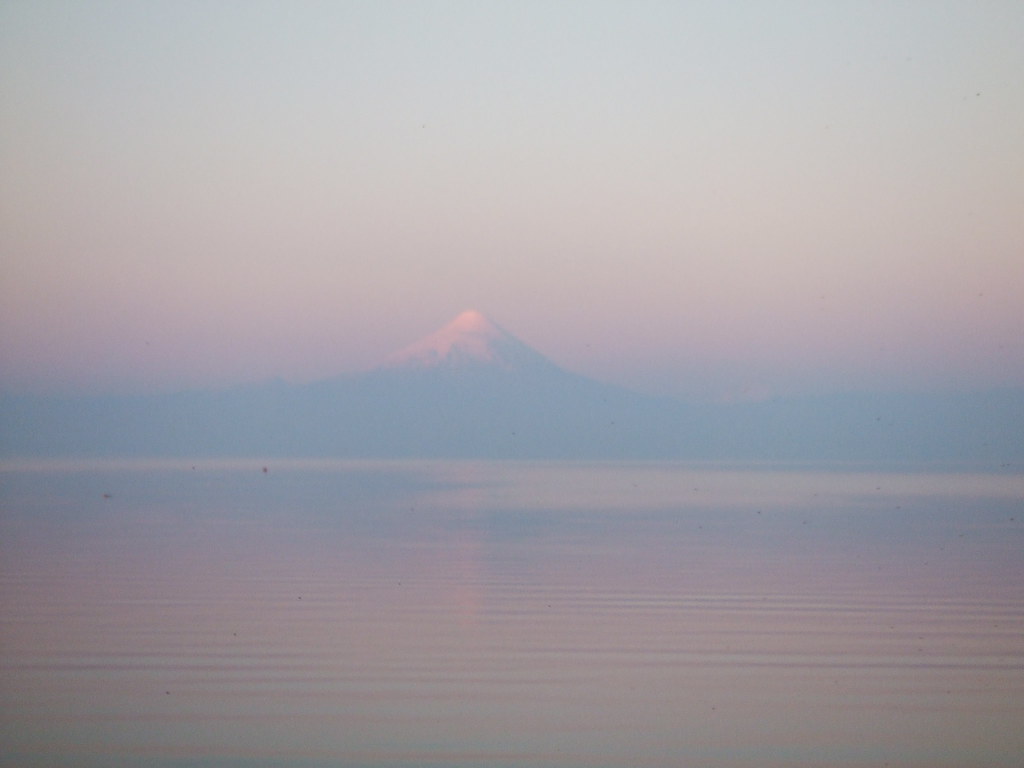
Afterwards, we were treated to another sunset. This time, with the mist and haze, the sky and sea turned shades of dusty pink and blue, like a pastel picture. Truly a sprinkle of magic.


Volcan Osorno at sunset

More Frutillar photos on Flickr:

www.flickr.com

jaynescarman's Frutillar photoset jaynescarman's Frutillar photoset