Showing posts with label Desert. Show all posts

Wednesday, 17 August 2011

Tatio geysers

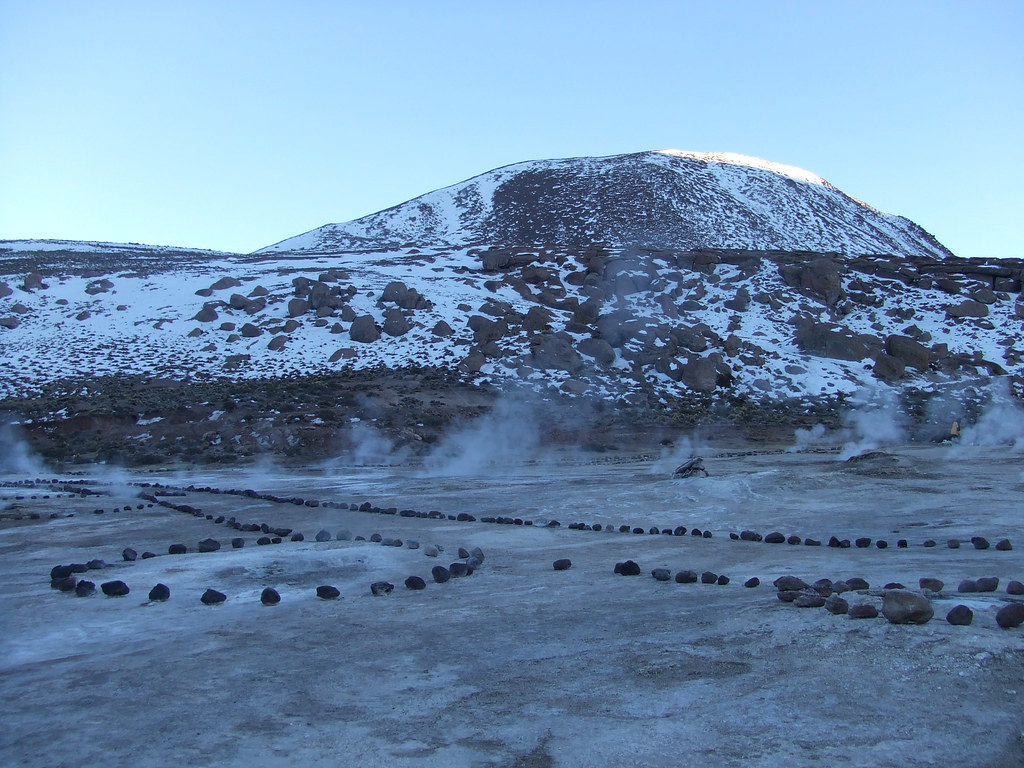
Tatio geysers are one of the 'must-sees' while in the Atacama. Situated right next to the border with Bolivia at a height of 4200 metres above sea-level, Tatio is the third biggest geyser field in the world, with over 80 active geysers (according to Wikipedia).

Tours from San Pedro set out at around 4am to arrive at the geysers just before dawn - the time when there is the greatest difference in temperature between the cold morning air and the hot molten rock below.

Just before dawn

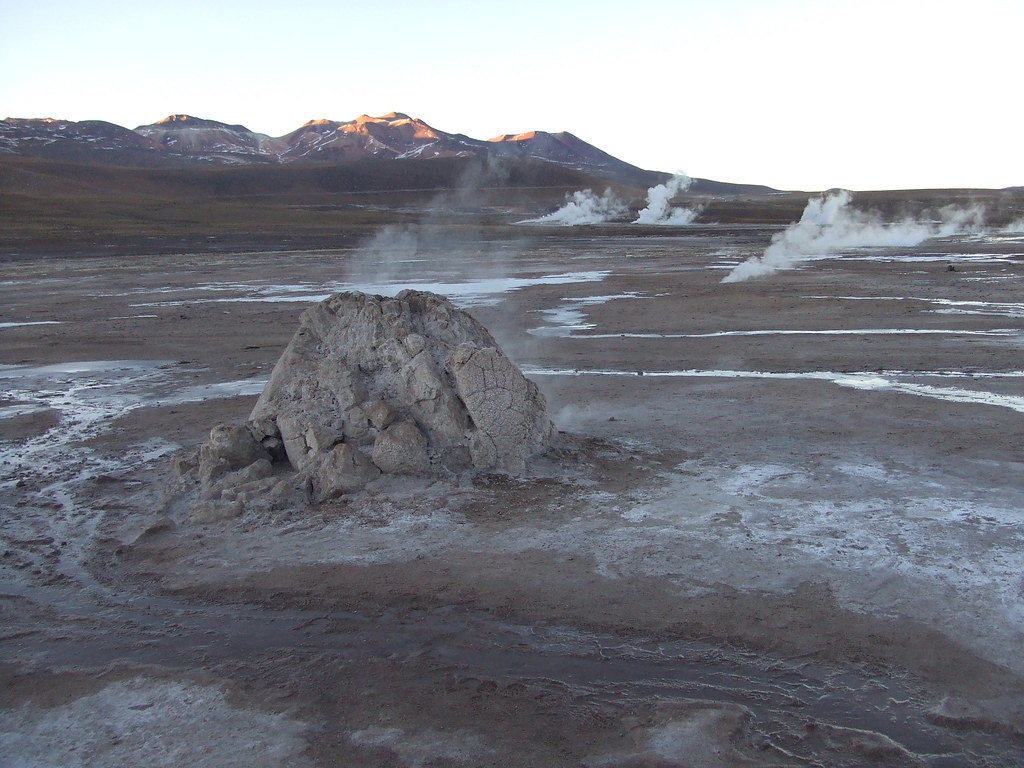
One of the oldest geysers
We arrived as the sun was just starting to come up, with an outside temperature of minus 8 degrees centigrade.

Our guide took us to see different types of geysers - some of the oldest with mini volcanoes around them, others that had become covered and so were trying to find new ways of breaking through the earth's crust.

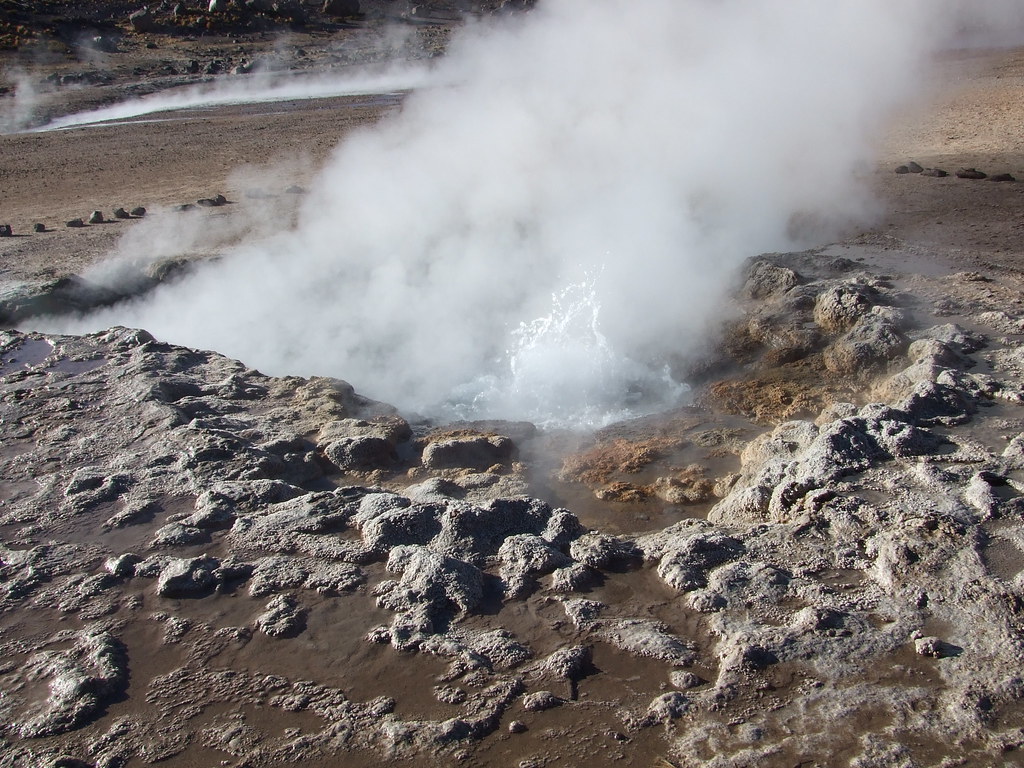
A surprise for me, was that I had expected to see fountains of water shooting up into the air. While it wasn't that dramatic, it was nonetheless a very surreal landscape, of cracks in the earth's surface, steam and sulphuric smoke and water bubbling up out of the ground.

Bubbling geyser

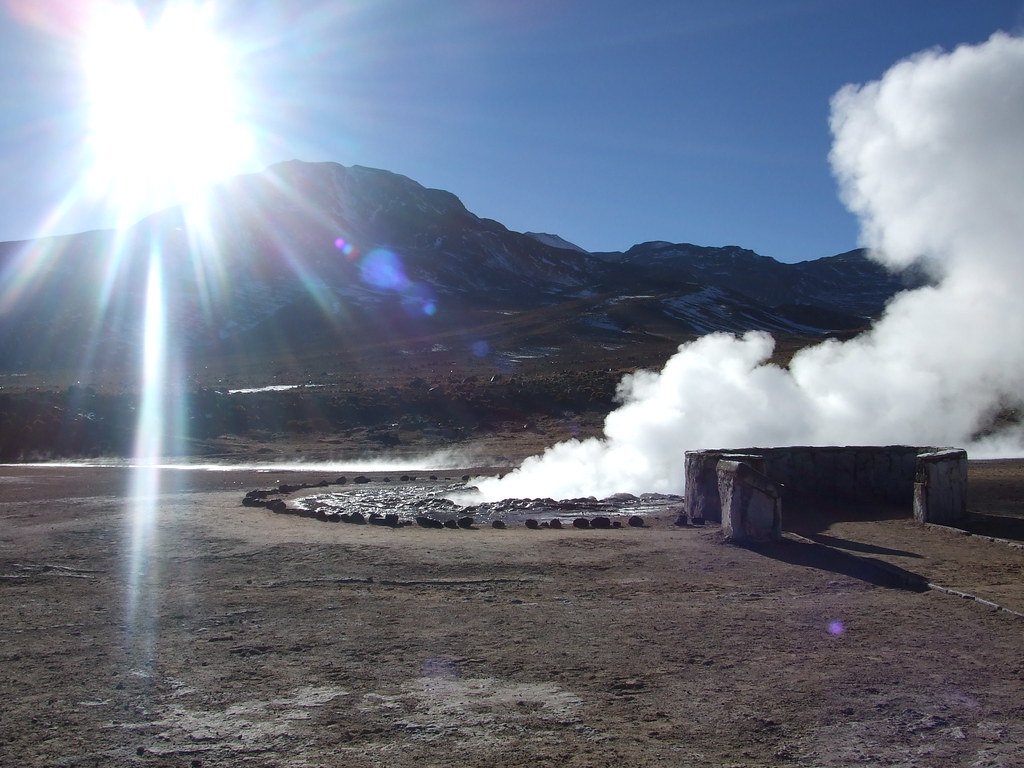
After a brief stroll, we had breakfast; hard boiled eggs and warm milk - both prepared in the steam of one of the geysers. Refreshed, and with the sun now flooding the valley, we moved onto another part of the field where there was a hot spring pool. Carlos took a dip while I ambled slowly around, finding it difficult to breath with the altitude and the cold.

The sun flooded the steam-filled valley

Vicuñas
At around 9.30am, we began our way back down the mountain, this time in full sunlight so we could take in our surroundings. Our first stop on the journey was to see vicuñas - similar to a llama. We saw 36 animals in total made up of two packs - a very rare sight. They were fighting as we drew close, before our bus and the vicuñas entered into a staring match.

Continuing on a wildlife theme, next we tried to spot a large greenish rabbit, which camouflages itself brilliantly amongst the rocky cliffs. Typically, I was the only person on the bus who couldn't spot one, but I've since seen a photo! Then a little further along the valley, we visited some wetlands, with giant coots among other birds.

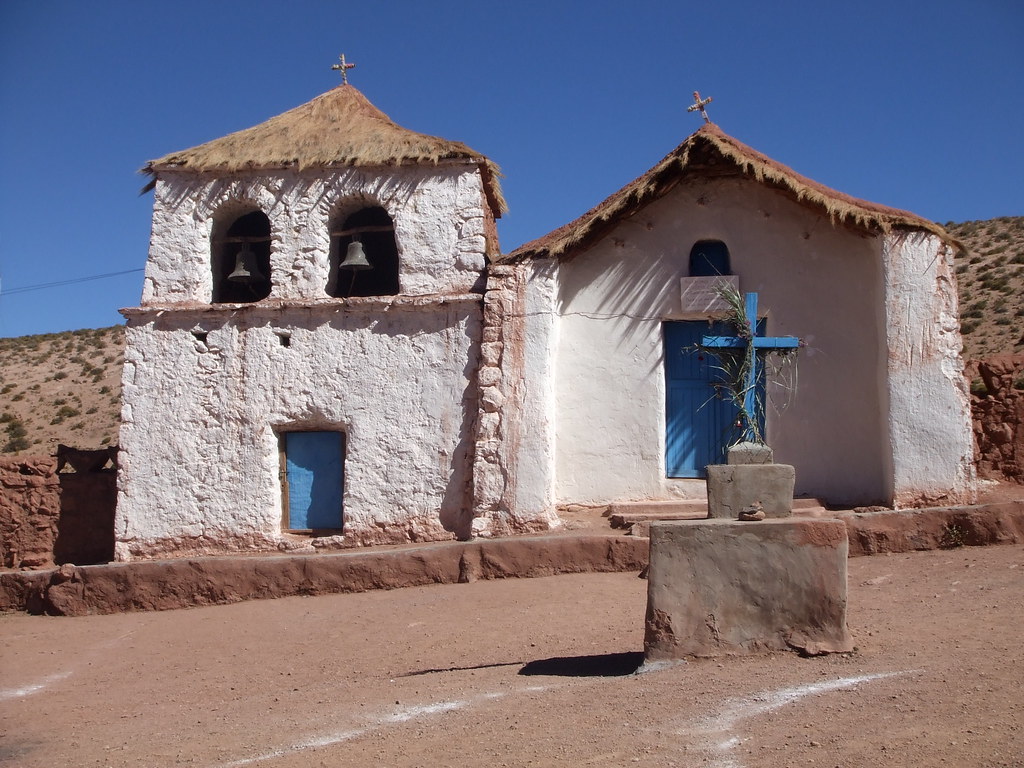
The village church
Still at around 4000 metres above sea level, we made our final stop at a tiny village that had about 6 houses and an asado (barbecue) on the go for the tourists. Its speciality was llama anticuchos, that's kebab skewers, which were seriously delicious, although that did bring a rather abrupt end to our nature watching!

Monday, 15 August 2011

Flamingos and moonscapes

Returning now to our desert trip, after a brief jaunt to the Elqui Valley (in a literary sense that is).

Sightseeing in the Atacama Desert requires booking tours, of which there are hundreds. That is, there are hundreds of companies (or at least it feels that way) but the tour content of each is much of a muchness. Going by a recommendation, we opted for Desert Adventure and reserved everything before we left Santiago.

Our first tour of the trip was to the Salar de Atacama to see some flamingos. But we were left dangling tantalised for a while; first we were taken to a nearby river oasis, where fruit grows in the middle of the arid wasteland; second, to the village of Toconao, with an interesting church and bell tower and a handicraft shop. Finally, as the sun began to set, we were taken to the Salar.

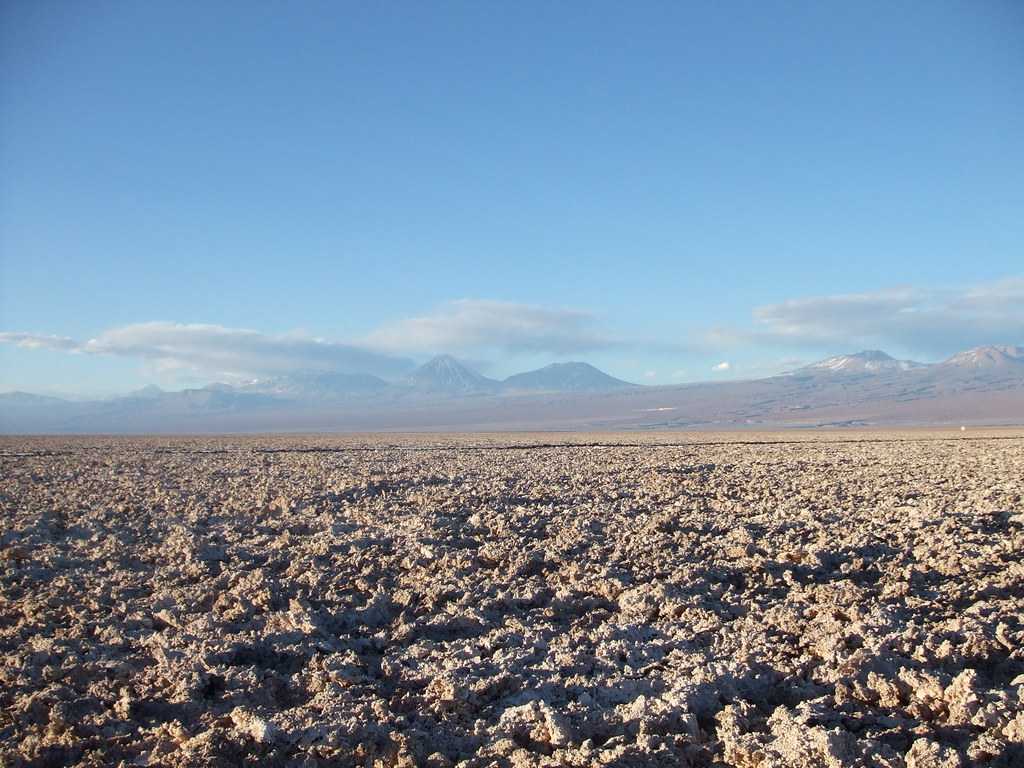
The Salar de Atacama is a vast salt flat, formed when rivers coming down from the mountains simply dry up in the desert heat. We were surprised to discover that the Chilean flats aren't the dazzling white expanses we were expecting; instead, the wind and the sand of the desert churns them up into a brown, knobbly texture - a little like the top of a crumble!


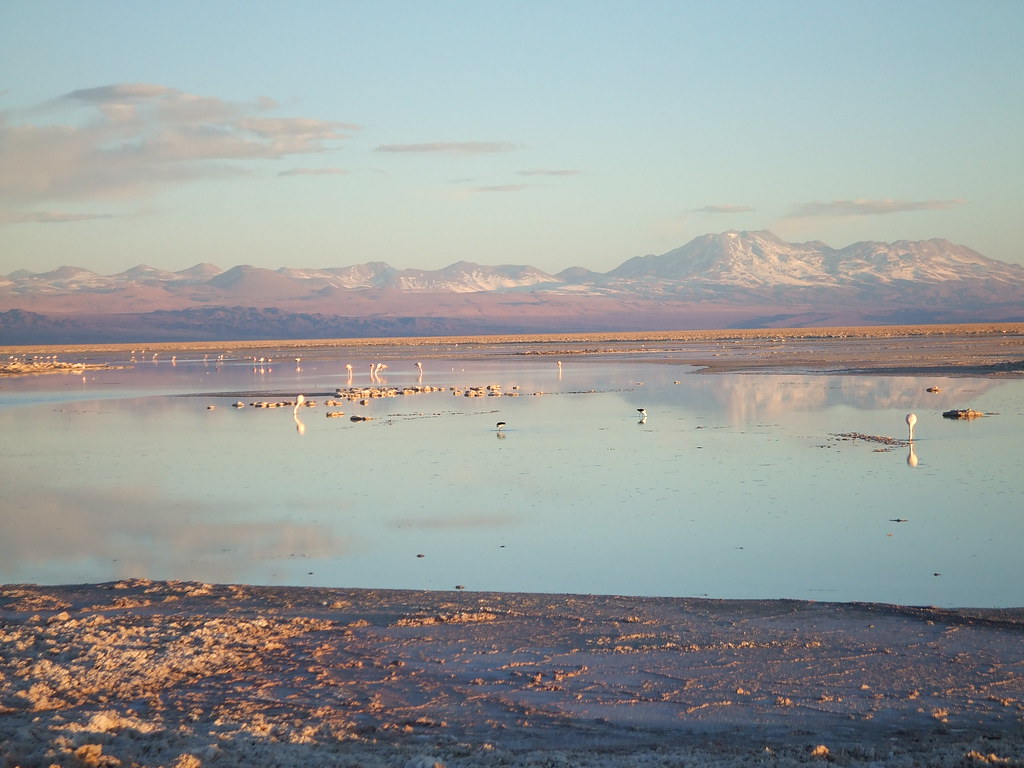
It's a stunning view, with salt and sand as far as the eye can see on one side, and volcanoes on the other. And plonked right in the middle, are a series of lagoons created by underground water sources, on which live the flamingos. 


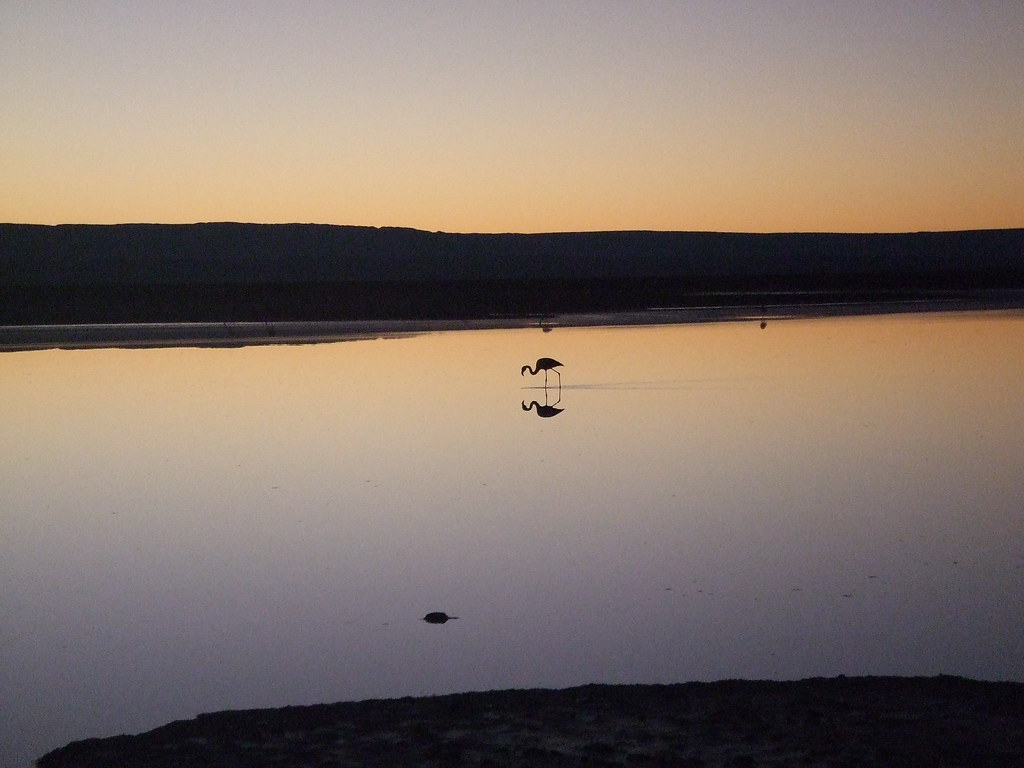
Showing a surprising lack of timidity, the flamingos continued eating, drinking and roosting as flocks of cooing tourists snapped photo after photo of a sunset flushed with pink.


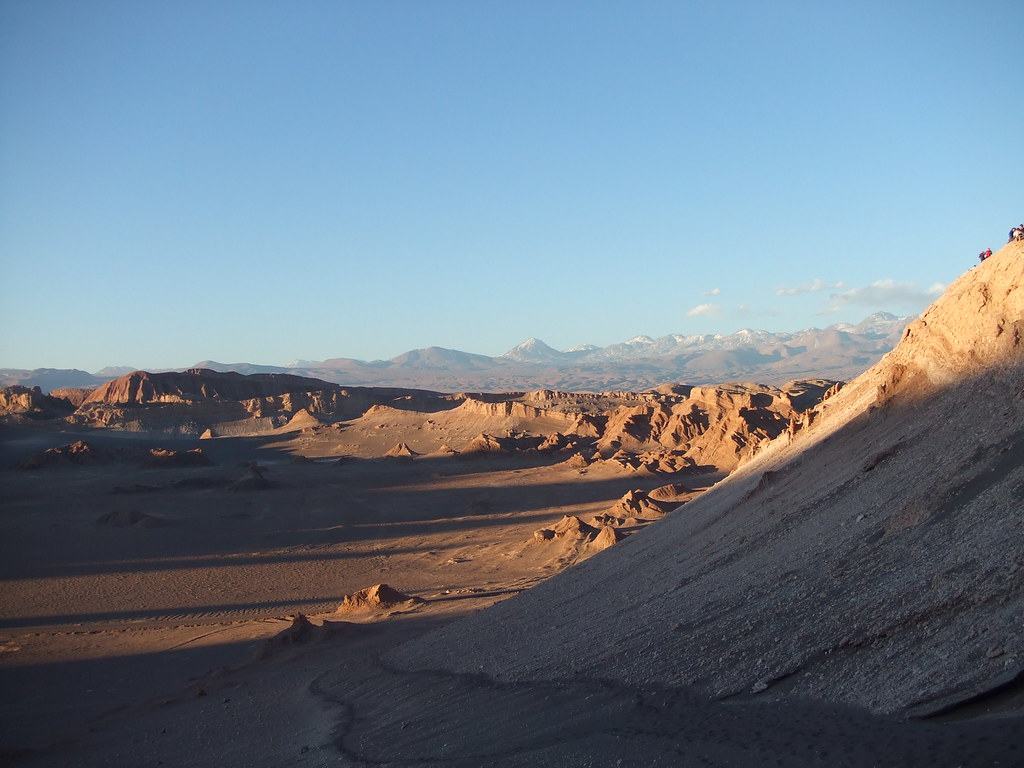
On the second afternoon, we travelled out to the Valle de la Muerte (Valley of Death) and Valle de la Luna (Moon Valley). Both are unreal landscapes, carved into the stone and sand by the constantly eroding force of the wind. In Valle de la Luna, we saw the obligatory Tres Marias rock formation, which is sadly now only two Marias after an unknown culprit knocked part of it down. We also saw an old salt mine and miners refuge now returned to the sands.


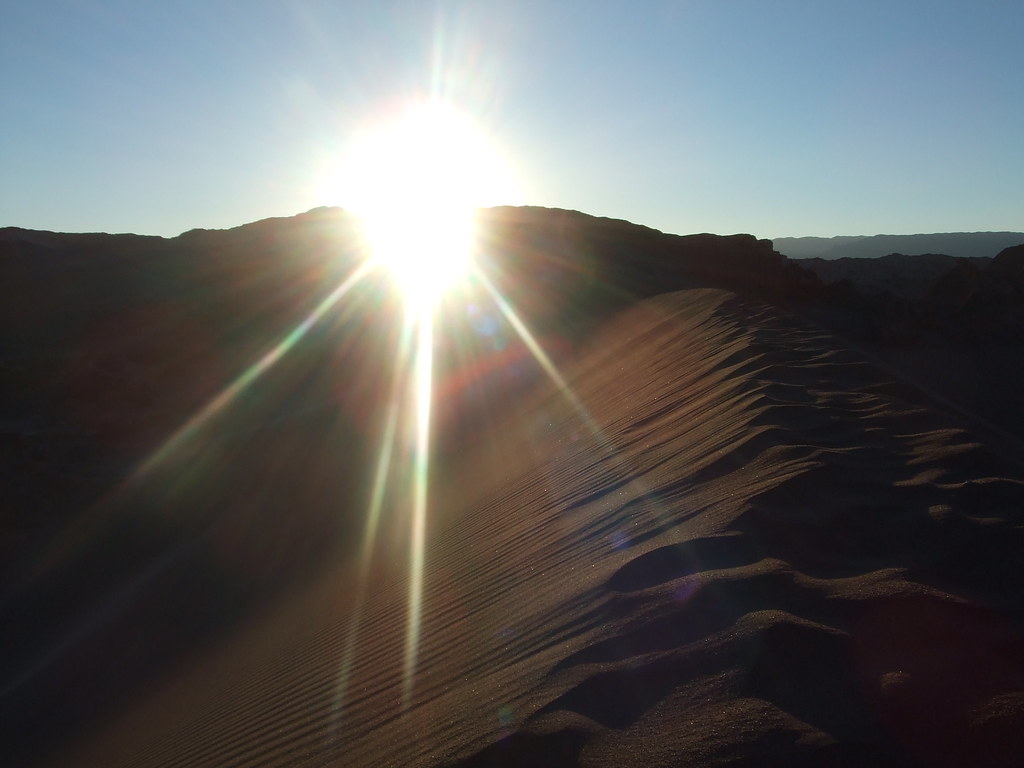
The afternoon culminated in another breathtaking sunset, the dry rock awash with soft pinks and oranges and long shadows sliding up the sides of the mountains. We had to be dragged away by our tour guide, or we would have been tumbling back down the sand dunes in the dark.

Thursday, 11 August 2011

San Pedro de Atacama

The desert oasis of San Pedro de Atacama is located some 24 hours by road from Chile's capital Santiago. Feeling this was a little too long a bus journey for us, we flew to the nearby city of Calama. The flight takes just under two hours, with several connecting transfers via taxi or minibus into San Pedro. All very slick and professional, the transfer takes between one hour and an hour and a half depending on where your hostel is located on the route. We were last to be dropped off, as we were staying at the Sumaj Jallpa - a cute, clean and cosy hostel on the outskirts of the village, but just a 10 minute walk from the centre.

San Pedro itself is tiny and can be walked around in about half an hour. It's a real tourist trap, full of backpackers of all nationalities (although a lot of Brazilians, French and Spanish at this time of year) and its dusty streets are littered with tour operators, souvenir shops and cafes. Despite this, it didn't feel annoyingly touristy like Pucón; it has a nice relaxed feel about it with everyone (including the stray dogs) reposing in the sun and getting along.

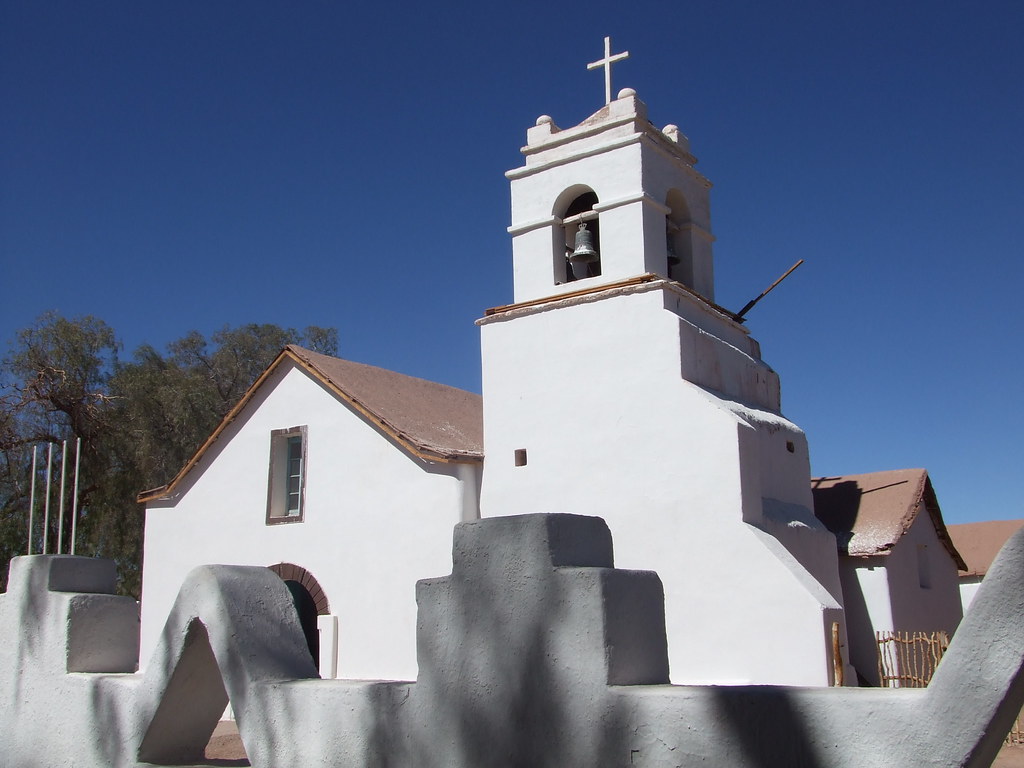
The church of San Pedro

Main sightseeing points include the church, a sparkling white national monument with beautifully adorned statues inside. Also fascinating is the archaeological museum Gustavo Le Paige ($2000 CLP / $1500 CLP for students) which covers the history of the first settlers in the region, through the arrival of the Incan empire and later the Spanish conquistadors, although occasionally in a little too much detail. The museum houses lots of interesting artefacts, including early stone tools, pottery and even textiles, all of which were kept preserved by the desert sands.

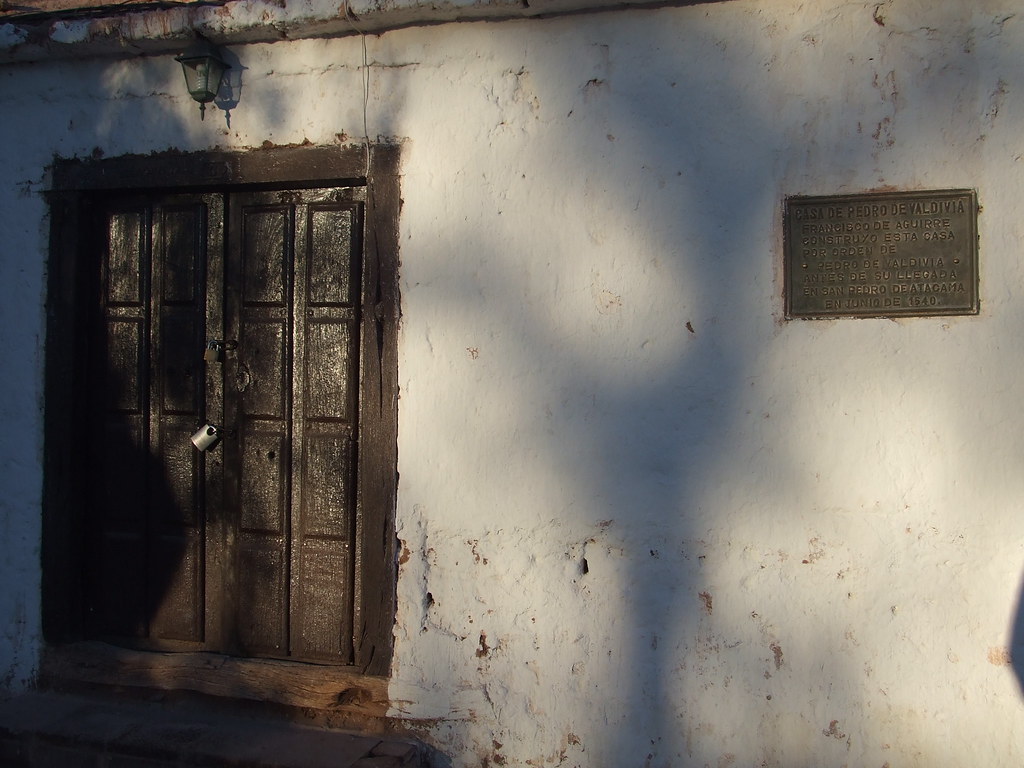
Spending a morning mooching around San Pedro's plentiful souvenir shops was fun, although you'll find that most stock the same items and that (we suspect) the majority are made in China and are not the wares of local artisans. That said, we found a really interesting jewellery shop that had some unique and reasonable priced pieces, such as a copper bangle I picked up for $10000 CLP. Our favourite souvenir shop (which we visited three or four times in our indecisiveness over gifts) turned out to be located within the oldest building in San Pedro, dating from the arrival of conquistador Pedro de Valdivia in the early 16th century. Both shops are on Taconao.

San Pedro's oldest building (now a souvenir shop)

Following the advice of the Rough Guide to Chile, we hunted around the edges of the village for cheaper eats, which was definitely the right thing to do. We frequented a restaurant on Tocopilla with Licanbur, near to the bus terminal, which offered three course meals with lots of choice for just $3500 CLP (that's about a fiver).

Chorillana
Ticking another dish off our 'to eat' list, we shared a chorillana in a bar at the eastern end of Caracoles. Dubbed a 'heart attack on a plate', chorillana consists of chips topped with sausage, beef, chicken, onions and a fried egg. Man it was goood...

Breakfasts were a little overpriced for what you got, but there are various places that offer tea/coffee/chocolate with toast and a glass of juice for an average of $2000 CLP, going up to nearer $3500 if you want eggs, ham or cheese too.

Finally, the best thing of all about San Pedro is that it's surrounded by this view, with unbeatable rosy sunsets on the backdrop of Volcán Licancabur every day.

The view during the walk back to our hostel

Wednesday, 10 August 2011

Just when I thought Chile couldn't get any more amazing

...it went and did just that

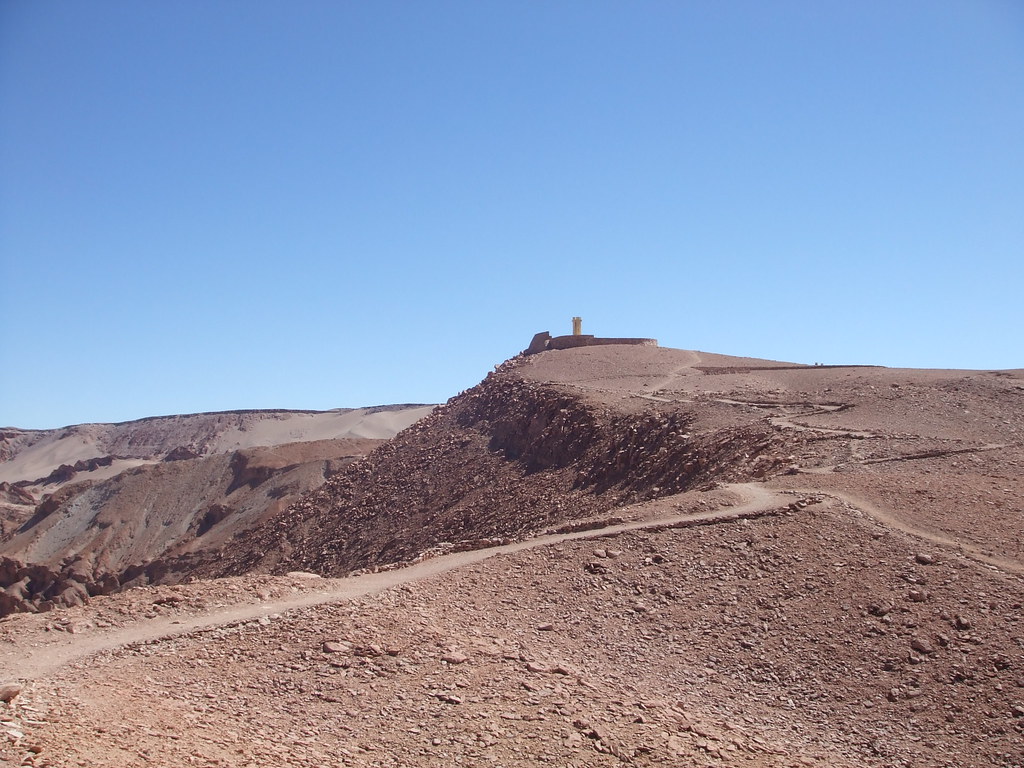
Of course I expected amazing things from the Atacama desert. The place has geysers, volcanoes, ancient ruins, salt flats and flamingos. But I wasn't prepared for how breathtakingly beautiful this extremely arid and almost barren part of the world actually is.

I'll be blogging about the different places we visited, but for now, here's a sneak photo preview:

Flamingos at sunset in the Salar de Atacama
Sunset in Valle de la Luna
Geysers de Tatio
Quitor ruins
San Pedro de Atacama