This weekend took us to the Elqui Valle (or
Valle de Elqui) and the extremely relaxed town of Vicuña; a
San Pedro in the making but less touristy and more Chilean.
Having spent the morning in La Serena, we hopped on a
micro headed up the valley and were soon treated to some lush green mountainsides under a sparkling clear blue sky. Signs were promising for our evening plans...
We relaxed for a while in our delightful hostel,
Donde Rita, run by a German lady with perfect Spanish. A slightly disorientating experience, but in a good way, as the lodging was decorated in a very similar vein to my parents' house and it felt like being back in England! Batteries recharged, we left in search of our night time entertainment as a full moon popped up over the mountains.
Enough teasing, as the title suggests, we were of course headed for an observatory. Chile is famed for its clear skies and Vicuña is blessed with 300 totally clear days (and nights) per year. The Elqui Valley is also somewhat infamous for its high volume of UFO sightings, but maybe that's down to the pisco (more on that to come).
The municipality of Vicuña operates an accessible observatory for anyone interested in learning about the stars. It costs 3500 Chilean pesos to enter plus 1500 for transport if you don't have your own. Tours run every day at 6.30pm and 8.30pm in the winter time and a minibus will take you up to the
Mamalluca observatory, located around 9km from Vicuña. There are also tours available in English if you remember to ask (we didn't).
The evening started with a 15 minute or so lecture on the universe. Unfortunately for me, I couldn't understand a thing due to a mixture of terrible sound quality and the presenter's very strong Chilean accent. Neither could Carlos though which made me feel better.
Thankfully, things improved when we were split into a group of around 20 and assigned our very own astronomer who took us to have a look at the telescopes. Felipe, our extremely knowledgeable but easy-to-understand guide, pointed out some of the principle constellations visible to the naked eye - including the Southern Cross (which obviously we don't get to see in the northern hemisphere), the Southern Triangle (probably a dreadful translation of mine but you get the idea) and most excitingly of all, the Scorpio constellation, right above our heads. I was pretty over-the-moon, if you'll excuse the pun, to see my own star sign up there in the sky.
Next, we were allowed to have a go on the telescope to look at a dim, yellow-ish star just above the horizon - which turned out to be Saturn. Although it was tiny, with the assistance of the telescope, it was easy to make out the distinctive rings that characterise the sixth planet from the sun.
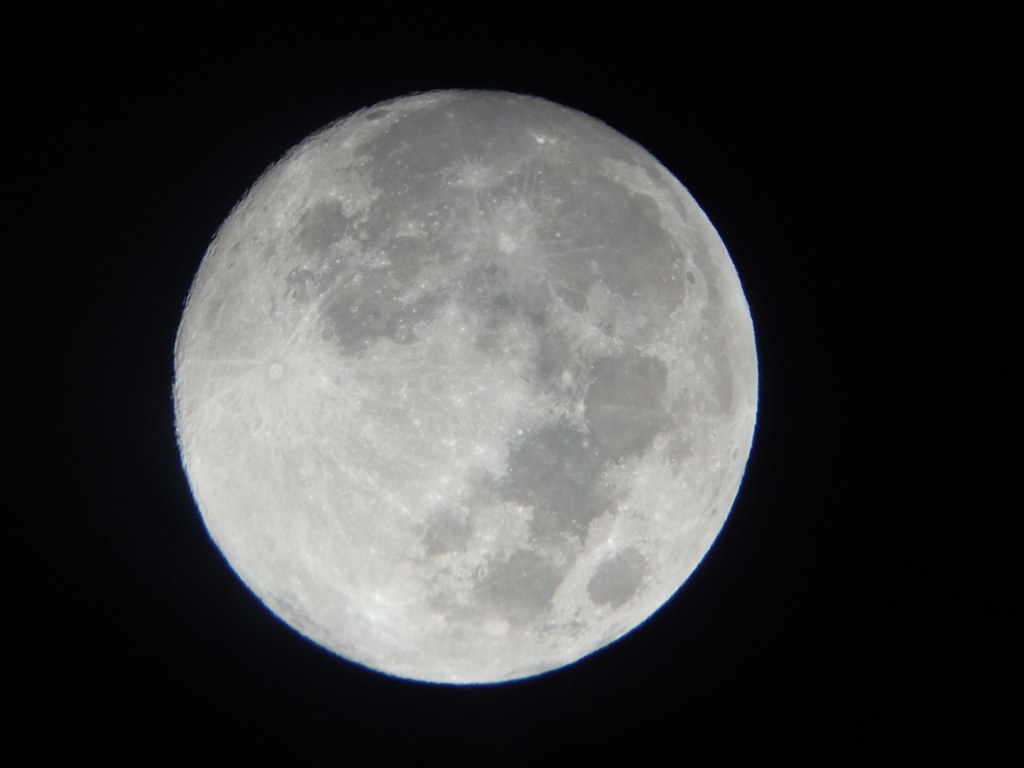
As it was a full moon, our astronomy expert explained, we weren't able to see as much of the sky as at other times due to the amount of light. However, what we were able to do was have a good old look at the surface of the moon through the telescope. A real privilege, as we observed alien seas and mountain ranges, along with having the opportunity to take a spectacular photo.
After this, we were taken to the strongest telescope on the site, housed in one of those circular-roofed buildings which opens and turns depending on where you want to look. Here we were shown a series of very distant stars, one of which was the Jewel Box, a young constellation that has three superbly bright stars in different colours that resemble precious stones. The second constellation was very old, accompanied by the dizzying fact that because it is so far away, the star has probably already died, and what we see today is how it looked many years ago.