Showing posts with label Impressions. Show all posts

Tuesday, 23 August 2011

Foreign - Familiar - Farewell

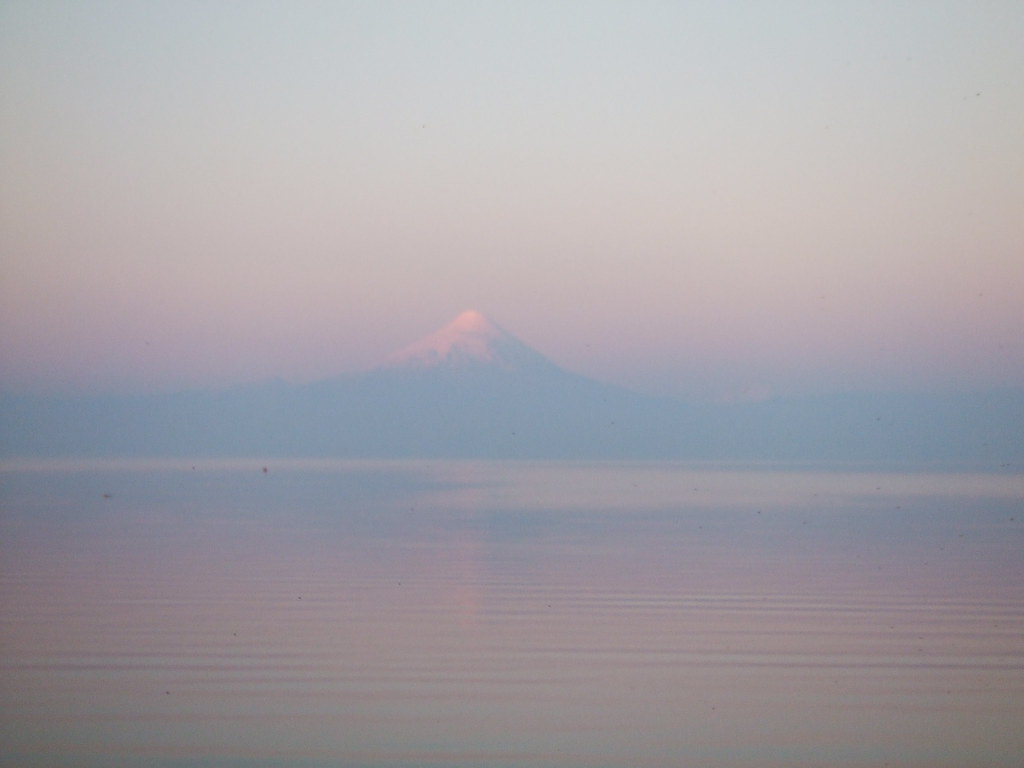
As the sliding doors of the Santiago Metro opened at La Moneda, I stepped onto the platform and was struck with recognition. Directly in front of me was Volcan Licancabur as seen from San Pedro de Atacama. To the left, the vineyards of Valle de Elqui. Across the tracks, Volcan Osorno and Lago Llanquihue and an aerial view of the Andes, such as is witnessed on a flight to Buenos Aires.

These enormous paintings have accompanied me on an almost daily basis. I have passed them without thinking since I first set eyes on their unfamiliar landscapes. Filled with trepidation, I marvelled at their beauty as they loomed over me - unknown worlds in a foreign country.

But suddenly, they have become familiar. I feel a rush of memory as I recall the terrain and I feel a little more a part of the world around me.

This is my farewell to Chile; the discovery that a world so alien - that left me without language, without culture, without identity - can become normal. It's been a struggle, I did not have the easiest of starts, and there are things I still find hard to deal with. But my Chilean adventure has taught me that from nothing, new ways of communicating can be learnt, new careers can be forged and wonderful new friends can be made.

And above all, outside of the smoggy metropolis of Santiago, Chile is one astonishingly beautiful country. Of the spectacular landscapes that have provided the backdrop to my daily commute, we are so incredibly lucky to have set eyes on their wonders.

Sunday, 21 August 2011

Final observations

Or blog posts that didn't quite make it to fruition

With just 48 hours left of our time in Chile, it's a sure-fire fact that there are a million and one things that I still want to write about. Here's a selection of snippets of observations that have been floating around my brain but as yet haven't made it on to paper.

Traffic

Traffic in Santiago drives Carlos and I completely round the bend (excuse the pun). Beeping the horn is as obligatory as gear changes and takes the place of a dawn chorus in the early morning rush hour. While traffic lights here signify the following actions:

  • Green light - zoom through as fast as you can, beeping the horn at anyone who happens to slow down or stop for any reason, be that for congestion, red traffic lights up ahead, a stray pedestrian or because they've crashed into a fence (yep, we watched this happen).

  • Amber light - speed up even more to make sure you get through before the lights 'change' (no preparing to stop here).

  • Red light - only takes effect after the first 5 or 6 cars have gone though the red light. Likewise, traffic starts moving again from around 30 seconds before the lights change to green (or the driver's patience is at an end, whichever is the shortest).

      "Mani, mani, cuchufli"*

      Chileans are an industrious and resourceful nation. Whenever there is an occasion to sell something, you can guarantee there's a vendor right there. Roaming sellers are ubiquitous; whether on the street, at the Metro entrance or in the micro, you can pick up everything from Super Ochos, to tights, to plasters, to sewing thread.

      Of course there is a serious side to this, as this on-the-hoof selling is how many, many Chileans make a living. But the funniest thing (at least to us) is the appropriateness of the goods. If it's a hot day - it's ice-creams, a chance of rain - umbrellas, new year - yellow underwear, football match - vuvuzelas and silly hats. And the best I've seen so far is a kid selling lemons in the middle of a demonstration, to help participants counteract the effects of tear gas!

      You will also never go hungry in Chile as "catering" (pronounced as cat not Kate) is rife. Concerts, beaches and parks all ring with the sound of "mani, mani, cuchufli". It's become a running joke between us now, that even in the most isolated spots like the Tatio geysers, there will probably be someone with a cardboard box full of goodies.

      *Mani = peanuts; Cuchufli = a tube of pastry filled with manjar and covered in chocolate; Manjar = sweetened condensed milk boiled to a caramel-like consistency; Super Ocho = a chocolate covered wafer bar


      Car alarms

      Car alarms are musical here in Chile. My first jetlagged experience was trying to sleep while a flypast went low overhead as part of the Fiestas Patrias celebrations continually setting off a cacophony of alarms. Eventually, it reached the point that Carlos and I could sing along. Something like:

      Ner - nir - ner - nir, nuuuurgh - nuuuurgh, woo woo woo woo woo woo woo woo wooo, ne ne ne ne ne ne ne ne, mwik miwk miwk miwk.

      You get the picture.


      Isabel Allende

      Going all serious for the moment, I never had the opportunity to follow up on my New Heroes post and write about Isabel Allende. I read her excellent book The House of the Spirits, which is basically the history of Chile in fictional form, which deals with everything from post-colonial feudalism to state torture under the dictatorship. I like her for her presentation of strong women in her novels, within a society that is very male dominated.


      On being a giant

      This is the mirror that every other woman checks their
      hair and make-up in on the way to the Metro
      Right back at the beginning of my stay here in Chile I observed how freakishly tall I am in this country and how it leads to a lot of eyes turning in my direction. Sadly for me, this hasn't got any better. I still have to endure the entire Metro carriage looking at me with curiosity as I stand there trying not to get too flustered. I still get in the way in department stores and bash into things (nothing new there then) and I still find myself able to see over the top of toilet doors. And I still terrify the occasional child.

      While I may have learnt the hard way the value of ducking my head, I'm looking forward to only being slighter taller than average and not a startling object of wonder.


      Yo Hablo Chileno

      It's hugely well documented that coming to Chile will supposedly ruin your Spanish. Or that if you can understand Spanish here, you can do it anywhere. Now, I'm not one to judge, but I will agree that there is a great deal of slang and that the pace and pronunciation make navigating conversations a challenge at times. But despite my consciousness that I would eventually be speaking Spanish with Spaniards, I hadn't realised quite how 'Chileno' was my vocabulary until Carlos and I sat today making a list of all the words that I know that are not used in Spain. Oh, and when we tried to buy slices of ham in the supermarket last weekend and it was me that the assistant could understand and not Carlos! Here's to the very strange combination of a Brit speaking Chileno with family from northern Spain on my next visit to Zaragoza...

      Saturday, 20 August 2011

      Return to the '80s

      Here's something I hadn't expected to find in Chile (picture below):

      A slightly famous wedding dress
      The fashion conscious or royalists amongst you will know that this is Princess Diana's wedding dress. Not the actual gown, but one of the versions that went into designing the final ensemble, worn by the late princess for her wedding to Prince Charles in 1981.

      But what on earth is it doing in Chile?

      Well, a couple of weeks ago I made my second visit to the fantastic Museo de la Moda (fashion museum) in Vitacura, Santiago. I first went on my birthday, way, way back in October when I knew nothing about Chile, was feeling extremely alienated and homesick and really needed to do something to cheer myself up. This time I found myself strolling up without getting lost, chewing on a Super 8 (it's a Chilean chocolate biscuit bar) and buying my ticket in Spanish with ease. No guided tour in English for me this time! How things change...

      Back to the Future
      I was visiting the second instalment of the museum's Return to the '80s exhibition (Volver a los '80s II) which has its centre piece the car/time machine from the film Back to the Future along with protagonist Marty McFly's jacket. Pretty cool, but of course I was there for the fashion.

      A new room has been added with an exhibition about Body Map, London-based designers that were highly influential in the fashion world of the era, dressing the likes of Boy George.

      The other rooms followed the same format as before - street fashion, celebrities, designer and couture. It was in the celebrity room that I stumbled across Princess Diana's dress, along with a pink full-length shoulder-padded gown belonging to Joan Collins and items from Madonna and Duran Duran.

      Chanel in the 'disco' room
      The designer section continued to dazzle, with cases from Jean-Paul Gautier (more conical bras), John Galliano, Armani, Issey Miyake, Thierry Muglar and Vivienne Westwood. Then downstairs in the 'disco' room (with very loud music and so dark I could hardly read the notes) was what I've labelled 'couture', beautiful, beautiful, beautiful tailoring from the likes of Chanel and Yves Saint Lauren, as well as a Chilean designer, Ruben Campos.

      What I found most interesting this time, was my greater appreciation of the context of the exhibition. I watched for the second time a video that explains the making of the exhibition and which includes various famous Chileans from the decade talking about their experiences of the fashion and culture of the '80s and Chilean society at the time.

      For a start, I recognised a lot more of the faces and many of the cultural references were no longer alien to me. But I also felt like I understood what they were saying a little more, and not just in terms of the language.

      Chile has an odd affair with the '80s. The entire decade was lived through the dictatorship, with curfews and repression and very little exposure to outside influences. And yet today there exists a massive nostalgia for the music and fashion. Whether it's because people feel they missed out, or because the world being lived by New York and London was such a polarity to what was permitted in Chile at the time, I don't know and I'm in no place to speculate. But it was insightful to realise that mutually, Chile and I have got under each other's skin.

      Tuesday, 2 August 2011

      Evita

      As one of the reasons my interest in Buenos Aires was piqued all those years ago was Evita the musical, we decided to pay a visit to the Evita museum. I realised as I entered, that my knowledge of one of Argentina's most famous figures was based almost entirely on the musical - a portrait which, during the two hours I spent in the museum, I came to understand was neither that accurate nor did it do her justice.

      The museum is located in a spectacular building on Lafinur, just on the edge of the upmarket Recoleta district. Originally a hotel dating from the turn of the 20th century, the building was taken over by the María Eva Duarte de Perón Social Aid Foundation in 1948 as a temporary home for women and children. The entrance hall boasts parquet flooring, a grand sweeping staircase and huge chandeliers. I felt like a princess when I descended the stairs to leave the building.

      The exhibition is organised into moments of Eva Perón's life; which in a way was our over-riding criticism, as it was difficult to get a full idea of the pattern of events without a chronology. But for me, a minor point.

      Starting with an introduction to the myths surrounding Evita - the rather predictable saintly mother figure versus power-hungry strumpet - the first stop was her death: a wall-sized projection of the scenes from her wake and funeral, with the abundant throwing of flowers and outpouring of public grief somewhat reminiscent of Princess Diana.

      Next, we started to unlock her past: a look at her childhood brought up out of wedlock, her move to the city with her mother and subsequent minor success as an actress, before an earthquake relief event crossed her path with Perón's.

      Upstairs focused on her relationship and marriage to the future president as well as her political career. The room of her good will tour immediately caught my attention. Here's why:


      Throughout the museum were numerous outfits, many accompanied by photographs of them in use. Exquisite 1940s tailoring and design and a very interesting spotlight on the era's fashion.

      The next rooms were what really took me by surprise: Eva Perón's political career. I had (wrongly) assumed that she was simply famous for being the wife of an important man - albeit she from very low birth who rose to one of the most powerful positions in the country. What I didn't know was how active she had been in social issues in her country. Her charitable foundation built schools, housing for workers, holiday camps for poor children and health clinics. It ran temporary shelters for women and children, orphanages, homes for senior citizens, nursing schools and a plan for agrarian reform. Need I go on? Well yes, she was a leading voice in the campaign for suffrage, helping to secure the vote for women in Argentina.

      To me this was a perfect testimony; that aside from the myths, the speculations around her death and the slurs on her character, she was a woman who achieved, and who used her new found position and power to help other women, and those most in need in her society. Stripping everything else away, for this, Eva Perón deserves to be recognised and applauded.


      "I seize this opportunity to tell all Peronist fellow workers ("compañeros") that in the women's party we are organizing there are no divisions, we are trying to collaborate [...] I want you to see in General Perón's wife not an old-style feminist, but a modern, constructive one aware of men's importance and women's potential. We are not struggling for group domination. We are struggling to leave a greater, fairer and merrier Motherland than the one we encountered in the past." Eva Perón, 'The Reason for my Life' (Chap. 53)

      Wednesday, 27 July 2011

      My 7 links

      A slight digression from my usual posting topics as I appear to have joined the world of the bloggersphere by being tagged in this '7 links' thing that's doing the rounds.

      Thanks to Rob W of the South America Blog (this is the chap who runs Woodward language school which brought me up to a passable level of Spanish, Chilenismos and all) I have to rifle through the archives of my blog for 7 posts that are the most beautiful, popular, controversial, helpful, surprisingly successful, lacking the attention they deserved and that I am most proud of.

      This actually turned out to be quite a fun task, as I got to rediscover stories I'd forgotten about and I enjoyed feeling incredibly proud of my blog and realising what an interesting historical record it is for me. So without further ado, onto the 7 links.

      My most beautiful post

      Difficult to define a beautiful blog post. Although on the whole I am pleased with how I write, I'm not sure any of the posts are exquisitely crafted literary masterpieces. So if we take beautiful to mean photography and subject matter, it doesn't get more perfect than A sprinkle of magic - the story of Frutillar and one volcano that made a last minute appearance to give us the most phenomenal setting for a pastel coloured sunset.

      My most popular post

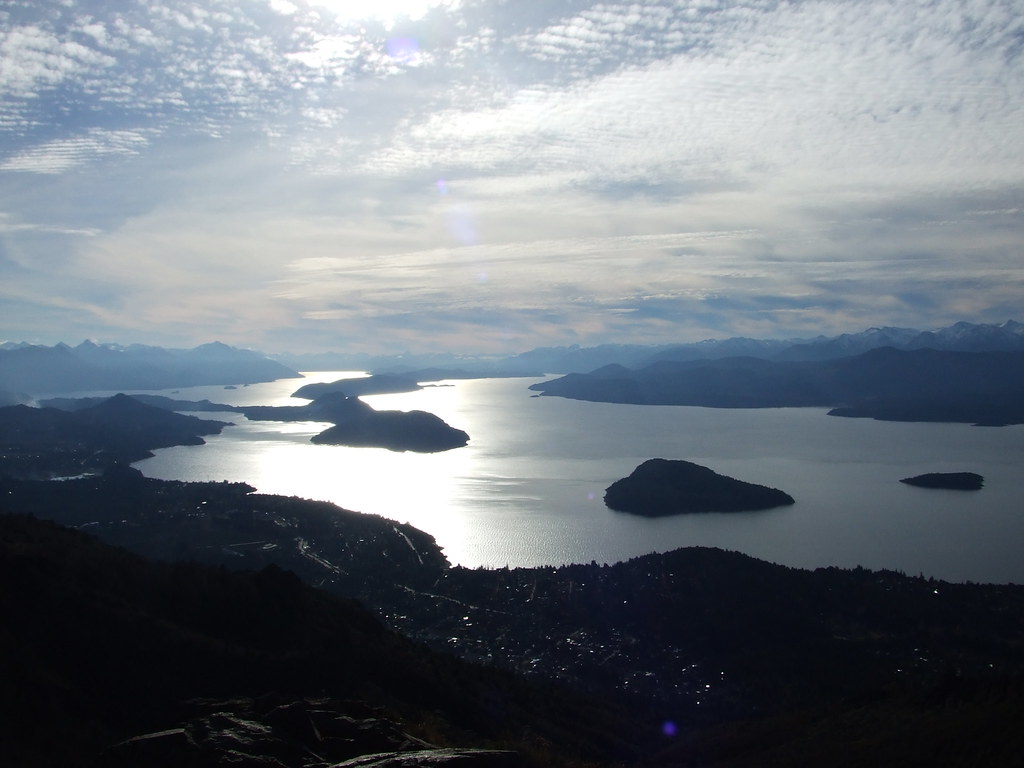
      Judging by stats alone, this award goes to The most beautiful place on earth about our visit to Bariloche in Argentina, before it got covered in ash from Volcan Puyehue. A worthy winner. That said, I never tire of this view has been hanging around at the top of my most visited list since I wrote it way back on 20th October, so I think it deserves a mention too.

      My most controversial post

      I don't really do controversy on this blog, but I guess that Civil unrest is the closest I've come to any kind of political statement, or for that matter, to writing anything negative about my experiences here. 

      My most helpful post
      My very first posts, First impressions and A day of small victories stand out for me simply because various friends I have met here have told me that they felt reassured reading about my rather wobbly experiences in Chile at the beginning. So I'm nominating these for helping people know that they weren't alone in feeling adrift in this strange new place.

      A post whose success surprised me


      New heroes was the first time I received feedback from Chileans about my blog, with many of them in agreement with my admiration for Michele Bachelet. This was a turning point for me, where I discovered that my blog was being read as much by my new friends here as by my old friends back home. The amount of attention my Food post got was also a genuine surprise - it seems eating is what my readers are really interested in!

      A post I feel didn't get the attention it deserved

      Looking through my archives I found it difficult to find a post that didn't get attention, but eventually I opted for Museum of Memory and Human Rights because I don't remember getting much direct feedback on it. Maybe the subject matter was too painful for some, or maybe the history is too distant for others. Either way, I thought this post would get more of a reaction than it did.

      The post that I'm most proud of

      Trying not to sound too cheesy, I can honestly say that I am incredibly proud of my entire blog. I only started writing it because I fancied having a go at blogging and a couple of people had suggested it might be an interesting thing to do. But as I said at the beginning, it's turned into fascinating record of my time here; I love reading it and I hope others do too. Selecting one post, therefore, is pretty hard, but I think I'm going to plump for Immigration. Partly because it made me and a lot of other people laugh, partly because I enjoyed writing it and working on getting the humour across, and partly because I'm really proud of what I achieved that morning!

      So now I have to pass on the tag to five other bloggers. So 7 links on their way to:
      1. Callie Mills - Ruffle Your Feathers
      2. Carolina Leseigneur - GoodCatt's Random Musings
      3. Pepe's Chile Adoration Page

        Next was going to be fellow Chile blogger Angie Clifford with Angie's life, but she's already been tagged so instead we change topic to...

      4. Ruth Lund - Cherry Coloured Twist
      5. Emma Fassio - Emma Fassio Knitting

      Sunday, 24 July 2011

      Tango

      Buenos Aires. City of my dreams. You did not disappoint me.

      I don't remember when it was exactly, but at some point during my childhood/adolescence I got the idea into my head that I wanted to experience tango in Buenos Aires. Somewhere between seeing the musical Evita and watching the original 'Come Dancing' I imagine it happened. A little seed lodged deep in my brain that as I grew-up I guess I never really thought would grow to fruition.

      But this is a time in my life where childhood dreams come true and I finally had the opportunity to visit the Argentine capital. And oh what a magnificent city you are.

      Tango 'graffiti'
      Tango is simply everywhere in Buenos Aires. It oozes out of window panes, is splashed across walls and sparkles in shop windows adorned with shoes. The city is tango. A red and black sultry haze that burns into life as night descends.

      We spent an evening at one of the many tango show and dinner places that litter the city. Taconeando was our bar of choice, located in San Telmo, one of the oldest and most historic barrios or neighbourhoods of Buenos Aires. We entered a small, dimly lit room, furnished with plush antique rose fabrics and tables for dining surrounding a low central stage.

      Dining came first. An entrada (starter) of very tasty pate, followed by, of course, a massive steak and chips. Dessert of a choc-ice filled with chocolate, caramel and vanilla ice cream had just been served as the lights went down and the show began.

      Tango at Taconeando
      The show covered the history of the tango, beginning with two men dancing in a rutting stag-like stand-off, followed by moves through romantic, fun and flirty and seriously sexy moods. The dancing was interspersed with singers performing tango classics (including audience participation) and backed by a brilliant quartet of piano, violin, double-bass and bandoneon - the accordion-like instrument that gives tango its signature sound.

      It was an electrifying hour and a half of tango, where we were so close to the action that at times we had to duck to avoid being kicked in the head! A marvellous display of a beautiful dance that was simply a joy to behold.

      More tango

      But our tango experience did not stop there. Oh no! The next day, I was rather overexcited to discover that the world tango museum, which was on my list of things to do, was actually located within the national tango academy of Argentina! You can imagine my squealing.

      We entered the 150 year old building, with its art nouveau style architecture, and found the museum on the first floor. It tells the chronological history of the tango, with various artefacts - from manuscripts, to records, to dancing shoes - to illustrate the different periods in the dance's life. It also demonstrated that tango is very much alive today, with the academy itself offering lessons at 30 Argentine pesos a go (that's about 4 quid) to anyone who wants them. Something for my next visit I think.

      The bandoleon
      After the museum, we headed on to another of the oldest tango buildings in Buenos Aires - Confiteria Ideal. Dating from 1912, the cafe / ballroom boasts more luscious art nouveau architecture, and judging by its website, seems to have been used for the film version of Evita starring Madonna. We supped a cafecito in the historic surroundings, while the sound of the afternoon milonga drifted downstairs.

      More Taconeando tango
      And more Taconeando tango

      Monday, 6 June 2011

      It's been a while readers...

      I must apologise for my tardiness with writing. But you see, I've been away. Not once, but twice. I'm a very lucky girl. During my travels in the south of Chile I have:
      • had one of the most amazing experiences of my life;
      • been to the most beautiful place in the world I have (so far) ever seen;
      • stayed in the most luxurious place I have ever stayed; 
      • completed my longest ever journey by bus; and,
      • witnessed one of the most astonishing views I have ever set eyes on.
      Oh, and narrowly missed a volcano erupting.

      I'll be filling you in over the coming days, but for now, here's a tantalising taster...

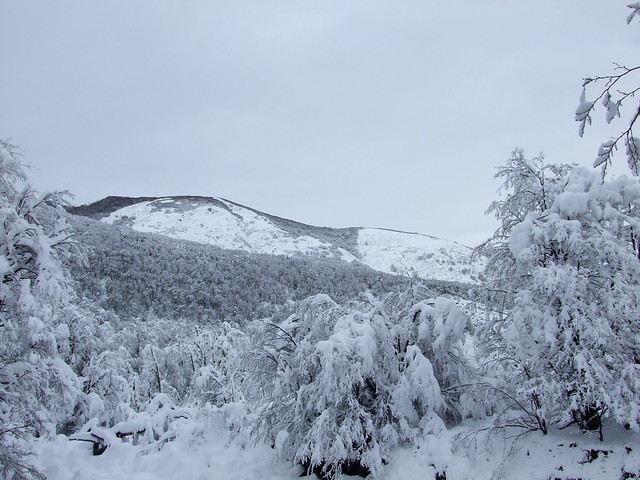
      Nevados de Chillan
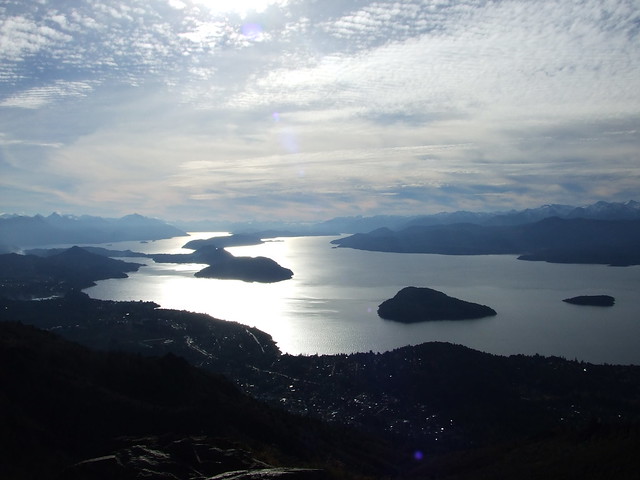
      Bariloche, Argentina
      Volcan Puyehue
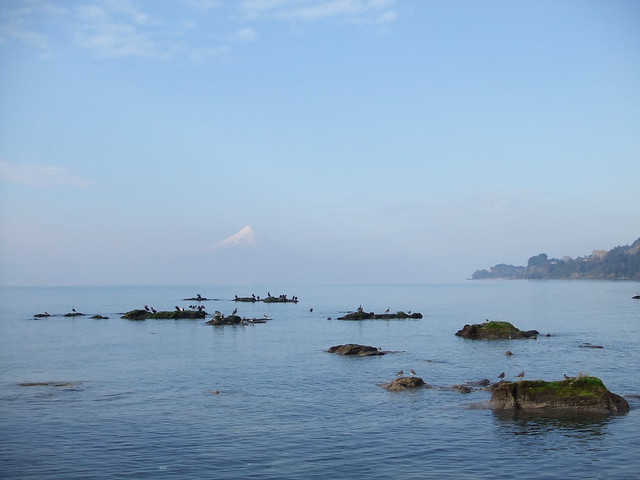
      Lago Llanquihue and Volcan Osorno
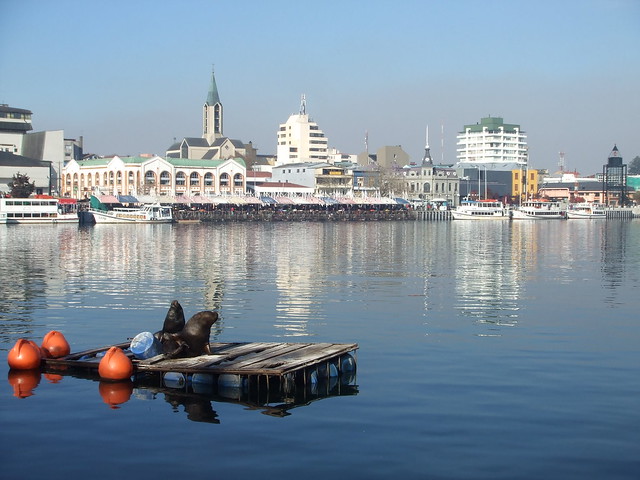
      Valdivia waterfront
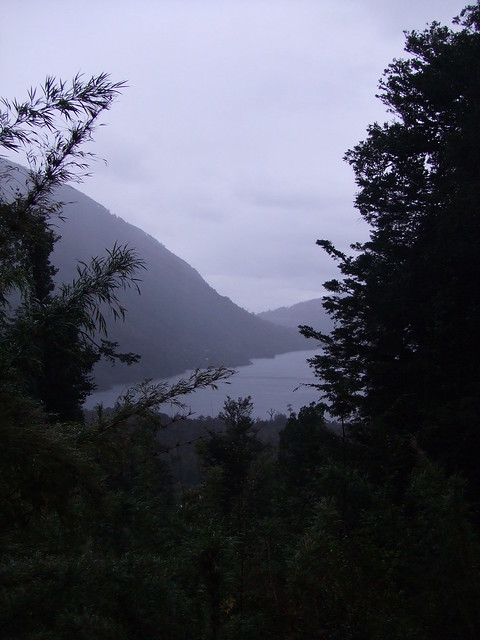
      Parque Huerquehue near Pucon

      Sunday, 15 May 2011

      Civil unrest

      Positive is usually the watchword of this blog, but I want to capture my Chilean Adventures in full, so I'm afraid this post is going to focus on one of its more ugly sides.

      Caveat out of the way, I can tell you that we have spent the last week in the centre of a whirlwind of civil disturbances. As I write, the click of the keyboard is accompanied by the din of saucepans being banged together outside. This is the latest in a string of protests against a hydroelectricity project in Patagonia that will see five mega dams built in one of the most unspoilt regions of the country, billed as essential fuel for a country poised to enter 'developed nation' status very soon.

      On Monday night, I exited the Metro station to the shock of having my nose burned with tear gas. Thursday, after a student protest, I walked home to find traffic lights snapped in two. And on Friday, in the biggest of the demonstrations so far, thousands of protesters marched chanting down our road, before a small minority tipped over a glass recycling bin to arm themselves ready to take aim at the police.

      The location of our building is the equivalent of being a few blocks away from the Houses of Parliament in London, so it is not surprising that we are seeing so much action. That said, the sheer number of both protesters and demonstrations is not something we are accustomed to in the UK. Estimates for Friday were 30,000 people and more civil action is planned over the coming days.

      Before anyone begins to worry, we are fine. By and large, the demonstrations are peaceful; some vandalism happens, but the scenes are little worse than Birmingham's Broad Street on a Saturday night. In fact, the protesters are infinitely better-mannered. Tear gas and water cannons are used, because the police are quick to disperse people at the merest hint of trouble. While staying inside may be the best option, it's interesting to witness a nation so vocal and active in expressing itself, quite a contrast to the 'keep calm and carry on' culture I've come from.

      In case you want to know more:

      Sunday, 8 May 2011

      New heroes

      One of the most surprising things about coming to a new country for me, has been discovering people I never knew existed. I don't mean making new friends or learning about historical figures; I mean stumbling upon seriously important and influential people who I hadn't heard the slightest hint of before setting foot in Chile.

      Being a self-confessed feminist, I am naturally impressed by strong, successful and aspirational women. Since arriving here, I have discovered two such women who quickly turned into new heroes for me, and both of whom I'm dismayed are not better known outside of these shores. They are Michelle Bachelet and Isabel Allende.

      I will return to Allende in my next post, as I recently finished reading her seminal novel 'The House of the Spirits. For now, I want to turn my attentions to Bachelet.

      Michelle Bachelet
      Photo by Ricardo Stuckert
      (Agencia Brasil 1) via Wikimedia
      Commons
      Michelle Bachelet is Chile's first ever female president, holding the post from March 2006 - March 2010 (see, I bet you didn't know that). She took office with an unprecedented absolute majority in both houses of congress and left with a seriously high 86% approval rating from the populace. Popular woman.

      Gender equality was high on her agenda and she appointed a never-seen-before 50/50 cabinet of men and women. Her policies included free daycare for poor children to help women back into work and economic independence and successfully securing free availability of the morning-after pill to all women over 14 (in a country where abortion is illegal...)

      Last year, after her presidential term finished, Bachelet was appointed Executive Director of a new international task force on gender equality - UN Women. The body is doing a crucially important job; to improve women's leadership and economic empowerment, to end violence against women, particularly in warfare, and in focusing countries around the world on prioritising gender equality.

      Before her presidency, Bachelet was Chile's first female defence minister. Upon entering politics (she had initially trained and worked as a paediatrician) she took herself off to study military strategy. In her personal life, she is a divorced mother of three and an agnostic (did I mention Chile is a very Catholic country?)

      But above and beyond all of these phenomenal achievements, for which I am filled with admiration, what makes here even more amazing in my eyes, is that she was imprisoned and tortured under the military dictatorship of General Pinochet. This is what makes her, for me, a shining example of what women can achieve.

      In writing this post, I am indebted to the following:
      1. Wikipedia, Michelle Bachelet (25/04/11)
      2. The Guardian, UN Women's head Michelle Bachelet: A new superhero? (22/04/11)
      3. The Guardian, Michelle Bachelet (08/03/11)
      4. The Guardian, The Bachelet factor: the cultural legacy of Chile's first female president (13/12/09)

      Thursday, 14 April 2011

      Pomaire

      As previously mentioned in my post about food, we spent a delightful afternoon last weekend in an enchanting village called Pomaire. Located about an hour south-west of Santiago, we were dropped off by the bus on the side of the motorway (this is Chile after all) and walked the short distance along the one road in and out of the village.

      According to my trusty copy of the Rough Guide to Chile, Pomaire (pronounced pom - aye - ray) was established in the 18th century by Spanish colonisers in an attempt to control the more nomadic indigenous population. It is famed for its pottery - the surrounding hills being packed with clay - and the main street is filled with workshops selling, in the main, cookware and piggy banks (chanchitas).

      Pomaire necklace with new skirt
      With my magpie's eye for anything colourful and pretty, I quickly spotted a tiny shop selling gorgeous ceramic jewellery. Of course, I felt compelled to take ownership of one of their wares, particularly one that would match my (ahem) impulse skirt purchase from earlier in the week. (Note to my UK readers familiar with my shopping habit - it has been so long since I've had the guts to even mooch around any shop other than a department store or American style mall, neither of which I can afford, these two little treats were long overdue. And beautiful).

      We also discovered an amazing cactus shop, with hundreds, if not thousands of cacti spread out on tables in front of someone's house. Missing our prickly friends from back home, we bought one, which hopefully we will keep alive until it is time for us to leave.

      The rest, you know; two enormous meals of humitas and cazuela followed by mote con huesillos which we had to force down on top of a full stomach before catching the very bumpy bus back to Santiago.

      While Pomaire has built itself a reputation for crafts and homecooking (its main draw is the half-kilo empanada) it didn't feel overly commercialised, despite the best efforts of various restaurateurs jumping on any gringo-looking passer-by and trying to lure them in with promises of cueca and mama's best from the oven. Without wishing to sound pompous, the village had an air of authenticity and didn't feel like a theme park attraction with bus loads of tourists, as many places like this can. Not least because of the ever-present reminder that most of the workshops and restaurants were also people's homes where they try to scratch a living.

      Sunday, 27 March 2011

      A very royal preoccupation

      Aside from the usual expat questions of "where are you from", "what brought you to Chile", "how long have you been here" etc., one of the most intriguing topics I am asked about as a Brit is the royal family.

      No, I don't have an invitation...
      I didn't notice it at first, but a couple of weeks ago it suddenly dawned on me that I get asked about the British monarchy a lot. And more than this, people want explanations!

      For instance, the most frequent question on the lips of the non-Brits I meet is what do you think about the royal wedding? Now this is easy; I'm not particularly a royalist, but I love a good wedding, and I think it's nice that two people who love each other are being allowed to break with convention and marry for happiness. I'll be there watching the whole thing online (hopefully) come April 29th.

      Inevitably, this leads on to the Diana / Charles / Camilla debate. Do you think Charles will become king or will the crown pass straight to William? Would Camilla be Queen? Do people like Charles and Camilla? Most astonishingly, do you think the Queen was behind Diana's death?

      Of course, I know that all of these questions, along with their respective opinions and conspiracy theories, have been banded around the (clearly international) press. But I have found myself having to explain tricky concepts such as the rules of ascension. Shuffling my feet in embarrassment, I confess to having only a limited knowledge of the workings of the monarchy. Except I'm British, so I should know!

      Truly a global preoccupation, I've been asked these questions by a whole range of nationalities - Chileans, Australians, Americans, Spaniards and more. Funny as it is, it's also a fascinating indication of how Britain is observed from afar.

      Tuesday, 22 March 2011

      All eyes on Chile... again

      As I write this, I'm recovering from another news marathon at I Love Chile. This week, it was the visit of US President Barack Obama. As the only English media group in Chile, we were fortunate to get press passes to the official proceedings, giving our reporters and photographers a nice close up of this important meeting. I may have been office bound, watching events unfold on the Chilean government's live stream, but nonetheless, it was exciting to be part of capturing such an historic occasion.

      More and more it seems, Chile is muscling its way onto the world stage. It embarrasses me to say, that I don't think I could have pointed to Chile on a map when I first learned this was going to be home for the next year. Like many of my compatriots, I knew little about this long slither of land at the end of the world.

      I've often mused about why this is. Without doubt, geographically, the country is isolated. The majestic Andes form a natural barrier to the east, while the expanse of the Pacific Ocean stretches out to the west. In the north lies the unforgiving Atacama Desert - which in places supports no life - and in the south, Antarctica, the last wilderness on Earth.

      Migration, at least between much of Europe and Chile, has historically been fairly low. And until 2010, there was little in the way of cultural or social exports that reached across the Atlantic to make the non-Latin parts of the northern hemisphere stand up and take notice.

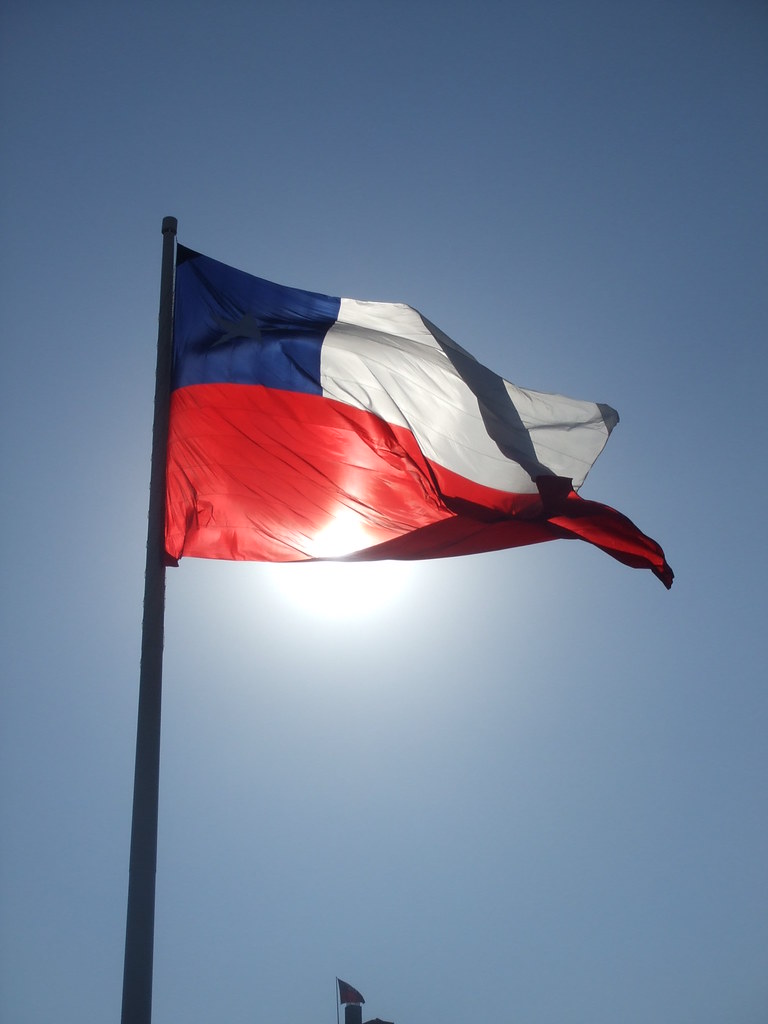
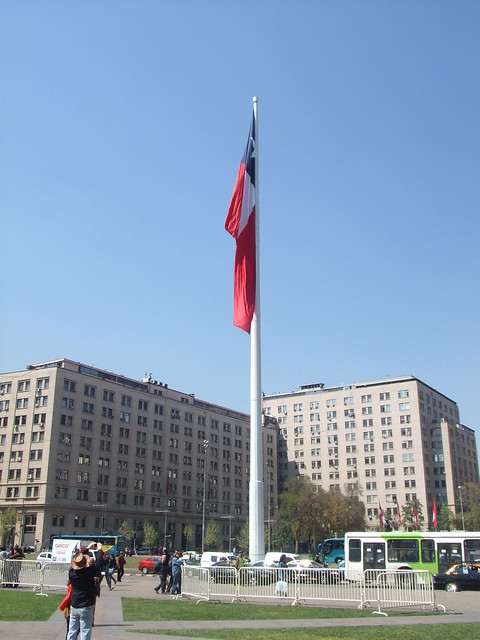
      Chile's pride is symbolised in the great
      bicentennial flag
      But all that has started to change. First came the great earthquake of February 27th 2010, now the sixth largest in recorded history, which started to peel open people's eyes. Then came the rescue of the 33 miners, where over a billion people worldwide had their eyes glued to the TV. Finally, yesterday, President Obama chose Chile to be the stage upon which he announced a new type of relationship between the United States and Latin America - as equal partners. Not the world superpower and its underdeveloped cousins. Two equals with much to share and learn from each other.

      The US President had high praise for Chile: "Credit for Chile’s success belongs to the Chilean people, whose courage, sacrifices and perseverance built this nation into the leader that it is. [...] So I could not imagine a more fitting place to discuss the new era of partnership that the United States is pursuing not only with Chile, but across the Americas."

      With all eyes once again on Chile, word is beginning to spread. Perhaps soon, I will no longer being asked in an incredulous tone: "Why Chile?"

      Saturday, 5 March 2011

      Museum of Memory and Human Rights

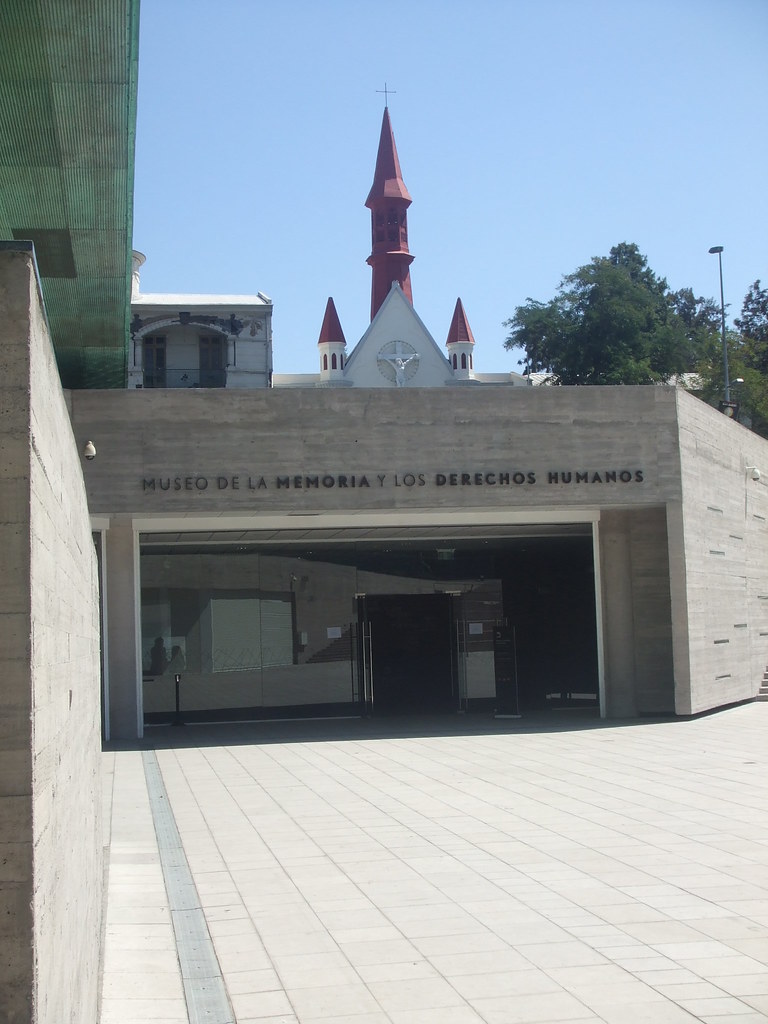
      Entrance to the Museum of Memory
      and Human Rights
      Anyone who travels to Chile, without fail, should visit the Museum of Memory and Human Rights. Opened in January last year, the museum serves as a sensitive but profound record of the atrocities committed in the country under the military dictatorship of General Augusto Pinochet, between 1973 and 1990.

      I had wanted to visit this museum for some time, but each day I had planned to go, I found myself reluctant to leave the house, knowing that it would be an upsetting experience. It was, of course. But it was also a crucially important account of Chile's history, which has given me insight into what makes Chile the country it is today.

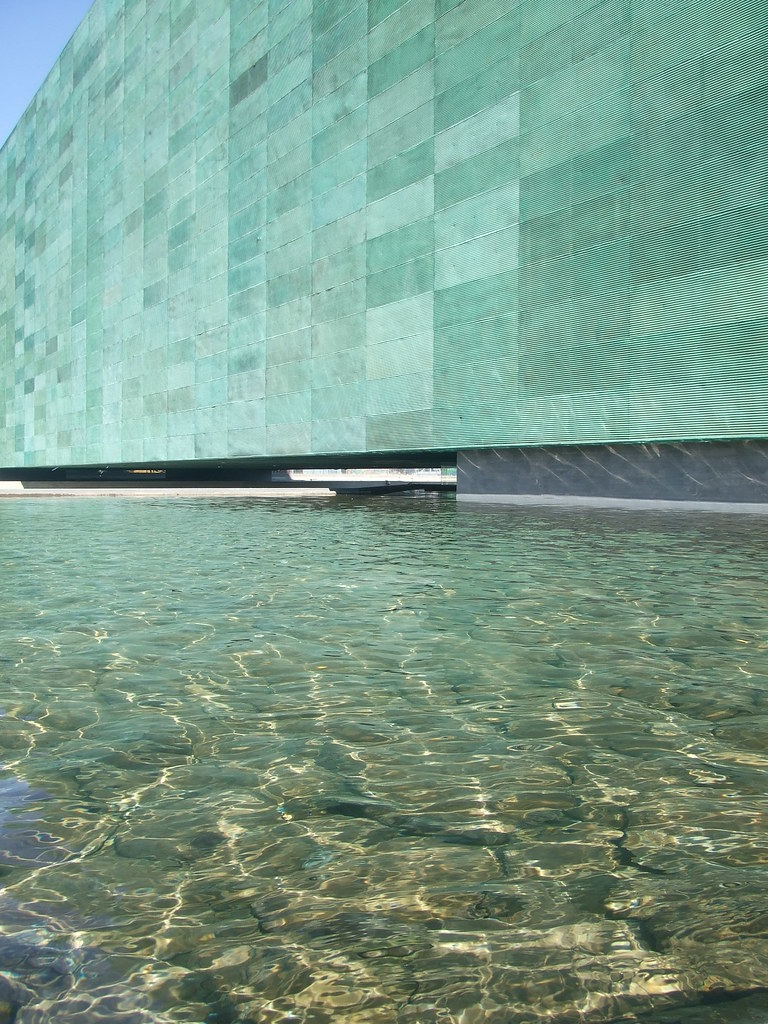
      The waters surrounding the museum
      The modern building uses architectural design at its best to express the different moods housed within the museum. From the outside, the venue looks impregnable; set low in the ground, the concrete entrance, hidden from view, looks like a kind of bunker. Surrounded by a large artificial pond, the rippling water creates a sense of calm. Inside, the country's darkest hour is contained within claustrophobic cubicles of black walls and minimal lighting, a new shock lurking round every corner. By way of contrast, a sun flooded corridor with a wall and ceiling entirely of glass runs the length of the exhibition space, providing a tranquil retreat to draw breath and reflect.

      Stories are told through hard-hitting video footage - both news reports from the time and present day testimonies of those that survived. Seeing these people talk, often close to breaking down, drives home the reality of the situation. This is not just a story from the history books. People the same as you and I were subjected to the most brutal treatment. While I have enjoyed the liberties of education, culture and freedom of expression, people my age - and people who I now know - witnessed family members being taken by force, never to be seen again.

      I would like to tell you more about the museum, and the deeply moving material it contains, but its power lies in being experienced. Please, if you come to Chile, make sure you include this museum in your list of must-sees. We must remember so that we do not forget.

      Sunday, 27 February 2011

      One year on

      I could write about nothing else today other than the first anniversary of the great Chilean earthquake of 2010.

      At 3.34am on February 27th 2010, a massive earthquake measuring 8.8 on the Richter scale hit Chile. Its epicenter was just offshore from Cobquecura, a small town in the central-southern part of the country. Around 30 minutes later, massive tsunami waves triggered by the quake hit Chile's coast, destroying large parts of the country's second city Concepción.

      Here in the capital city of Santiago, where the quake measured around 8.0, there was surprisingly little damage. While lots of buildings suffered some surface damage, there was little in the way of major structural problems. Testament to this, our flat had some sizeable cracks in its central walls and a few tiles that had fallen off when we moved in. And like many people we know, our doors don't close properly and the windows don't open without a fight. But the building is standing and sturdy. Reports in the news say that it was business as usual in Santiago after only a couple of days.

      In total, the earthquake caused the deaths of 524 people, left 31 missing and 800,000 homeless. But what's amazing, is that these numbers are pretty small. Compare it to the Haiti earthquake just six weeks earlier; this measured 7.0 on the Richter scale, but is thought to have killed over 300,000 people, injured a further 300,000 and left 1 million people homeless. This just goes to show how well prepared Chile is. It understands the risks of its location and knows how to deal with them.

      Read my articles about the February 27th earthquake on I Love Chile:

      Wednesday, 12 January 2011

      Christmas fun: sunburn

      The past two Christmases I've been fortunate enough to be able to go hiking up mountains. Last year, I visited the Pyrenees and got to fool around in waist-deep snow surrounded by peaks that looked like giant meringues. This year, it was all about sunburn...

      Escaping the pressure cooker that is Santiago city is fantastic. The atmosphere is clean and the air is still, free from the noise and the crowds. Travel just a few kilometres south-east and you're in the foothills of the Andes.

      Getting there is really fun. Civilisation takes you as far as the outer suburbs of the city by Metro, and then it's onto a micro. Micros are quickly achieving legendary status in my mind. They are small buses, very, very old and rattly, that the driver proceeds to hurtle around country lanes at around 100km per hour. Usually the driver has music blaring - accompanied by a sign that says something like: the radio on this vehicle is fixed at an adequate volume, get used to it. And then there's the in-house entertainment. Buskers and street-sellers use the micros as a regular source of income from a captive audience - so far I've endured rappers, ice-cream sellers, plaster sellers and a clown that told homophobic jokes. Most of the time I feel dreadfully uncomfortable, but however inappropriate the clown was, I did feel sorry for him. It was a tough crowd.

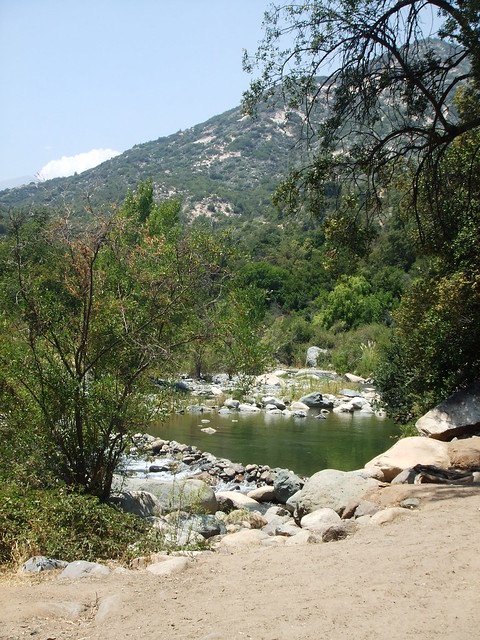
      Anyway, back to the countryside. Having been dropped off in the middle of nowhere by the micro we made our way on foot to the Rio Clarillo nature reserve - a type of national park centred around a small river. A slight miscalculation on our timing meant we had an hour's walk under the midday sun from the gatehouse to the start of the reserve proper. You can guess from the title what happened.

      After a spot of lunch, we went for a dip in the crystal clear spring. Now how many people can say they did that on the 28th of December? Then we headed up one of the foothills on a nature trail, a supposedly 'easy' path that had me puffing and gasping and dragging myself up by the handrail. Thankfully we were rewarded by a fabulous view, lizard-spotting and I think, on a distant craggy mountain-top, an eagle.

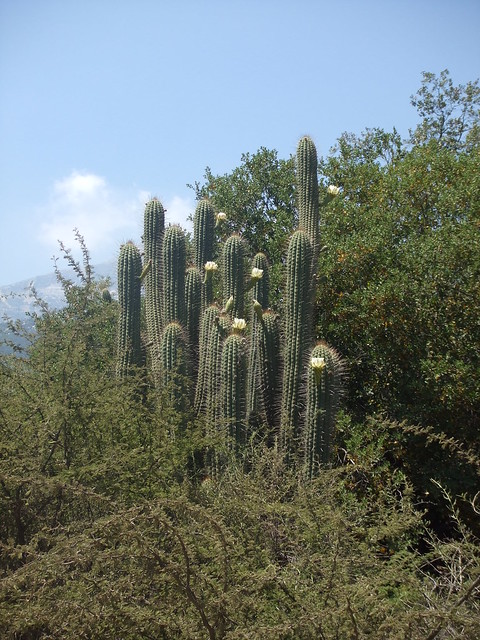
      The scenery was amazing, pretty green, despite the arid conditions. There were giant cacti everywhere - and I mean giant, at least twice as tall as I am. We took in another trail through an arboretum, this walk a lot more leisurely, which showcased many native tree species, including one called 'Laura'!

      By late afternoon, the midges started to swarm by the river so we headed for home, the three kilometre walk back to the gatehouse feeling even more exhausting after a full day's walking. Then we hopped back on the micro and returned to the city, thankful for a day's respite and for finally having the chance to see some of Chile's gorgeous countryside.

      Saturday, 8 January 2011

      Christmas fun: celebrations

      As previous posts have explained, Christmas felt pretty weird to me this year. Nonetheless, we did have a fun time, not least because Carlos had a whole week off so we were able to get out and explore a little. More on that later, but to start with, what about the Chilean Christmas celebrations?

      The big day here for celebrations is Christmas Eve. Although not officially a bank holiday, many business wind down at lunch time and nothing really happens after 1 or 2pm. As previously mentioned, I spent the day sweating in the kitchen, as well as doing some last minute present wrapping (nothing changes there). Then it was off across the city for a big family meal.

      A big family meal I hear you say? Well yes! When we first found out we would be moving to Santiago, Carlos' parents mentioned that he had a cousin here too. They had never met as adults, but Carlos got in touch with him when he arrived and he and his family have been very lovely and accommodating to us ever since. So we had a big old family knees up, very traditional, if not a little multinational, as the party included myself and Carlos (representing England and Spain), Carlos' cousin with his wife and three small children (representing Spain and Chile), plus three grandparents (from Spain and Chile) and an uncle (Chile).

      We kicked-off with pisco sours, the national tipple. Then moved on to a seafood starter, with the special dish of octopus. The main was turkey with apple sauce and roast potatoes - an American import I think, but now the staple Christmas dinner here. Although I still can't get used to eating turkey without gravy, it's just wrong! A delicious chocolate sponge came next for dessert. A very common Christmas desert here is pan de pascua, a sweet fruitcake that I guess is a lot like Christmas pudding. Sadly though, it's laced with nuts, so I won't be able to find out any time soon. All of this of course, was washed down with lashings of local red wine.

      Close to midnight, we opened our presents as is the custom here. The children had been too tired to stay-up, although I'm sure they bounced into the living room at some small hour the following morning! Then I brought a little bit of England to the table - some mulled wine that I'd lovingly prepared earlier. It seemed to go down well. Perhaps a new custom introduced to this already very international gathering!

      Finally, as the night drew on, it was time to go home. Impressively, public transport runs all over Christmas (it's not like the UK where everything stops for the day). So we caught the bus at around 2am, along with a host of other people, including lots of small children clutching their freshly-opened presents!

      For more about Chilean Christmas customs, see this interesting post from Pepe's Chile.

      Monday, 3 January 2011

      What a year for Chile... and for me

      2010 - a year of huge ups and downs for Chile. For me - a year of life-changing experiences.

      It's not often in life you are given the opportunity to do something completely new. To actually realise a dream you may have had, or half had, for years, never really thinking it was achievable. But for me, 2010 presented just that; an opportunity to live abroad, to visit south America, to immerse myself entirely in a new culture and language.

      For my newly adopted country, 2010 was, to put it mildly, an interesting year. Many of us in the northern hemisphere probably learned more about Chile in the media last year than ever before, as for both good and bad reasons, it made headlines. Certainly, nothing ordinary happened.

      The great Chilean flag
      To start with, 2010 was Chile's bicentenary. 200 years ago, on the 18th September 1810, a group of Chilean-born citizens began the process of independence from Spain. To mark the occasion, an extensive programme of events was planned: an enormous national flag was proudly unfurled in the centre of Santiago; a new museum of memory and human rights opened to remember victims of the military dictatorship; over 17 million trees were planted, one native species for every Chilean; several national monuments and public spaces were overhauled and revitalized, including Santiago Cathedral; construction started on a national network of bicycle paths - 690 miles worth; and various cultural and artistic events took place, including the special performance of The Nutcracker in the grounds of La Moneda.

      It was due to be a year of great excitement, hope and celebration. Then out of nowhere, on February 27th, at 3:34 local time, a massive earthquake struck the country. Measuring 8.8 on the Richter Scale, the quake affected large swathes of the country and triggered a devastating tsunami that destroyed extensive areas of the coast. The infrastructure, including the main route connecting the capital with the south of the country, was badly damaged. Hundreds of thousands of people were made homeless, food was scarce, the drinking water supply contaminated and a complete blackout lasted for several days. A state of national catastrophe was declared.

      However, despite the severity of the quake (bigger than the Haiti quake earlier in the year), Chile quickly set-about the task of re-building. And the nation showed its strength and solidarity in a special Telethon, named Chile helps Chile, which raised double its target to kick-start the country's recovery. In total, over 50 billion Chilean pesos was collected (that's over 68.5 million pounds).

      Two weeks after the earthquake, a new president assumed office. Sebastián Piñera, a media mogul and one of the country's richest people, is Chile's first democratically elected right-wing president since 1958. This was a major political shift, which saw him replace the hugely popular Michelle Bachelet, who left office with an approval rating of around 80% (the Chilean Constitution prevents presidents from serving consecutive terms).

      In June, there was some light relief and great excitement as Chile took part in the World Cup for the first time since 1998. The national team, 'La Roja', played some impressive football, eventually losing to Brazil in the second round.

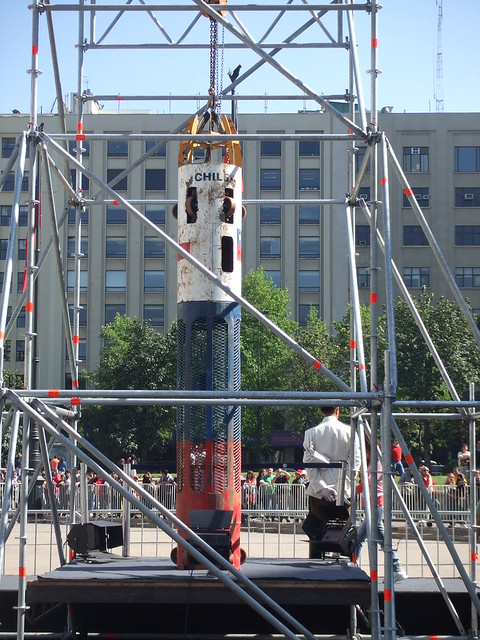
      The miners' rescue capsule
      Then in August, Chile hit the headlines of the world, with the news of 33 miners, trapped at a depth of 700 meters when the mine they were working in collapsed, were found alive and well after 17 days. They of course went on to spend a total of 69 days underground before being dramatically rescued on October 13th. The eyes of the world were on Chile and the miners and their families received the fairytale ending they could probably never have imagined.

      But the emotional rollercoaster didn't end there. Tragedy struck again in December when a fire in an overcrowded prison killed 81 inmates. While a second Telethon raised over 18 billion pesos, uniting the country once again in a drive to help disabled children.

      Any one of these events would have been enough for a country. So what will 2011 have in store for Chile? After a year of jubilation, despair, tragedies and fairytale endings, perhaps the citizens of this country are hoping for something a little less out-of-the-ordinary.

      Saturday, 25 December 2010

      The strangest Christmas

      Christmas has taken me somewhat by surprise this year. The first time I realised it was coming was earlier this month when, while battling through Santiago's busy shopping district in sweltering heat, I noticed pictures of snowflakes in shop windows. "Snowflakes?", I thought, "but it's not ski season any more." And then it hit me - this was Christmas in the southern hemisphere. Temperatures may peak at 33 degrees on Christmas Day but the image of a winter wonderland pervades.

      Thanks to Ruth for the little reminder of
      Christmases past - a poinsettia
      And yet it doesn't feel like Christmas. Dutifully, Santa sits in shopping malls, robed in a thick red coat, boots and fake white beard, surrounded by Christmas trees, brightly wrapped presents, reindeer, snow and helper elves, but it seems out of place somehow (and my goodness he must be hot). My language school hung some paper garlands and installed a massive Christmas tree in reception; lovely to look at, but strangely incongruous against the 'hot country' building design of white plaster walls, light wood, cacti and palms. Christmas lights adorn the city streets, but they don't accompany any Christmas shopping trips, because it doesn't get dark until 9.30pm.

      I guess that this must be normal for Chile, but for me, and for all of my northern hemisphere friends, it's just plain weird. There are two reasons as I see it. Firstly, Christmas isn't as prominent. Yes, there are adverts everywhere, decorations, lights, special food in the supermarkets and Christmas songs in the shops, but this doesn't start until at least the 1st of December. A very welcome and refreshing change to the flood of Christmas merchandising that appears before the school holidays are even over in the UK. Secondly, it's hot! It's summertime and the kids are enjoying their long holiday from school. So why do Christmas cards here feature snow-filled scenes, when that is never, ever going to be reality? Why not have Santa on the beach?

      And this, I think, is the strangest thing for me to get my head around. Yesterday, I sweated over a pan of hot mulled wine while wearing shorts. For me, and I think for anyone who is accustomed to celebrating Christmas in the northern half of the world, the brain cannot compute that we should be putting up tinsel and roasting a turkey, when all we want to do is grab an ice-cream and a long cool drink in the shade. Merry Christmas from the other side of the world!

      Wednesday, 22 December 2010

      Bringing culture to the masses

      One of the things I'm really starting to love about Santiago is the amount of free cultural events that are on offer. There always seems to be something going on, from ballet, to opera, to classical concerts, as well as outdoor art exhibitions and craft fairs. I guess the lack of rain here makes it easy to rock-up to the nearest public space and put on a show...

      What is interesting, is that these events are packed. And not just with the usual crowd you would expect at an opera or a ballet. All of Santiago is there: families with small children, cool looking guys whose usual domain is reggaeton, girls on their way to a night out and pairs of blokes who on a Saturday night you'd expect to be in the pub. It seems there is a real hunger to experience culture here and it's fantastic that it's made accessible.

      'The Nutcracker' with images projected onto La Moneda

      This weekend it was the turn of festive favourite 'The Nutcracker' (or El Cascanueces). Performed by the amazing Santiago Ballet, accompanied by the equally brilliant Santiago Philharmonic Orchestra (the same team behind last month's production of 'Swan Lake'), it was another marvellous spectacle.

      The setting was Plaza de la Constitucion, the central square in front of La Moneda, the presidential palace. With wondrous effect, this magnificent piece of architecture was used as a backdrop to the ballet - with dazzling images projected onto the white walls of the palace. Each sequence of light was greeted with a tantalized 'oooh' from the crowd.

      The final scenes of 'The Nutcracker'

      Meanwhile the dancing, of course, was superb. I was a long way from the stage, so the twirling figures were minute, but somehow they manage to draw you in, enthralling you with their delicate and intricate movements. The ballerinas displayed their prowess with numerous different styles, from a flamenco-inspired piece, to an almost rumba-esque section, to Russian dancers, a fight scene, puppets and robots. All culminating with the most familiar piece of "Nutcracker music", the lone ballerina pirouetting and leaving the crowd spellbound as if they had just discovered a music box for the first time. A real Christmas treat.

      Saturday, 4 December 2010

      27 hours of love

      As I write, Chile is slap-bang in the middle of its Teletón - a major national fundraising event that seeks to unite the entire country in order to raise money for children and young people with disabilities.

      It's a bit like Children in Need or Comic Relief, only I would say on a much grander scale. The TV marathon starts at 10pm on Friday night and goes right through until the small hours of Sunday morning. There are acts throughout the period - music, dance, comedy, even strippers (apparently) at one point - as well as a celebrity football match and of course, lots of heart-breaking stories of struggle, rehabilitation and hope.

      But it's more than that, it feels like the entire country gets involved in the Teletón. As an adult, I think, it's often quite easy for the British telethons to pass you by. You can simply not tune in to BBC1 on that evening, and if your workplace isn't one that does a lot for charity, and you don't have children to remind you that their school is organising something, you could be forgiven for not realising there was any kind of fundraising effort taking place at all.

      Here, things are different. For the last month or so, there has been a huge advertising campaign - billboard-size posters in the Metro, Teletón packaging on all the well-known brands and TV commercials across all networks to remind you that the 3rd and 4th of December is Teletón. Then in the last week or so, hand-painted adverts have started appearing on the rear windows of people's cars, on buses even. The people here are moved to get involved. There is no way you escape the call for Chile, un solo corazón (Chile, one heart).

      Last night I watched the opening ceremony; I set a new record (even for me) of starting to blub my eyes out around 10 seconds in. I really shouldn't watch these kind of programmes. Of course, this has been a momentous year for Chile, with the massive earthquake in February, a change in government and the rescue of the San Jose miners, all taking place in its Bicentenary - 200 years since the process of independence from Spain began.

      But what was really amazing to me, was I couldn't have not watched the Teletón - it was on every single TV channel in the country. Friday night in Santiago was eerily quiet. I usually get very little sleep at the weekend because Chileans love a good party to end the week - with loud music, singing and dancing regularly going on until 3 or 4am. Yet last night - not a peep; with the exception of an occasional chorus of cheers and shouts. And I knew exactly what was prompting those cheers and shouts, because I was watching too. Truly, a nation united in solidarity - Chile, one heart.