2010 - a year of huge ups and downs for Chile. For me - a year of life-changing experiences.
It's not often in life you are given the opportunity to do something completely new. To actually realise a dream you may have had, or half had, for years, never really thinking it was achievable. But for me, 2010 presented just that; an opportunity to live abroad, to visit south America, to immerse myself entirely in a new culture and language.
For my newly adopted country, 2010 was, to put it mildly, an interesting year. Many of us in the northern hemisphere probably learned more about Chile in the media last year than ever before, as for both good and bad reasons, it made headlines. Certainly, nothing ordinary happened.
 |
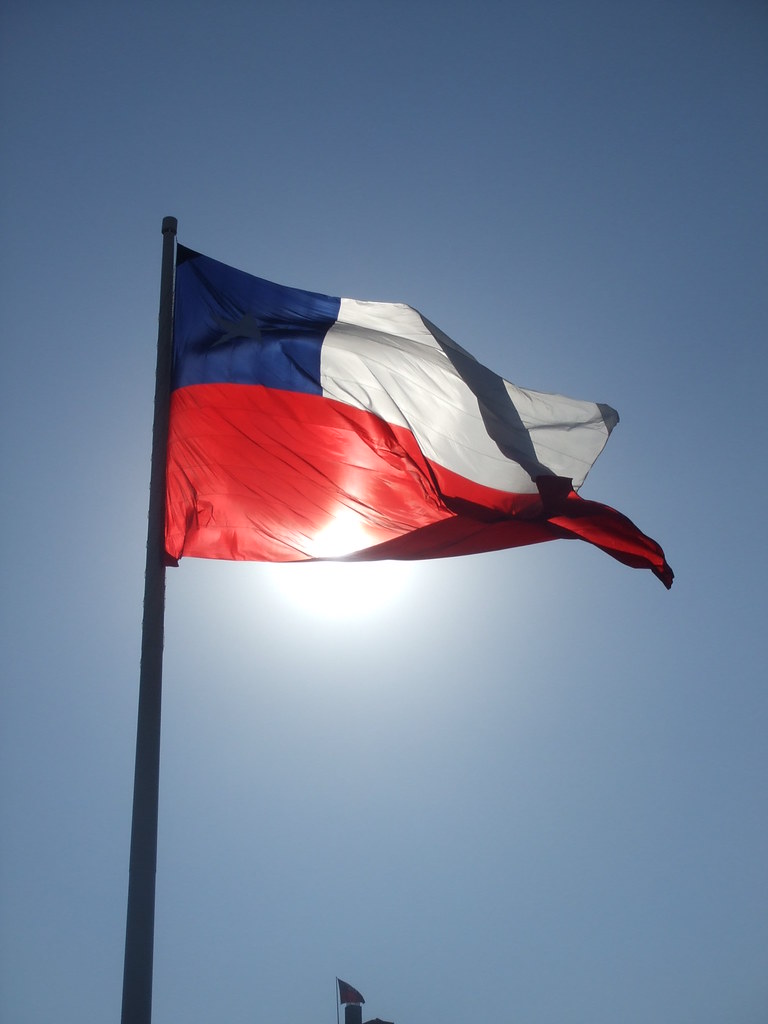
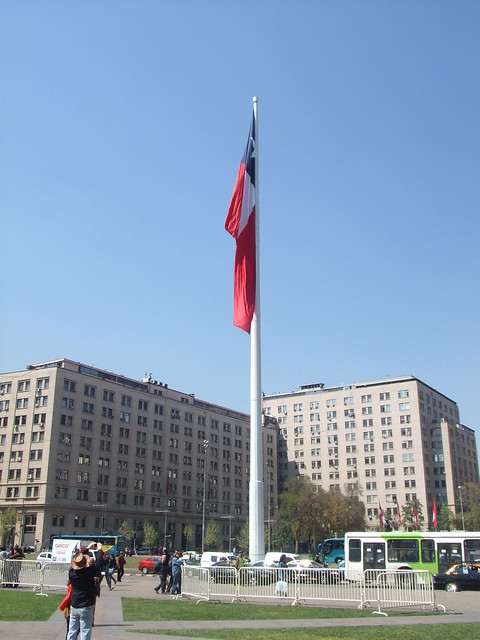
| The great Chilean flag |
To start with, 2010 was Chile's bicentenary. 200 years ago, on the 18th September 1810, a group of Chilean-born citizens began the process of independence from Spain. To mark the occasion, an extensive
programme of events was planned: an enormous national flag was proudly unfurled in the centre of Santiago; a new museum of memory and human rights opened to remember victims of the military dictatorship; over 17 million trees were planted, one native species for every Chilean; several national monuments and public spaces were overhauled and revitalized, including Santiago Cathedral; construction started on a national network of bicycle paths - 690 miles worth; and various cultural and artistic events took place, including the special performance of The Nutcracker in the grounds of La Moneda.
It was due to be a year of great excitement, hope and celebration. Then out of nowhere, on February 27th, at 3:34 local time, a massive earthquake struck the country. Measuring 8.8 on the Richter Scale, the quake affected large swathes of the country and triggered a devastating tsunami that destroyed extensive areas of the coast. The infrastructure, including the main route connecting the capital with the south of the country, was badly damaged. Hundreds of thousands of people were made homeless, food was scarce, the drinking water supply contaminated and a complete blackout lasted for several days. A state of national catastrophe was declared.
However, despite the severity of the quake (bigger than the Haiti quake earlier in the year), Chile quickly set-about the task of re-building. And the nation showed its strength and solidarity in a special Telethon, named
Chile helps Chile, which raised double its target to kick-start the country's recovery. In total, over 50 billion Chilean pesos was collected (that's over 68.5 million pounds).
Two weeks after the earthquake, a new president assumed office. Sebastián Piñera, a media mogul and one of the country's richest people, is Chile's first democratically elected right-wing president since 1958. This was a major political shift, which saw him replace the hugely popular Michelle Bachelet, who left office with an approval rating of around 80% (the Chilean Constitution prevents presidents from serving consecutive terms).
In June, there was some light relief and great excitement as Chile took part in the World Cup for the first time since 1998. The national team,
'La Roja', played some impressive football, eventually losing to Brazil in the second round.
 |
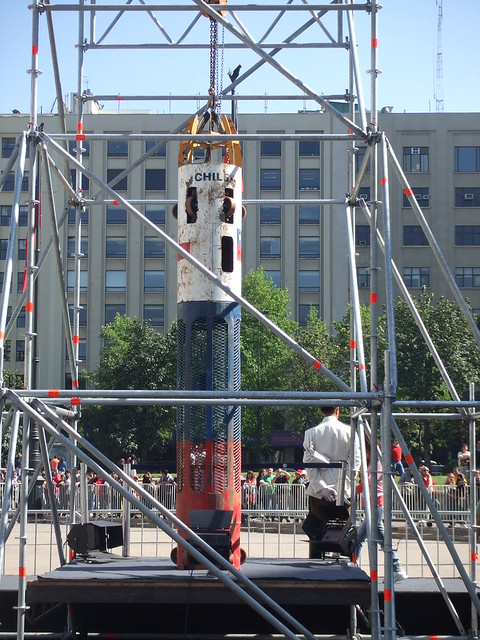
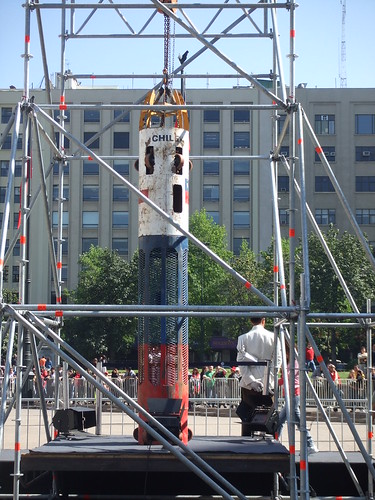
| The miners' rescue capsule |
Then in August, Chile hit the headlines of the world, with the news of 33 miners, trapped at a depth of 700 meters when the mine they were working in collapsed, were found alive and well after 17 days. They of course went on to spend a total of 69 days underground before being dramatically rescued on October 13th. The eyes of the world were on Chile and the miners and their families received the fairytale ending they could probably never have imagined.
But the emotional rollercoaster didn't end there. Tragedy struck again in December when a fire in an overcrowded prison killed 81 inmates. While a second Telethon raised over 18 billion pesos, uniting the country once again in a drive to help disabled children.
Any one of these events would have been enough for a country. So what will 2011 have in store for Chile? After a year of jubilation, despair, tragedies and fairytale endings, perhaps the citizens of this country are hoping for something a little less out-of-the-ordinary.