Showing posts with label Culture. Show all posts

Tuesday, 23 August 2011

Foreign - Familiar - Farewell

As the sliding doors of the Santiago Metro opened at La Moneda, I stepped onto the platform and was struck with recognition. Directly in front of me was Volcan Licancabur as seen from San Pedro de Atacama. To the left, the vineyards of Valle de Elqui. Across the tracks, Volcan Osorno and Lago Llanquihue and an aerial view of the Andes, such as is witnessed on a flight to Buenos Aires.

These enormous paintings have accompanied me on an almost daily basis. I have passed them without thinking since I first set eyes on their unfamiliar landscapes. Filled with trepidation, I marvelled at their beauty as they loomed over me - unknown worlds in a foreign country.

But suddenly, they have become familiar. I feel a rush of memory as I recall the terrain and I feel a little more a part of the world around me.

This is my farewell to Chile; the discovery that a world so alien - that left me without language, without culture, without identity - can become normal. It's been a struggle, I did not have the easiest of starts, and there are things I still find hard to deal with. But my Chilean adventure has taught me that from nothing, new ways of communicating can be learnt, new careers can be forged and wonderful new friends can be made.

And above all, outside of the smoggy metropolis of Santiago, Chile is one astonishingly beautiful country. Of the spectacular landscapes that have provided the backdrop to my daily commute, we are so incredibly lucky to have set eyes on their wonders.

Sunday, 21 August 2011

Final observations

Or blog posts that didn't quite make it to fruition

With just 48 hours left of our time in Chile, it's a sure-fire fact that there are a million and one things that I still want to write about. Here's a selection of snippets of observations that have been floating around my brain but as yet haven't made it on to paper.

Traffic

Traffic in Santiago drives Carlos and I completely round the bend (excuse the pun). Beeping the horn is as obligatory as gear changes and takes the place of a dawn chorus in the early morning rush hour. While traffic lights here signify the following actions:

  • Green light - zoom through as fast as you can, beeping the horn at anyone who happens to slow down or stop for any reason, be that for congestion, red traffic lights up ahead, a stray pedestrian or because they've crashed into a fence (yep, we watched this happen).

  • Amber light - speed up even more to make sure you get through before the lights 'change' (no preparing to stop here).

  • Red light - only takes effect after the first 5 or 6 cars have gone though the red light. Likewise, traffic starts moving again from around 30 seconds before the lights change to green (or the driver's patience is at an end, whichever is the shortest).

      "Mani, mani, cuchufli"*

      Chileans are an industrious and resourceful nation. Whenever there is an occasion to sell something, you can guarantee there's a vendor right there. Roaming sellers are ubiquitous; whether on the street, at the Metro entrance or in the micro, you can pick up everything from Super Ochos, to tights, to plasters, to sewing thread.

      Of course there is a serious side to this, as this on-the-hoof selling is how many, many Chileans make a living. But the funniest thing (at least to us) is the appropriateness of the goods. If it's a hot day - it's ice-creams, a chance of rain - umbrellas, new year - yellow underwear, football match - vuvuzelas and silly hats. And the best I've seen so far is a kid selling lemons in the middle of a demonstration, to help participants counteract the effects of tear gas!

      You will also never go hungry in Chile as "catering" (pronounced as cat not Kate) is rife. Concerts, beaches and parks all ring with the sound of "mani, mani, cuchufli". It's become a running joke between us now, that even in the most isolated spots like the Tatio geysers, there will probably be someone with a cardboard box full of goodies.

      *Mani = peanuts; Cuchufli = a tube of pastry filled with manjar and covered in chocolate; Manjar = sweetened condensed milk boiled to a caramel-like consistency; Super Ocho = a chocolate covered wafer bar


      Car alarms

      Car alarms are musical here in Chile. My first jetlagged experience was trying to sleep while a flypast went low overhead as part of the Fiestas Patrias celebrations continually setting off a cacophony of alarms. Eventually, it reached the point that Carlos and I could sing along. Something like:

      Ner - nir - ner - nir, nuuuurgh - nuuuurgh, woo woo woo woo woo woo woo woo wooo, ne ne ne ne ne ne ne ne, mwik miwk miwk miwk.

      You get the picture.


      Isabel Allende

      Going all serious for the moment, I never had the opportunity to follow up on my New Heroes post and write about Isabel Allende. I read her excellent book The House of the Spirits, which is basically the history of Chile in fictional form, which deals with everything from post-colonial feudalism to state torture under the dictatorship. I like her for her presentation of strong women in her novels, within a society that is very male dominated.


      On being a giant

      This is the mirror that every other woman checks their
      hair and make-up in on the way to the Metro
      Right back at the beginning of my stay here in Chile I observed how freakishly tall I am in this country and how it leads to a lot of eyes turning in my direction. Sadly for me, this hasn't got any better. I still have to endure the entire Metro carriage looking at me with curiosity as I stand there trying not to get too flustered. I still get in the way in department stores and bash into things (nothing new there then) and I still find myself able to see over the top of toilet doors. And I still terrify the occasional child.

      While I may have learnt the hard way the value of ducking my head, I'm looking forward to only being slighter taller than average and not a startling object of wonder.


      Yo Hablo Chileno

      It's hugely well documented that coming to Chile will supposedly ruin your Spanish. Or that if you can understand Spanish here, you can do it anywhere. Now, I'm not one to judge, but I will agree that there is a great deal of slang and that the pace and pronunciation make navigating conversations a challenge at times. But despite my consciousness that I would eventually be speaking Spanish with Spaniards, I hadn't realised quite how 'Chileno' was my vocabulary until Carlos and I sat today making a list of all the words that I know that are not used in Spain. Oh, and when we tried to buy slices of ham in the supermarket last weekend and it was me that the assistant could understand and not Carlos! Here's to the very strange combination of a Brit speaking Chileno with family from northern Spain on my next visit to Zaragoza...

      Places I didn't get to write about

      Valparaíso

      Oh Valparaíso, I believe you to be an enchanting city by the sea and I was so excited to discover you. But we caught each other on a bad day: fog and rain, wandering around one of your run-down sides, everything shut because it was a public holiday and then the incident with the vicious dog. I'm sorry, perhaps another time I will fall under your spell.


      Isla Negra

      Home of Chile's most famous poet, Pablo Neruda, and you can see where he drew his inspiration. Perched on a cliff-top with the most fantastic view of the Pacific, Isla Negra is a dream house for anyone with an artistic soul. What a site to make your home and your final resting place.


      Pukará de Quitor

      700 year old ruins of a fort built by the Atacameñan people a couple of kilometres bike ride from San Pedro de Atacama. An historic defensive spot with a magnificent view.


      La Serena

      Lying at the mouth of the Elqui valley, architecturally beautiful La Serena boasts several churches, beaches, tranquil Japanese gardens and an archaeological museum with none other than a Moai statue, direct from Easter Island. La Sereñan president, Gabriel González Videla made sure his home received the best during his time in office.


      La Moneda

      Chile's presidential palace where the work of government is conducted and right in our barrio (neighbourhood). Tours take place daily and give you an interesting look at some of the working rooms of the building and its chequered history.


      Museo Arte de la Luz

      An innovative open air museum in the Bellavista/Recoleta neighbourhoods that projects paintings of Chile onto the (usually not very fast flowing) waters of the River Mapoche. It's an interesting idea, and the images are eye-catching, but the lack of water for the majority of the year means you don't really get to experience its full impact.


      Precolumbine Museum


      Housed in a former mansion close to Santiago's Plaza de Armas, this museum includes various South American artefacts dating from the eras before the arrival of Columbus to the continent. Mainly pottery and stone for functional, decorative and ceremonial uses, along with an extremely interesting textile room.


      Sculpture Park


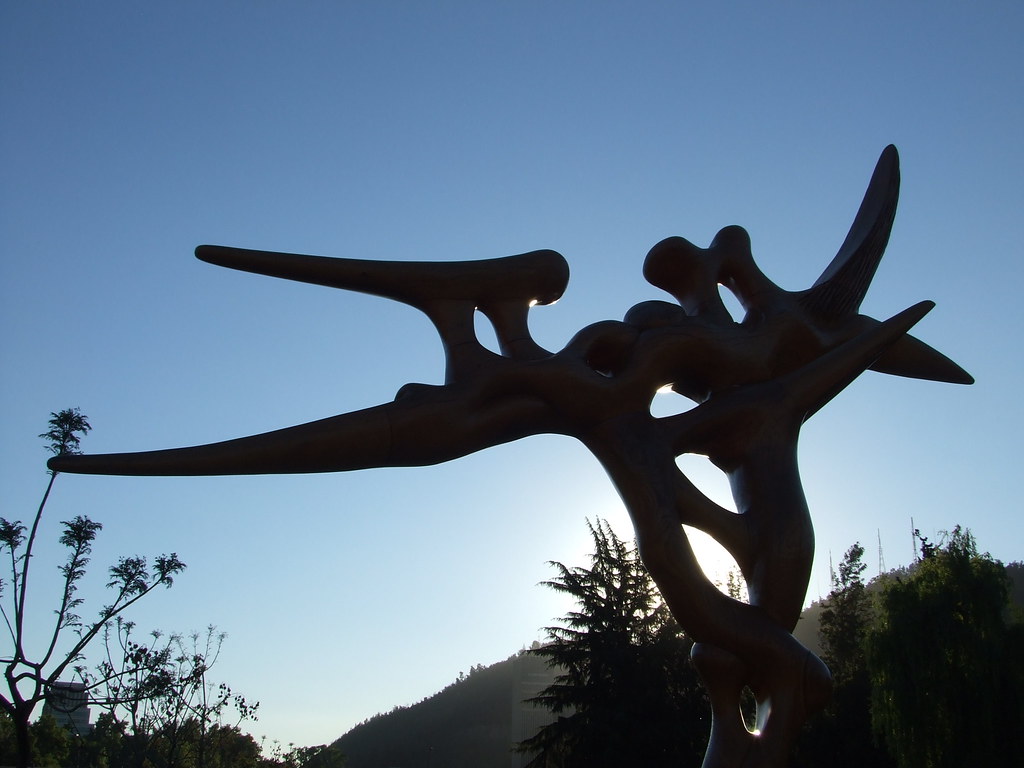
      A fun Sunday afternoon meander along the Mapoche river in the Pedro de Valdivia area of Santiago, with sculptures of wood, metal and other materials by a range of local artists.

      Saturday, 20 August 2011

      Return to the '80s

      Here's something I hadn't expected to find in Chile (picture below):

      A slightly famous wedding dress
      The fashion conscious or royalists amongst you will know that this is Princess Diana's wedding dress. Not the actual gown, but one of the versions that went into designing the final ensemble, worn by the late princess for her wedding to Prince Charles in 1981.

      But what on earth is it doing in Chile?

      Well, a couple of weeks ago I made my second visit to the fantastic Museo de la Moda (fashion museum) in Vitacura, Santiago. I first went on my birthday, way, way back in October when I knew nothing about Chile, was feeling extremely alienated and homesick and really needed to do something to cheer myself up. This time I found myself strolling up without getting lost, chewing on a Super 8 (it's a Chilean chocolate biscuit bar) and buying my ticket in Spanish with ease. No guided tour in English for me this time! How things change...

      Back to the Future
      I was visiting the second instalment of the museum's Return to the '80s exhibition (Volver a los '80s II) which has its centre piece the car/time machine from the film Back to the Future along with protagonist Marty McFly's jacket. Pretty cool, but of course I was there for the fashion.

      A new room has been added with an exhibition about Body Map, London-based designers that were highly influential in the fashion world of the era, dressing the likes of Boy George.

      The other rooms followed the same format as before - street fashion, celebrities, designer and couture. It was in the celebrity room that I stumbled across Princess Diana's dress, along with a pink full-length shoulder-padded gown belonging to Joan Collins and items from Madonna and Duran Duran.

      Chanel in the 'disco' room
      The designer section continued to dazzle, with cases from Jean-Paul Gautier (more conical bras), John Galliano, Armani, Issey Miyake, Thierry Muglar and Vivienne Westwood. Then downstairs in the 'disco' room (with very loud music and so dark I could hardly read the notes) was what I've labelled 'couture', beautiful, beautiful, beautiful tailoring from the likes of Chanel and Yves Saint Lauren, as well as a Chilean designer, Ruben Campos.

      What I found most interesting this time, was my greater appreciation of the context of the exhibition. I watched for the second time a video that explains the making of the exhibition and which includes various famous Chileans from the decade talking about their experiences of the fashion and culture of the '80s and Chilean society at the time.

      For a start, I recognised a lot more of the faces and many of the cultural references were no longer alien to me. But I also felt like I understood what they were saying a little more, and not just in terms of the language.

      Chile has an odd affair with the '80s. The entire decade was lived through the dictatorship, with curfews and repression and very little exposure to outside influences. And yet today there exists a massive nostalgia for the music and fashion. Whether it's because people feel they missed out, or because the world being lived by New York and London was such a polarity to what was permitted in Chile at the time, I don't know and I'm in no place to speculate. But it was insightful to realise that mutually, Chile and I have got under each other's skin.

      Thursday, 11 August 2011

      San Pedro de Atacama

      The desert oasis of San Pedro de Atacama is located some 24 hours by road from Chile's capital Santiago. Feeling this was a little too long a bus journey for us, we flew to the nearby city of Calama. The flight takes just under two hours, with several connecting transfers via taxi or minibus into San Pedro. All very slick and professional, the transfer takes between one hour and an hour and a half depending on where your hostel is located on the route. We were last to be dropped off, as we were staying at the Sumaj Jallpa - a cute, clean and cosy hostel on the outskirts of the village, but just a 10 minute walk from the centre.

      San Pedro itself is tiny and can be walked around in about half an hour. It's a real tourist trap, full of backpackers of all nationalities (although a lot of Brazilians, French and Spanish at this time of year) and its dusty streets are littered with tour operators, souvenir shops and cafes. Despite this, it didn't feel annoyingly touristy like Pucón; it has a nice relaxed feel about it with everyone (including the stray dogs) reposing in the sun and getting along.

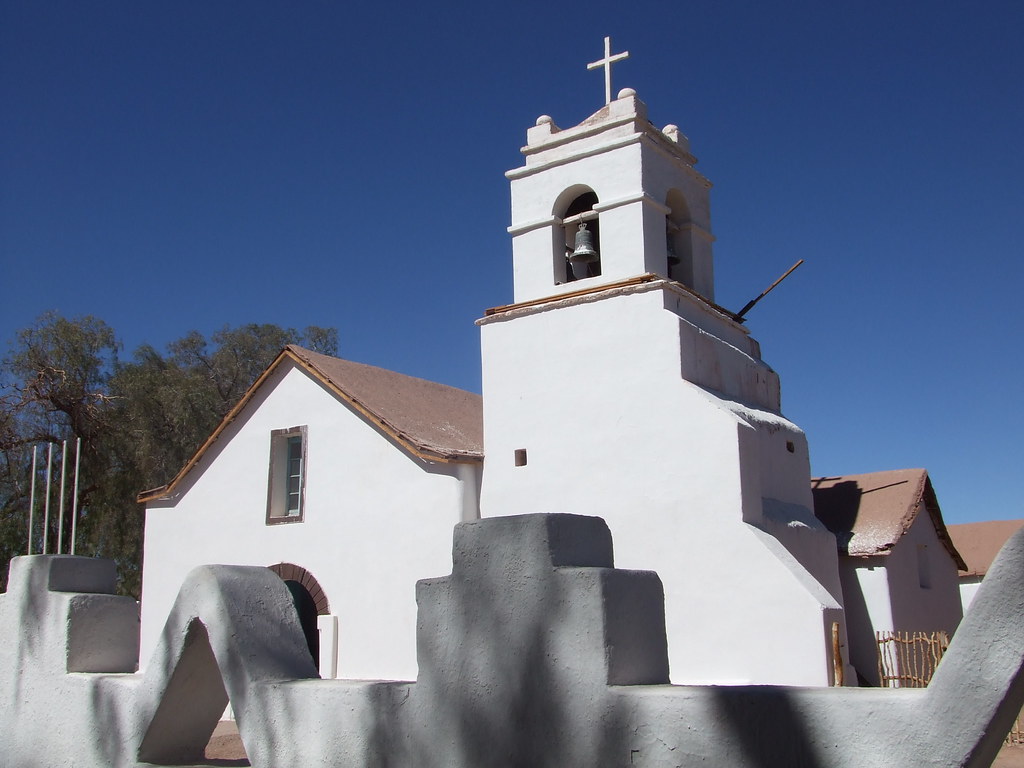
      The church of San Pedro

      Main sightseeing points include the church, a sparkling white national monument with beautifully adorned statues inside. Also fascinating is the archaeological museum Gustavo Le Paige ($2000 CLP / $1500 CLP for students) which covers the history of the first settlers in the region, through the arrival of the Incan empire and later the Spanish conquistadors, although occasionally in a little too much detail. The museum houses lots of interesting artefacts, including early stone tools, pottery and even textiles, all of which were kept preserved by the desert sands.

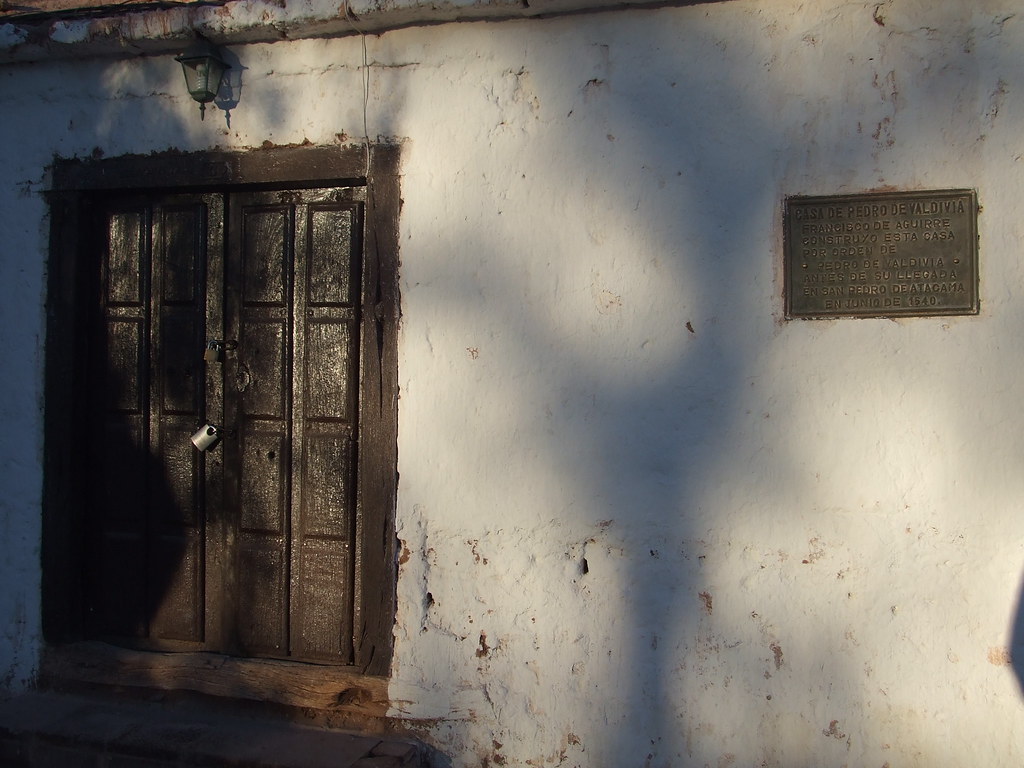
      Spending a morning mooching around San Pedro's plentiful souvenir shops was fun, although you'll find that most stock the same items and that (we suspect) the majority are made in China and are not the wares of local artisans. That said, we found a really interesting jewellery shop that had some unique and reasonable priced pieces, such as a copper bangle I picked up for $10000 CLP. Our favourite souvenir shop (which we visited three or four times in our indecisiveness over gifts) turned out to be located within the oldest building in San Pedro, dating from the arrival of conquistador Pedro de Valdivia in the early 16th century. Both shops are on Taconao.

      San Pedro's oldest building (now a souvenir shop)

      Following the advice of the Rough Guide to Chile, we hunted around the edges of the village for cheaper eats, which was definitely the right thing to do. We frequented a restaurant on Tocopilla with Licanbur, near to the bus terminal, which offered three course meals with lots of choice for just $3500 CLP (that's about a fiver).

      Chorillana
      Ticking another dish off our 'to eat' list, we shared a chorillana in a bar at the eastern end of Caracoles. Dubbed a 'heart attack on a plate', chorillana consists of chips topped with sausage, beef, chicken, onions and a fried egg. Man it was goood...

      Breakfasts were a little overpriced for what you got, but there are various places that offer tea/coffee/chocolate with toast and a glass of juice for an average of $2000 CLP, going up to nearer $3500 if you want eggs, ham or cheese too.

      Finally, the best thing of all about San Pedro is that it's surrounded by this view, with unbeatable rosy sunsets on the backdrop of Volcán Licancabur every day.

      The view during the walk back to our hostel

      Wednesday, 10 August 2011

      Just when I thought Chile couldn't get any more amazing

      ...it went and did just that

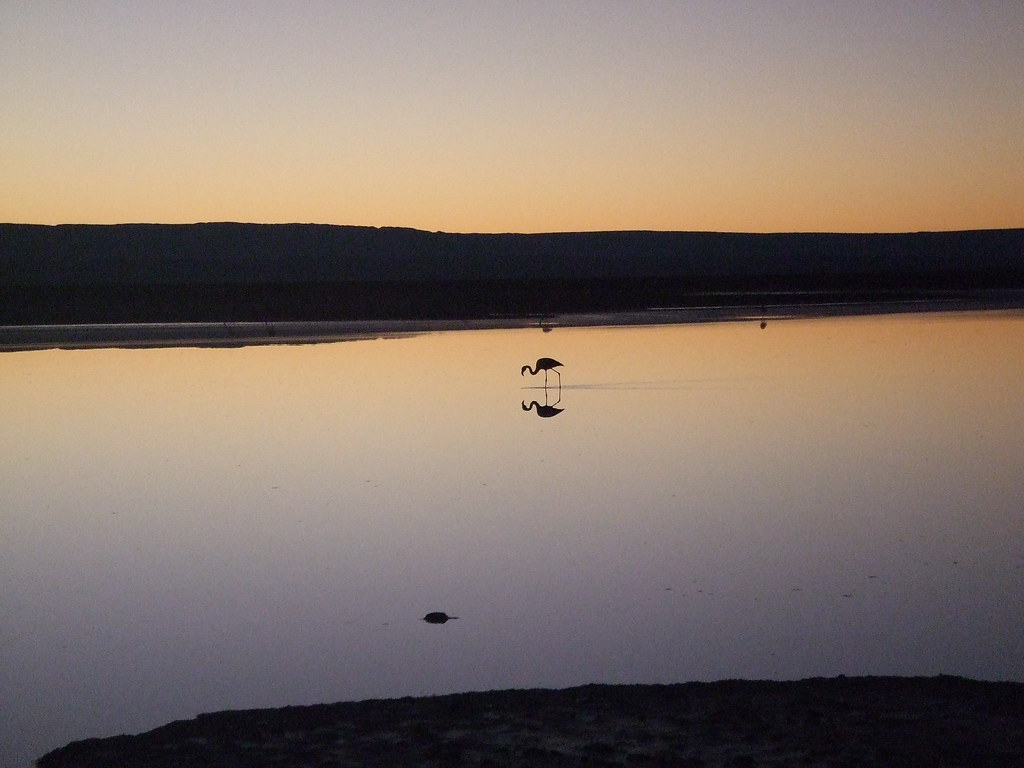
      Of course I expected amazing things from the Atacama desert. The place has geysers, volcanoes, ancient ruins, salt flats and flamingos. But I wasn't prepared for how breathtakingly beautiful this extremely arid and almost barren part of the world actually is.

      I'll be blogging about the different places we visited, but for now, here's a sneak photo preview:

      Flamingos at sunset in the Salar de Atacama
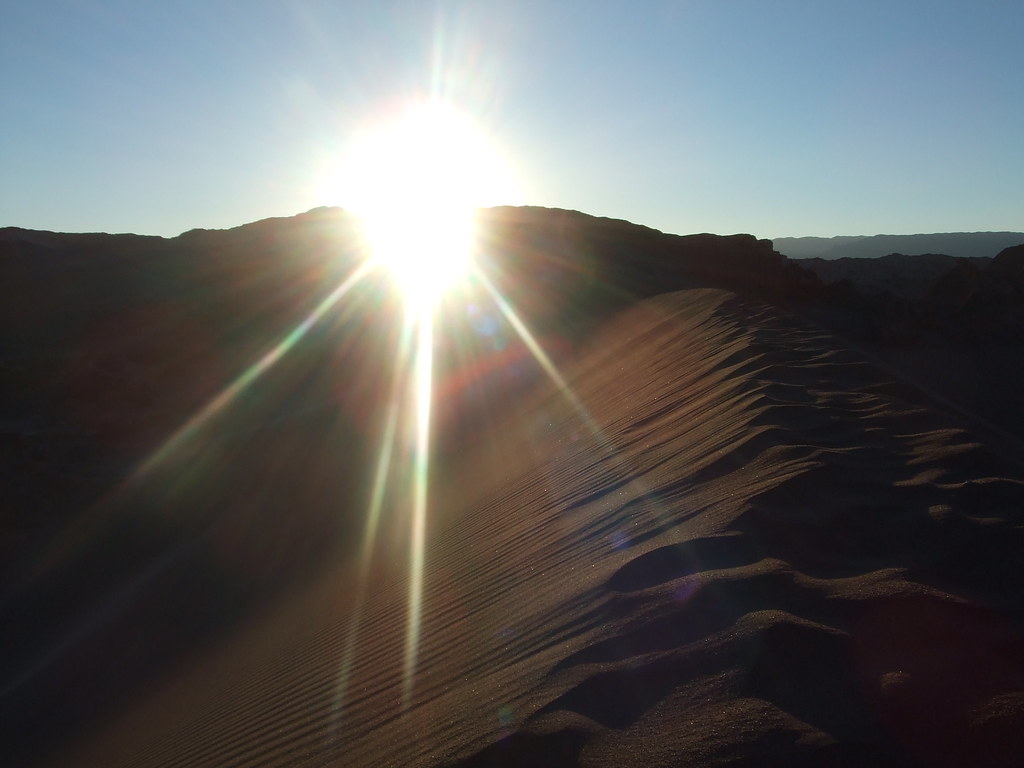
      Sunset in Valle de la Luna
      Geysers de Tatio
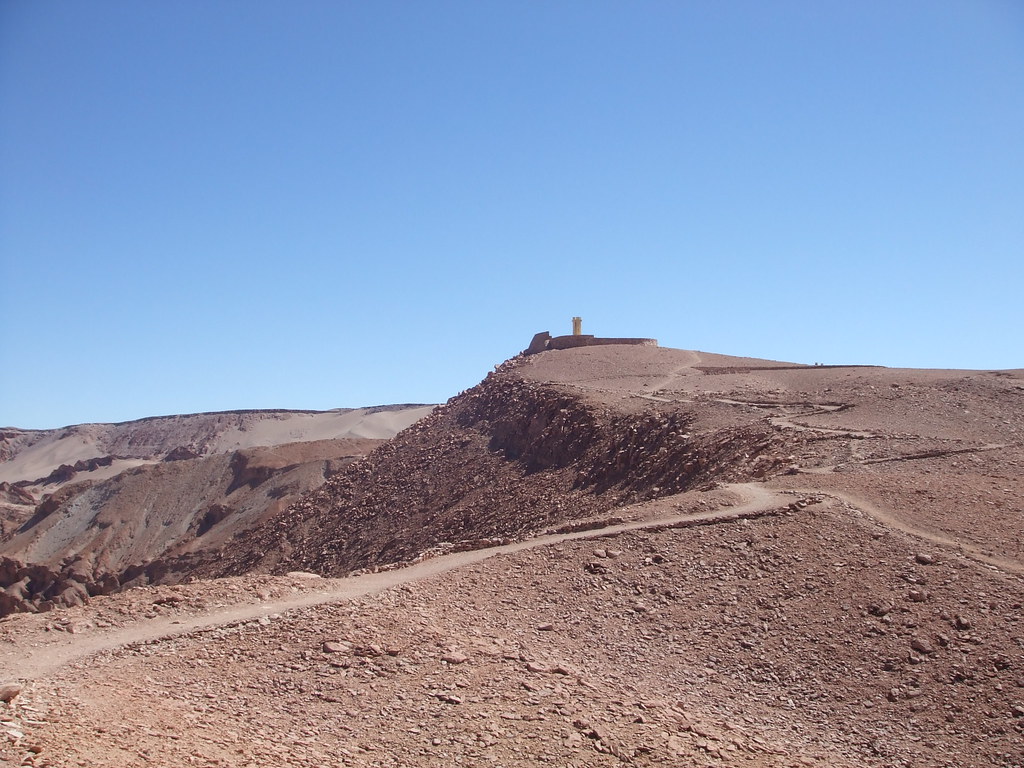
      Quitor ruins
      San Pedro de Atacama

      Tuesday, 2 August 2011

      Evita

      As one of the reasons my interest in Buenos Aires was piqued all those years ago was Evita the musical, we decided to pay a visit to the Evita museum. I realised as I entered, that my knowledge of one of Argentina's most famous figures was based almost entirely on the musical - a portrait which, during the two hours I spent in the museum, I came to understand was neither that accurate nor did it do her justice.

      The museum is located in a spectacular building on Lafinur, just on the edge of the upmarket Recoleta district. Originally a hotel dating from the turn of the 20th century, the building was taken over by the María Eva Duarte de Perón Social Aid Foundation in 1948 as a temporary home for women and children. The entrance hall boasts parquet flooring, a grand sweeping staircase and huge chandeliers. I felt like a princess when I descended the stairs to leave the building.

      The exhibition is organised into moments of Eva Perón's life; which in a way was our over-riding criticism, as it was difficult to get a full idea of the pattern of events without a chronology. But for me, a minor point.

      Starting with an introduction to the myths surrounding Evita - the rather predictable saintly mother figure versus power-hungry strumpet - the first stop was her death: a wall-sized projection of the scenes from her wake and funeral, with the abundant throwing of flowers and outpouring of public grief somewhat reminiscent of Princess Diana.

      Next, we started to unlock her past: a look at her childhood brought up out of wedlock, her move to the city with her mother and subsequent minor success as an actress, before an earthquake relief event crossed her path with Perón's.

      Upstairs focused on her relationship and marriage to the future president as well as her political career. The room of her good will tour immediately caught my attention. Here's why:


      Throughout the museum were numerous outfits, many accompanied by photographs of them in use. Exquisite 1940s tailoring and design and a very interesting spotlight on the era's fashion.

      The next rooms were what really took me by surprise: Eva Perón's political career. I had (wrongly) assumed that she was simply famous for being the wife of an important man - albeit she from very low birth who rose to one of the most powerful positions in the country. What I didn't know was how active she had been in social issues in her country. Her charitable foundation built schools, housing for workers, holiday camps for poor children and health clinics. It ran temporary shelters for women and children, orphanages, homes for senior citizens, nursing schools and a plan for agrarian reform. Need I go on? Well yes, she was a leading voice in the campaign for suffrage, helping to secure the vote for women in Argentina.

      To me this was a perfect testimony; that aside from the myths, the speculations around her death and the slurs on her character, she was a woman who achieved, and who used her new found position and power to help other women, and those most in need in her society. Stripping everything else away, for this, Eva Perón deserves to be recognised and applauded.


      "I seize this opportunity to tell all Peronist fellow workers ("compañeros") that in the women's party we are organizing there are no divisions, we are trying to collaborate [...] I want you to see in General Perón's wife not an old-style feminist, but a modern, constructive one aware of men's importance and women's potential. We are not struggling for group domination. We are struggling to leave a greater, fairer and merrier Motherland than the one we encountered in the past." Eva Perón, 'The Reason for my Life' (Chap. 53)

      Sunday, 24 July 2011

      Tango

      Buenos Aires. City of my dreams. You did not disappoint me.

      I don't remember when it was exactly, but at some point during my childhood/adolescence I got the idea into my head that I wanted to experience tango in Buenos Aires. Somewhere between seeing the musical Evita and watching the original 'Come Dancing' I imagine it happened. A little seed lodged deep in my brain that as I grew-up I guess I never really thought would grow to fruition.

      But this is a time in my life where childhood dreams come true and I finally had the opportunity to visit the Argentine capital. And oh what a magnificent city you are.

      Tango 'graffiti'
      Tango is simply everywhere in Buenos Aires. It oozes out of window panes, is splashed across walls and sparkles in shop windows adorned with shoes. The city is tango. A red and black sultry haze that burns into life as night descends.

      We spent an evening at one of the many tango show and dinner places that litter the city. Taconeando was our bar of choice, located in San Telmo, one of the oldest and most historic barrios or neighbourhoods of Buenos Aires. We entered a small, dimly lit room, furnished with plush antique rose fabrics and tables for dining surrounding a low central stage.

      Dining came first. An entrada (starter) of very tasty pate, followed by, of course, a massive steak and chips. Dessert of a choc-ice filled with chocolate, caramel and vanilla ice cream had just been served as the lights went down and the show began.

      Tango at Taconeando
      The show covered the history of the tango, beginning with two men dancing in a rutting stag-like stand-off, followed by moves through romantic, fun and flirty and seriously sexy moods. The dancing was interspersed with singers performing tango classics (including audience participation) and backed by a brilliant quartet of piano, violin, double-bass and bandoneon - the accordion-like instrument that gives tango its signature sound.

      It was an electrifying hour and a half of tango, where we were so close to the action that at times we had to duck to avoid being kicked in the head! A marvellous display of a beautiful dance that was simply a joy to behold.

      More tango

      But our tango experience did not stop there. Oh no! The next day, I was rather overexcited to discover that the world tango museum, which was on my list of things to do, was actually located within the national tango academy of Argentina! You can imagine my squealing.

      We entered the 150 year old building, with its art nouveau style architecture, and found the museum on the first floor. It tells the chronological history of the tango, with various artefacts - from manuscripts, to records, to dancing shoes - to illustrate the different periods in the dance's life. It also demonstrated that tango is very much alive today, with the academy itself offering lessons at 30 Argentine pesos a go (that's about 4 quid) to anyone who wants them. Something for my next visit I think.

      The bandoleon
      After the museum, we headed on to another of the oldest tango buildings in Buenos Aires - Confiteria Ideal. Dating from 1912, the cafe / ballroom boasts more luscious art nouveau architecture, and judging by its website, seems to have been used for the film version of Evita starring Madonna. We supped a cafecito in the historic surroundings, while the sound of the afternoon milonga drifted downstairs.

      More Taconeando tango
      And more Taconeando tango

      Sunday, 19 June 2011

      City of rivers

      Pinnacle of the holiday finally achieved, we moved onto Valdivia - the urban centre and capital of Los Rios region. Valdivia is famous for being the location of the world's biggest ever recorded earthquake - a huge 9.5 on the Richter scale in 1960. It's also famous for its German influences, beer, fish market, rivers and sea lions!

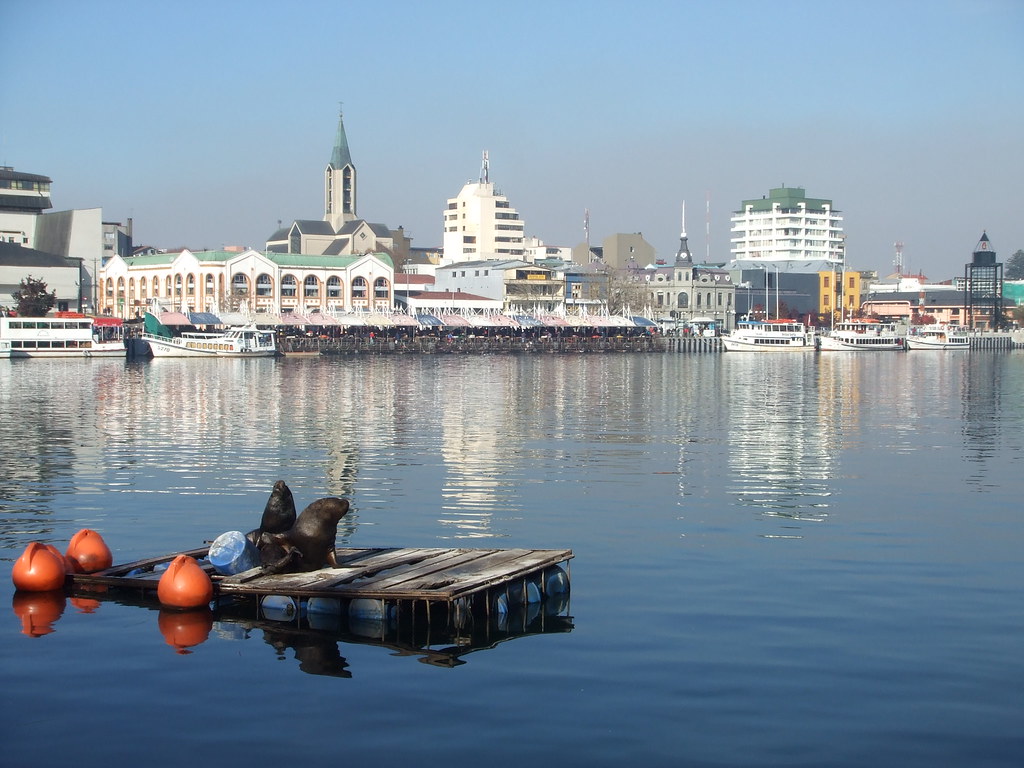
      The day began shrouded in dense fog as we ambled along the waterfront trying to avoid the grasp of the plethora of pleasure boat trip sellers keen to seize on a couple of tourists. In addition to the rather yummy looking fish market (a pity we couldn't cook that night), the waterfront also boasts a massive submarine and a pendulum clock that tells the time based on the curvature of the earth. And how could I forget? The waterfront is also home to loads of (rather smelly) sea lions, who lounge around all day except for when the market clears up at night...

      My picture postcard of Valdivia's waterfront (and sea lions)

      While we were waiting for the skies to clear, we decided to take in a few museums. The first was the Kunstmann brewery (cerveceria) - which we took a short micro trip to get to. Now, we were expecting something on the scale of the Guinness Storehouse in Dublin. Not to be I'm afraid; the brewery has a small museum and shop and a large restaurant. Still, it was interesting to learn about this family business, started by German immigrants who first arrived in the mid 1800s, which now competes on a global sale. The honey ale is particularly nice.

      Philippi (right) and friend.
      I love this photo, nothing says 'Victorian
      explorer' more.
      Back in the town centre, the sun had broken through so we enjoyed our sandwiches on the riverside - at a safe distance away from the hungry lobos marinos (sea lions). Afterwards, we crossed the river to the university side of town (Valdivia is an important student city) and visited two more museums. The first was an historical and anthropological museum that contained artefacts from the region's various colonisers, from the Mapuches to the Spanish to the Germans.

      The second was the Philippi museum of exploration. The observant amongst you will remember I mentioned Philippi in my post about Puerto Varas. Despite the sound of the name, Philippi was a German explorer who 'discovered' a large part of the regions of Los Rios and Los Lagos. A palaeontologist and zoologist, he worked extensively to categorise and document life in this exotic land, which at the time consisted mainly of dense forest.

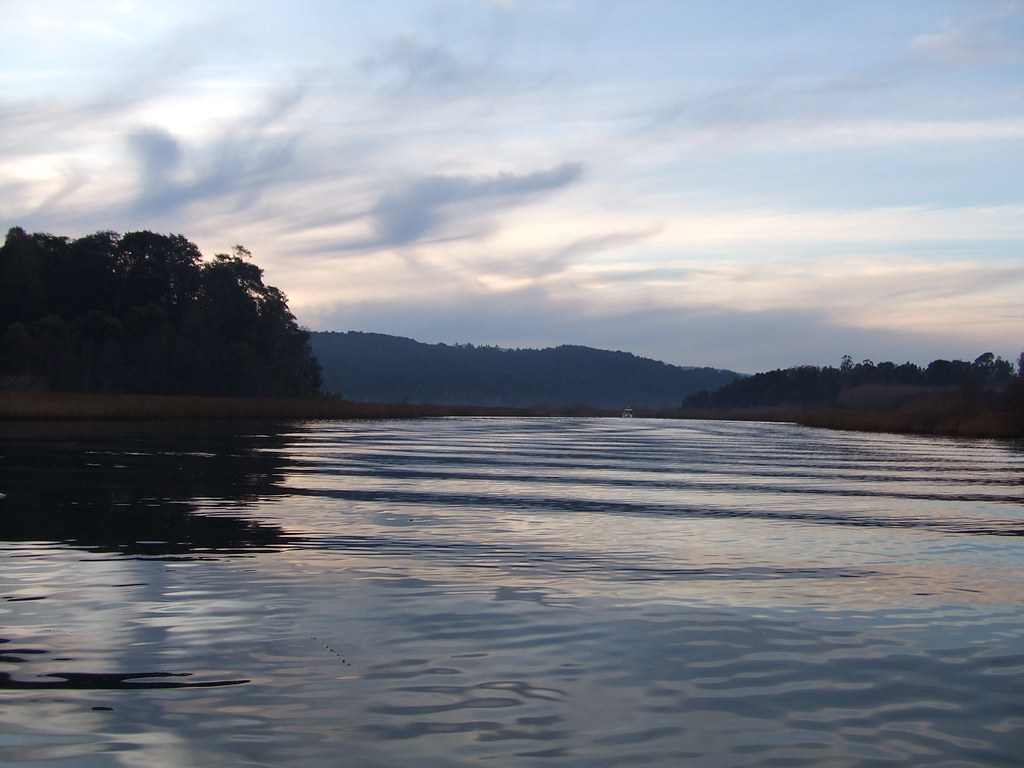
      Full of information, we decided to finish off the day with one of the riverboat tours we had an initially been avoiding. Thankfully, we made a good choice - a sturdy boat, a very informative guide and a decent long tour along the Valdivia, Cau Cau and Cruces rivers. Another sunset in another romantic place.

      Valdivia, city of rivers

      More Valdivia photos on Flickr:

      www.flickr.com

      jaynescarman's Valdivia photoset jaynescarman's Valdivia photoset

      Sunday, 15 May 2011

      Civil unrest

      Positive is usually the watchword of this blog, but I want to capture my Chilean Adventures in full, so I'm afraid this post is going to focus on one of its more ugly sides.

      Caveat out of the way, I can tell you that we have spent the last week in the centre of a whirlwind of civil disturbances. As I write, the click of the keyboard is accompanied by the din of saucepans being banged together outside. This is the latest in a string of protests against a hydroelectricity project in Patagonia that will see five mega dams built in one of the most unspoilt regions of the country, billed as essential fuel for a country poised to enter 'developed nation' status very soon.

      On Monday night, I exited the Metro station to the shock of having my nose burned with tear gas. Thursday, after a student protest, I walked home to find traffic lights snapped in two. And on Friday, in the biggest of the demonstrations so far, thousands of protesters marched chanting down our road, before a small minority tipped over a glass recycling bin to arm themselves ready to take aim at the police.

      The location of our building is the equivalent of being a few blocks away from the Houses of Parliament in London, so it is not surprising that we are seeing so much action. That said, the sheer number of both protesters and demonstrations is not something we are accustomed to in the UK. Estimates for Friday were 30,000 people and more civil action is planned over the coming days.

      Before anyone begins to worry, we are fine. By and large, the demonstrations are peaceful; some vandalism happens, but the scenes are little worse than Birmingham's Broad Street on a Saturday night. In fact, the protesters are infinitely better-mannered. Tear gas and water cannons are used, because the police are quick to disperse people at the merest hint of trouble. While staying inside may be the best option, it's interesting to witness a nation so vocal and active in expressing itself, quite a contrast to the 'keep calm and carry on' culture I've come from.

      In case you want to know more:

      Sunday, 8 May 2011

      New heroes

      One of the most surprising things about coming to a new country for me, has been discovering people I never knew existed. I don't mean making new friends or learning about historical figures; I mean stumbling upon seriously important and influential people who I hadn't heard the slightest hint of before setting foot in Chile.

      Being a self-confessed feminist, I am naturally impressed by strong, successful and aspirational women. Since arriving here, I have discovered two such women who quickly turned into new heroes for me, and both of whom I'm dismayed are not better known outside of these shores. They are Michelle Bachelet and Isabel Allende.

      I will return to Allende in my next post, as I recently finished reading her seminal novel 'The House of the Spirits. For now, I want to turn my attentions to Bachelet.

      Michelle Bachelet
      Photo by Ricardo Stuckert
      (Agencia Brasil 1) via Wikimedia
      Commons
      Michelle Bachelet is Chile's first ever female president, holding the post from March 2006 - March 2010 (see, I bet you didn't know that). She took office with an unprecedented absolute majority in both houses of congress and left with a seriously high 86% approval rating from the populace. Popular woman.

      Gender equality was high on her agenda and she appointed a never-seen-before 50/50 cabinet of men and women. Her policies included free daycare for poor children to help women back into work and economic independence and successfully securing free availability of the morning-after pill to all women over 14 (in a country where abortion is illegal...)

      Last year, after her presidential term finished, Bachelet was appointed Executive Director of a new international task force on gender equality - UN Women. The body is doing a crucially important job; to improve women's leadership and economic empowerment, to end violence against women, particularly in warfare, and in focusing countries around the world on prioritising gender equality.

      Before her presidency, Bachelet was Chile's first female defence minister. Upon entering politics (she had initially trained and worked as a paediatrician) she took herself off to study military strategy. In her personal life, she is a divorced mother of three and an agnostic (did I mention Chile is a very Catholic country?)

      But above and beyond all of these phenomenal achievements, for which I am filled with admiration, what makes here even more amazing in my eyes, is that she was imprisoned and tortured under the military dictatorship of General Pinochet. This is what makes her, for me, a shining example of what women can achieve.

      In writing this post, I am indebted to the following:
      1. Wikipedia, Michelle Bachelet (25/04/11)
      2. The Guardian, UN Women's head Michelle Bachelet: A new superhero? (22/04/11)
      3. The Guardian, Michelle Bachelet (08/03/11)
      4. The Guardian, The Bachelet factor: the cultural legacy of Chile's first female president (13/12/09)

      Sunday, 10 April 2011

      More food

      Lately, Carlos and I have been pursuing our Chilean adventure through the medium of traditional meals, warranting a second full post on Chilean cuisine. Enjoy.

      Pastel de choclo 
      Pastel de choclo
      Pastel de choclo (literally translated as 'corn cake') is the meal every Chilean remembers their mom or their grandma making. It's a bit like a meat pie, only the topping is made from ground corn rather than potatoes or pastry. Underneath are strips of tender beef and chicken in gravy, along with a boiled egg and an olive. The dish has a strange sensation of being both sweet and savoury; the corn is quite sweet anyway, but I'm told it also has sugar sprinkled on top. How Chileans eat this dish in the midday sun I don't know, but they do.

      Cazuela
      Cazuela de pavo (turkey) with the 'everything' salad and
      bread with pebre
      In a word stew. I ordered this dish in Pomaire yesterday (more on this in the next post) and it came out served in a massive bowl, leg of turkey sticking out the top with a dollop of squash and potato and a garnish of green beans (porotos verdes - a very popular vegetable here). You can have it with chicken or beef too. Suffice to say, when eating this at four in the afternoon for lunch, I nearly exploded. Tasty though.

      Humitas
      Humitas (with an ensalada chilena in the background)
      This was Carlos' Pomaire dish of choice. An humita consists of mashed corn wrapped in its leaves and tied into a parcel. We're not entirely sure what else goes into them - definitely onion and a herb, which Wikipedia tells me is basil, plus butter or lard. To me, they tasty quite meaty, so perhaps that was the lard. Impressively, two humitas foiled Carlos, possibly the first time of seen him unable to finish a meal.

      Agregados
      Or side dishes. So far we've had two traditional meals in traditional Chilean restaurants and the procedure seems to be as follows. Start with a bread roll topped with pebre - a hot salsa-type sauce made from tomatoes, onion, garlic, coriander and jalapeno peppers. I adore it (it's what I have on sopaipillas) and definitely need to have a go at making it myself. Then your main dish comes (which usually consists of meat and corn at the very least) accompanied by a salad - either a simple ensalda chilena of tomato and onion or an 'everything' salad, usually consisting of tomato and beetroot as a base, as well as cauliflower, carrot, cucumber or whatever else is to hand.

      Mote con huesillos
      Mote con huesillos
      Either a dessert or drink made from a sweet sticky peach syrup served with a whole peach inside it (the huesillos) and husks of wheat (the mote). Clearly not looking like we'd been fed enough, we were given some for pudding by the restaurant in Pomaire where we'd had the humitas and cazuela. We then had to knock it back before getting on the return bus to Santiago. Needless to say, I cant give you a proper review, except to say that it was very sweet, a little strange (odd sensation of syrup and cereal) but enjoyable. We'll be valiant and give them another try before we leave.

      Empanadas
      Empanadas (the things that look like
      brownish-yellow parcels)
      Empanadas are to Chile what fish and chips are to the UK. The national dish, in essence, is a Cornish pasty - pastry stuffed with a range of hot ingredients. The most common is pino; you guessed it, beef, gravy, a boiled egg and an olive. There's also a really nice one filled with cheese and (surprise, surprise) corn and one filled with cheese and olives. I've also heard of some great seafood varieties but have yet to try one. Empanadas are so common that I've realised I've neglected to take a photograph out of the numerous quantities I've sampled. Nevertheless, they popped up on this monument to Chile built for Columbus Day at Estadio Español in October.

      Sunday, 27 March 2011

      A very royal preoccupation

      Aside from the usual expat questions of "where are you from", "what brought you to Chile", "how long have you been here" etc., one of the most intriguing topics I am asked about as a Brit is the royal family.

      No, I don't have an invitation...
      I didn't notice it at first, but a couple of weeks ago it suddenly dawned on me that I get asked about the British monarchy a lot. And more than this, people want explanations!

      For instance, the most frequent question on the lips of the non-Brits I meet is what do you think about the royal wedding? Now this is easy; I'm not particularly a royalist, but I love a good wedding, and I think it's nice that two people who love each other are being allowed to break with convention and marry for happiness. I'll be there watching the whole thing online (hopefully) come April 29th.

      Inevitably, this leads on to the Diana / Charles / Camilla debate. Do you think Charles will become king or will the crown pass straight to William? Would Camilla be Queen? Do people like Charles and Camilla? Most astonishingly, do you think the Queen was behind Diana's death?

      Of course, I know that all of these questions, along with their respective opinions and conspiracy theories, have been banded around the (clearly international) press. But I have found myself having to explain tricky concepts such as the rules of ascension. Shuffling my feet in embarrassment, I confess to having only a limited knowledge of the workings of the monarchy. Except I'm British, so I should know!

      Truly a global preoccupation, I've been asked these questions by a whole range of nationalities - Chileans, Australians, Americans, Spaniards and more. Funny as it is, it's also a fascinating indication of how Britain is observed from afar.

      Sunday, 20 February 2011

      Music

      "We live on the wrong side of the Atlantic". That is the conclusion Carlos and I have reached, at least when it comes to music anyway.

      Marc Anthony
      Since arriving in Chile, we have already had the unique opportunity to see salsa legend Willie Colon - a true honour to be in the presence of one of the founding fathers of salsa music as we know it. Last night, we added modern day latin superstar Marc Anthony to the list. What a show that was; a true performer - theatrical and charismatic - completely at home with hordes of screaming girls, but also a consummate musician with an astonishingly powerful voice and superbly talented band.

      With bachata group Aventura on the cards too, we are enjoying rare opportunities to see artists who just don't cross the Atlantic, or at least, not as far as the UK. For anyone who is into salsa or latin music in general, we are being afforded treats that are hard to come by back home.

      As well as great live performances, something else we'll miss is the mainstream nature of salsa here - or more correctly reggaeton. Reggaeton is massively popular, dominating many radio stations, and is usually the music of choice whenever one of our neighbours wishes to share their record collection with the rest of the building. 4am parties aside, it's great to hear the type of music we can only get in specialist clubs in the UK, whenever we feel like it.


      Video from keka1209 via YouTube

      Sunday, 6 February 2011

      Food

      People often ask me what the food is like in Chile - what is different and what do I miss. Saving what I crave for another post, I will focus on some of the foods that I'm going to be very sorry to have to say goodbye to.

      Sopaipilla
      Sopaipillas

      A circle of deep-fried filo pastry made with courgette and served with pebre - a hot salsa of garlic, tomato, onion and herbs. A lady sells them on our street during the evening commute home and Carlos and I have become thoroughly addicted to them. They are so tasty!

      Alfajores

      Alfajores

      Chileans know how to do sugar and the alfajor is no exception. Two layers of very crumbly biscuit are stuck together with manjar and covered in chocolate or icing sugar. Manjar or dulce de leche is a thick, sticky mixture of evaporated milk and sugar. Ubiquitous in Chile, just imagine any pudding or cake, stick manjar in it, and you have a Chilean postre (dessert).

      Asado

      Choripanes
      I have written about the delights of the asado before but I had to give it a mention here. Asado translates as barbecue but it is essentially a meat feast, washed down with lashings of red wine. The staple food is a choripan - a hotdog made from a chorizo or longaniza spicy sausage within a marraqueta, a type of bread that handily breaks down into two or four hotdog-sized rolls. When we can't get out on the roof to the quincho (barbecue range) Carlos and I have taken to having oven-baked asados on a weekend instead.

      Sushi

      By far the most common form of fast food here (apart from the completo) is sushi. Amazing as it sounds, particularly as there is almost no Japanese community here in Chile, sushi restaurants can be found on practically every street in Santiago. I'd read a lot about the Chilean twist on sushi, which was that it is unusually laced with cream cheese and avocado (see below). I had my first sushi experience last night and found it all pretty yummy.

      Completo

      Completo
      Whisper this quietly, but I am not a big fan of the completo. However, I could not write a post about Chilean food without mentioning it. The completo is a frankfurter-style hotdog, slathered in tomatoes, avocado and mayonnaise. Tomato and avocado are a staple part of the diet here - no meal is complete without them. I've tried and failed with the completo (probably something to do with the fact that I'm not a fan of frankfurters, mayonnaise or fresh tomatoes!) and am admitting defeat on this one.

      Pisco sour
      Pisco sours

      Not a food as such, but I'm developing a weakness for Chile's national drink. Pisco is a super-strong liquor but the 'sour' (lemon or lime juice) makes it wonderfully refreshing. A foamy top is made from egg white and then completed with a dash of orange-coloured bitters (thanks Wikipedia for that information).

      With all that talk of my favourite Chilean foods I'm now salivating with hunger; if only the sopaipilla lady was there on a Sunday afternoon!

      Wednesday, 22 December 2010

      Bringing culture to the masses

      One of the things I'm really starting to love about Santiago is the amount of free cultural events that are on offer. There always seems to be something going on, from ballet, to opera, to classical concerts, as well as outdoor art exhibitions and craft fairs. I guess the lack of rain here makes it easy to rock-up to the nearest public space and put on a show...

      What is interesting, is that these events are packed. And not just with the usual crowd you would expect at an opera or a ballet. All of Santiago is there: families with small children, cool looking guys whose usual domain is reggaeton, girls on their way to a night out and pairs of blokes who on a Saturday night you'd expect to be in the pub. It seems there is a real hunger to experience culture here and it's fantastic that it's made accessible.

      'The Nutcracker' with images projected onto La Moneda

      This weekend it was the turn of festive favourite 'The Nutcracker' (or El Cascanueces). Performed by the amazing Santiago Ballet, accompanied by the equally brilliant Santiago Philharmonic Orchestra (the same team behind last month's production of 'Swan Lake'), it was another marvellous spectacle.

      The setting was Plaza de la Constitucion, the central square in front of La Moneda, the presidential palace. With wondrous effect, this magnificent piece of architecture was used as a backdrop to the ballet - with dazzling images projected onto the white walls of the palace. Each sequence of light was greeted with a tantalized 'oooh' from the crowd.

      The final scenes of 'The Nutcracker'

      Meanwhile the dancing, of course, was superb. I was a long way from the stage, so the twirling figures were minute, but somehow they manage to draw you in, enthralling you with their delicate and intricate movements. The ballerinas displayed their prowess with numerous different styles, from a flamenco-inspired piece, to an almost rumba-esque section, to Russian dancers, a fight scene, puppets and robots. All culminating with the most familiar piece of "Nutcracker music", the lone ballerina pirouetting and leaving the crowd spellbound as if they had just discovered a music box for the first time. A real Christmas treat.

      Friday, 26 November 2010

      More culture

      On Wednesday, thanks to my new-found membership of the Chilean press, I was invited to the dress rehearsal of the ballet Swan Lake at Santiago's Municipal Theatre.

      This performance was a modern take on the story, with the male roles taking the lead. Their dancing was powerful, particularly the evil Rothbart character who was portrayed as a kind of half-man, half-swan mutant, his costume and movements almost reptilian in nature. Then balancing this was the very traditional sequences of swans on the lake - where a chorus of female ballerinas transformed themselves into a graceful flock, gliding hauntingly and delicately in the moonlight.

      It was a superb production, which had the audience in raptures from beginning to end.

      Swan Lake
      Photo thanks to Carolina Sipos at I Love Chile


      The Municipal Theatre itself is an amazingly grandiose building. Built in 1860, it epitomises the height of Chilean society. Its opulent interior includes an enormous crystal chandelier hanging from the centre of a domed ceiling, adorned with Sistine Chapel style paintings.

      Saturday, 20 November 2010

      A spine-tingling evening

      Santiago's citizens were treated to evening of culture last night from the University of Chile. In celebration of the institution's 168th anniversary, the university symphony orchestra and choir staged a free performance of Carmina Burana - a classical piece of music that begins and ends with a piece possibly more familiar to many in the UK as the "X Factor music".

      It was a stirring performance, sublimely set against the backdrop of Santiago's Metropolitan Cathedral in Plaza de Armas. This central square is the city's heartbeat, where the original colony was founded and where today, Santiago in all its forms can be observed. As such, over 7000 people turned out to enjoy this aural spectacle, and were suitably delighted. It's just a pity there was no encore.


      Monday, 18 October 2010

      Wow wow wow!

      Willie Colón

      On Saturday night, Willie Colon returned to play in concert in Chile for the first time in 15 years. And wow did he not disappoint!

      One of the pioneers of salsa music in the 60s and 70s, this man can still absolutely enthral a heaving theatre. Salseros young, old and from all over the planet were there; singing at the top of the voices; dancing their hearts out and generally going crazy for this man.

      What an amazing experience. I am so lucky to have had the chance to see this consummate performer.


      Thanks to yokanti for the video