Showing posts with label Santiago. Show all posts

Tuesday, 23 August 2011

Foreign - Familiar - Farewell

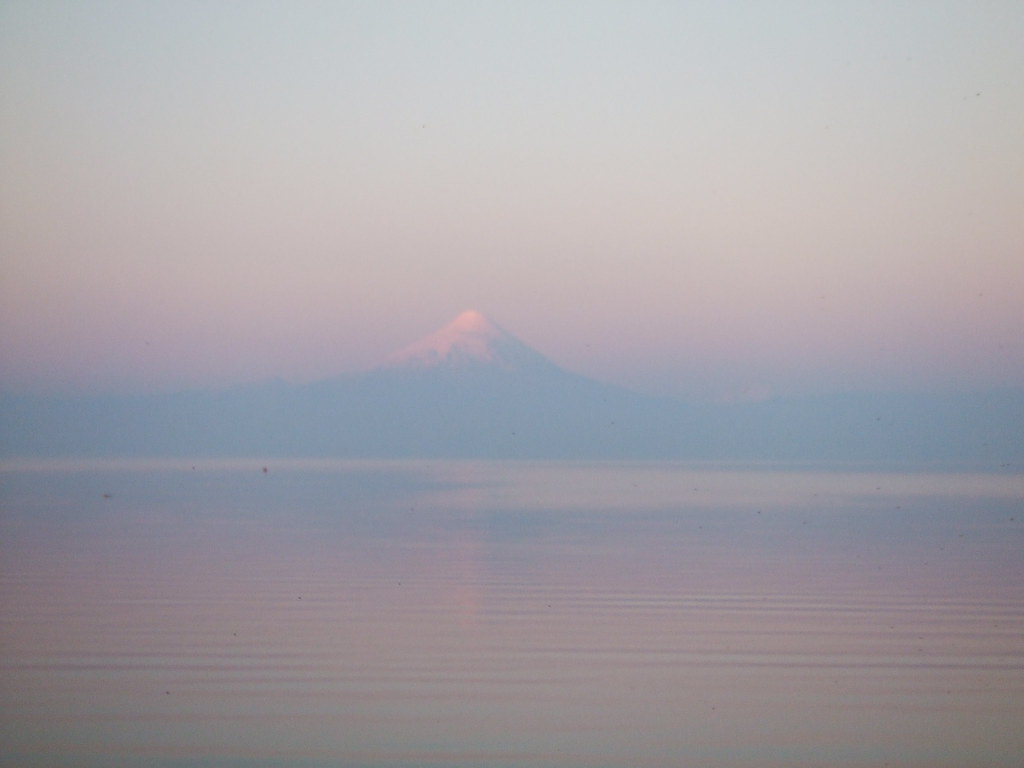
As the sliding doors of the Santiago Metro opened at La Moneda, I stepped onto the platform and was struck with recognition. Directly in front of me was Volcan Licancabur as seen from San Pedro de Atacama. To the left, the vineyards of Valle de Elqui. Across the tracks, Volcan Osorno and Lago Llanquihue and an aerial view of the Andes, such as is witnessed on a flight to Buenos Aires.

These enormous paintings have accompanied me on an almost daily basis. I have passed them without thinking since I first set eyes on their unfamiliar landscapes. Filled with trepidation, I marvelled at their beauty as they loomed over me - unknown worlds in a foreign country.

But suddenly, they have become familiar. I feel a rush of memory as I recall the terrain and I feel a little more a part of the world around me.

This is my farewell to Chile; the discovery that a world so alien - that left me without language, without culture, without identity - can become normal. It's been a struggle, I did not have the easiest of starts, and there are things I still find hard to deal with. But my Chilean adventure has taught me that from nothing, new ways of communicating can be learnt, new careers can be forged and wonderful new friends can be made.

And above all, outside of the smoggy metropolis of Santiago, Chile is one astonishingly beautiful country. Of the spectacular landscapes that have provided the backdrop to my daily commute, we are so incredibly lucky to have set eyes on their wonders.

Sunday, 21 August 2011

Final observations

Or blog posts that didn't quite make it to fruition

With just 48 hours left of our time in Chile, it's a sure-fire fact that there are a million and one things that I still want to write about. Here's a selection of snippets of observations that have been floating around my brain but as yet haven't made it on to paper.

Traffic

Traffic in Santiago drives Carlos and I completely round the bend (excuse the pun). Beeping the horn is as obligatory as gear changes and takes the place of a dawn chorus in the early morning rush hour. While traffic lights here signify the following actions:

  • Green light - zoom through as fast as you can, beeping the horn at anyone who happens to slow down or stop for any reason, be that for congestion, red traffic lights up ahead, a stray pedestrian or because they've crashed into a fence (yep, we watched this happen).

  • Amber light - speed up even more to make sure you get through before the lights 'change' (no preparing to stop here).

  • Red light - only takes effect after the first 5 or 6 cars have gone though the red light. Likewise, traffic starts moving again from around 30 seconds before the lights change to green (or the driver's patience is at an end, whichever is the shortest).

      "Mani, mani, cuchufli"*

      Chileans are an industrious and resourceful nation. Whenever there is an occasion to sell something, you can guarantee there's a vendor right there. Roaming sellers are ubiquitous; whether on the street, at the Metro entrance or in the micro, you can pick up everything from Super Ochos, to tights, to plasters, to sewing thread.

      Of course there is a serious side to this, as this on-the-hoof selling is how many, many Chileans make a living. But the funniest thing (at least to us) is the appropriateness of the goods. If it's a hot day - it's ice-creams, a chance of rain - umbrellas, new year - yellow underwear, football match - vuvuzelas and silly hats. And the best I've seen so far is a kid selling lemons in the middle of a demonstration, to help participants counteract the effects of tear gas!

      You will also never go hungry in Chile as "catering" (pronounced as cat not Kate) is rife. Concerts, beaches and parks all ring with the sound of "mani, mani, cuchufli". It's become a running joke between us now, that even in the most isolated spots like the Tatio geysers, there will probably be someone with a cardboard box full of goodies.

      *Mani = peanuts; Cuchufli = a tube of pastry filled with manjar and covered in chocolate; Manjar = sweetened condensed milk boiled to a caramel-like consistency; Super Ocho = a chocolate covered wafer bar


      Car alarms

      Car alarms are musical here in Chile. My first jetlagged experience was trying to sleep while a flypast went low overhead as part of the Fiestas Patrias celebrations continually setting off a cacophony of alarms. Eventually, it reached the point that Carlos and I could sing along. Something like:

      Ner - nir - ner - nir, nuuuurgh - nuuuurgh, woo woo woo woo woo woo woo woo wooo, ne ne ne ne ne ne ne ne, mwik miwk miwk miwk.

      You get the picture.


      Isabel Allende

      Going all serious for the moment, I never had the opportunity to follow up on my New Heroes post and write about Isabel Allende. I read her excellent book The House of the Spirits, which is basically the history of Chile in fictional form, which deals with everything from post-colonial feudalism to state torture under the dictatorship. I like her for her presentation of strong women in her novels, within a society that is very male dominated.


      On being a giant

      This is the mirror that every other woman checks their
      hair and make-up in on the way to the Metro
      Right back at the beginning of my stay here in Chile I observed how freakishly tall I am in this country and how it leads to a lot of eyes turning in my direction. Sadly for me, this hasn't got any better. I still have to endure the entire Metro carriage looking at me with curiosity as I stand there trying not to get too flustered. I still get in the way in department stores and bash into things (nothing new there then) and I still find myself able to see over the top of toilet doors. And I still terrify the occasional child.

      While I may have learnt the hard way the value of ducking my head, I'm looking forward to only being slighter taller than average and not a startling object of wonder.


      Yo Hablo Chileno

      It's hugely well documented that coming to Chile will supposedly ruin your Spanish. Or that if you can understand Spanish here, you can do it anywhere. Now, I'm not one to judge, but I will agree that there is a great deal of slang and that the pace and pronunciation make navigating conversations a challenge at times. But despite my consciousness that I would eventually be speaking Spanish with Spaniards, I hadn't realised quite how 'Chileno' was my vocabulary until Carlos and I sat today making a list of all the words that I know that are not used in Spain. Oh, and when we tried to buy slices of ham in the supermarket last weekend and it was me that the assistant could understand and not Carlos! Here's to the very strange combination of a Brit speaking Chileno with family from northern Spain on my next visit to Zaragoza...

      Places I didn't get to write about

      Valparaíso

      Oh Valparaíso, I believe you to be an enchanting city by the sea and I was so excited to discover you. But we caught each other on a bad day: fog and rain, wandering around one of your run-down sides, everything shut because it was a public holiday and then the incident with the vicious dog. I'm sorry, perhaps another time I will fall under your spell.


      Isla Negra

      Home of Chile's most famous poet, Pablo Neruda, and you can see where he drew his inspiration. Perched on a cliff-top with the most fantastic view of the Pacific, Isla Negra is a dream house for anyone with an artistic soul. What a site to make your home and your final resting place.


      Pukará de Quitor

      700 year old ruins of a fort built by the Atacameñan people a couple of kilometres bike ride from San Pedro de Atacama. An historic defensive spot with a magnificent view.


      La Serena

      Lying at the mouth of the Elqui valley, architecturally beautiful La Serena boasts several churches, beaches, tranquil Japanese gardens and an archaeological museum with none other than a Moai statue, direct from Easter Island. La Sereñan president, Gabriel González Videla made sure his home received the best during his time in office.


      La Moneda

      Chile's presidential palace where the work of government is conducted and right in our barrio (neighbourhood). Tours take place daily and give you an interesting look at some of the working rooms of the building and its chequered history.


      Museo Arte de la Luz

      An innovative open air museum in the Bellavista/Recoleta neighbourhoods that projects paintings of Chile onto the (usually not very fast flowing) waters of the River Mapoche. It's an interesting idea, and the images are eye-catching, but the lack of water for the majority of the year means you don't really get to experience its full impact.


      Precolumbine Museum


      Housed in a former mansion close to Santiago's Plaza de Armas, this museum includes various South American artefacts dating from the eras before the arrival of Columbus to the continent. Mainly pottery and stone for functional, decorative and ceremonial uses, along with an extremely interesting textile room.


      Sculpture Park


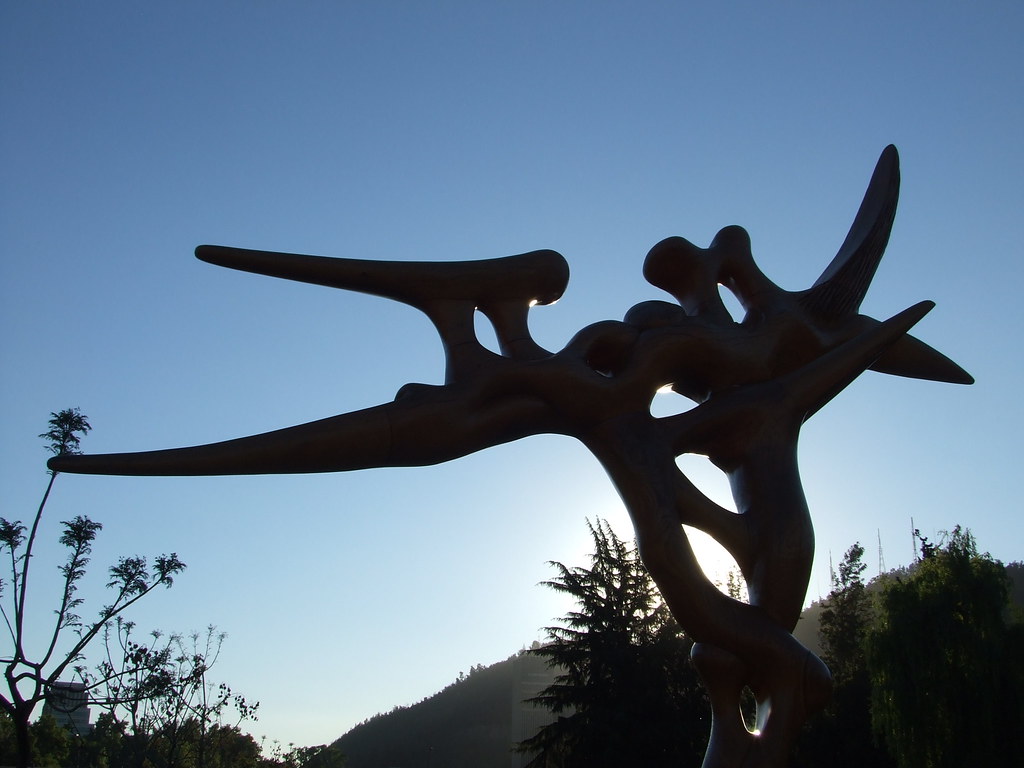
      A fun Sunday afternoon meander along the Mapoche river in the Pedro de Valdivia area of Santiago, with sculptures of wood, metal and other materials by a range of local artists.

      Hiking the cordillera

      With the Andes as such a magnificent backdrop to the everyday city of Santiago (below is the view from my office, just to rub it in), we have often wondered if it was possible to get out and enjoy a day amongst them, without the need for loads of mountaineering equipment or being particularly in shape.


      Delightfully, the answer is yes! There are 5 or 6 national parks dotted along the east of the city which are easily accessible, including via public transport.

      Meeting our criteria of:
      1. An easy to follow waymarked route without the need for a map;
      2. A fairly easy-going hike that wouldn't see us hanging onto craggy outcrops for dear life; and,
      3. Not requiring a succession of ever complicated bus routes (especially those scary-looking orange micros)
      was a park to the east of Ñuñoa, the details for which have now disappeared off the Park Association's website. But here's what we did:
      • From the Alameda, we took bus number 403 east - staying on it almost to the end after Vicuña Mackenna, Irarrázabal and Larraín
      • We alighted a few moments after the aerodrome and military hospital, when the bus makes a right turn
      • Back onto Larraín, we started walking towards the mountains - a slow incline that was a little tiring on the legs, for about 15 minutes until we reached the entrance to the park
      The entrance fee to the park was 600 Chilean pesos each and we had to leave our details with the security hut at the entrance. From there (alongside various adventurous looking outdoor activities) were a series of trails going up into the mountains.

      Our plotted route took us on paths labelled as senderismo and trekking; the first supposedly being just normal walking, while the second would have some pretty steep parts. Exhaustingly, we did nothing but go up and up and up (although I suppose we should have figured that out, it being a mountain range and all).

      The first part of the walk took us through a picnic area and then onto an access road which wound its way up the mountain. Then the second part, which was trekking, involved more climbing than we were expecting. It was a dry day so scrambling in between rocks wasn't too bad, but it meant we didn't get as far as we'd hoped.

      What we did get though was an awesome view of the Santiago smog in all its glory! Although I think I would have preferred to be in the thick of it and not know...

      Saturday, 20 August 2011

      Return to the '80s

      Here's something I hadn't expected to find in Chile (picture below):

      A slightly famous wedding dress
      The fashion conscious or royalists amongst you will know that this is Princess Diana's wedding dress. Not the actual gown, but one of the versions that went into designing the final ensemble, worn by the late princess for her wedding to Prince Charles in 1981.

      But what on earth is it doing in Chile?

      Well, a couple of weeks ago I made my second visit to the fantastic Museo de la Moda (fashion museum) in Vitacura, Santiago. I first went on my birthday, way, way back in October when I knew nothing about Chile, was feeling extremely alienated and homesick and really needed to do something to cheer myself up. This time I found myself strolling up without getting lost, chewing on a Super 8 (it's a Chilean chocolate biscuit bar) and buying my ticket in Spanish with ease. No guided tour in English for me this time! How things change...

      Back to the Future
      I was visiting the second instalment of the museum's Return to the '80s exhibition (Volver a los '80s II) which has its centre piece the car/time machine from the film Back to the Future along with protagonist Marty McFly's jacket. Pretty cool, but of course I was there for the fashion.

      A new room has been added with an exhibition about Body Map, London-based designers that were highly influential in the fashion world of the era, dressing the likes of Boy George.

      The other rooms followed the same format as before - street fashion, celebrities, designer and couture. It was in the celebrity room that I stumbled across Princess Diana's dress, along with a pink full-length shoulder-padded gown belonging to Joan Collins and items from Madonna and Duran Duran.

      Chanel in the 'disco' room
      The designer section continued to dazzle, with cases from Jean-Paul Gautier (more conical bras), John Galliano, Armani, Issey Miyake, Thierry Muglar and Vivienne Westwood. Then downstairs in the 'disco' room (with very loud music and so dark I could hardly read the notes) was what I've labelled 'couture', beautiful, beautiful, beautiful tailoring from the likes of Chanel and Yves Saint Lauren, as well as a Chilean designer, Ruben Campos.

      What I found most interesting this time, was my greater appreciation of the context of the exhibition. I watched for the second time a video that explains the making of the exhibition and which includes various famous Chileans from the decade talking about their experiences of the fashion and culture of the '80s and Chilean society at the time.

      For a start, I recognised a lot more of the faces and many of the cultural references were no longer alien to me. But I also felt like I understood what they were saying a little more, and not just in terms of the language.

      Chile has an odd affair with the '80s. The entire decade was lived through the dictatorship, with curfews and repression and very little exposure to outside influences. And yet today there exists a massive nostalgia for the music and fashion. Whether it's because people feel they missed out, or because the world being lived by New York and London was such a polarity to what was permitted in Chile at the time, I don't know and I'm in no place to speculate. But it was insightful to realise that mutually, Chile and I have got under each other's skin.

      Wednesday, 27 July 2011

      My 7 links

      A slight digression from my usual posting topics as I appear to have joined the world of the bloggersphere by being tagged in this '7 links' thing that's doing the rounds.

      Thanks to Rob W of the South America Blog (this is the chap who runs Woodward language school which brought me up to a passable level of Spanish, Chilenismos and all) I have to rifle through the archives of my blog for 7 posts that are the most beautiful, popular, controversial, helpful, surprisingly successful, lacking the attention they deserved and that I am most proud of.

      This actually turned out to be quite a fun task, as I got to rediscover stories I'd forgotten about and I enjoyed feeling incredibly proud of my blog and realising what an interesting historical record it is for me. So without further ado, onto the 7 links.

      My most beautiful post

      Difficult to define a beautiful blog post. Although on the whole I am pleased with how I write, I'm not sure any of the posts are exquisitely crafted literary masterpieces. So if we take beautiful to mean photography and subject matter, it doesn't get more perfect than A sprinkle of magic - the story of Frutillar and one volcano that made a last minute appearance to give us the most phenomenal setting for a pastel coloured sunset.

      My most popular post

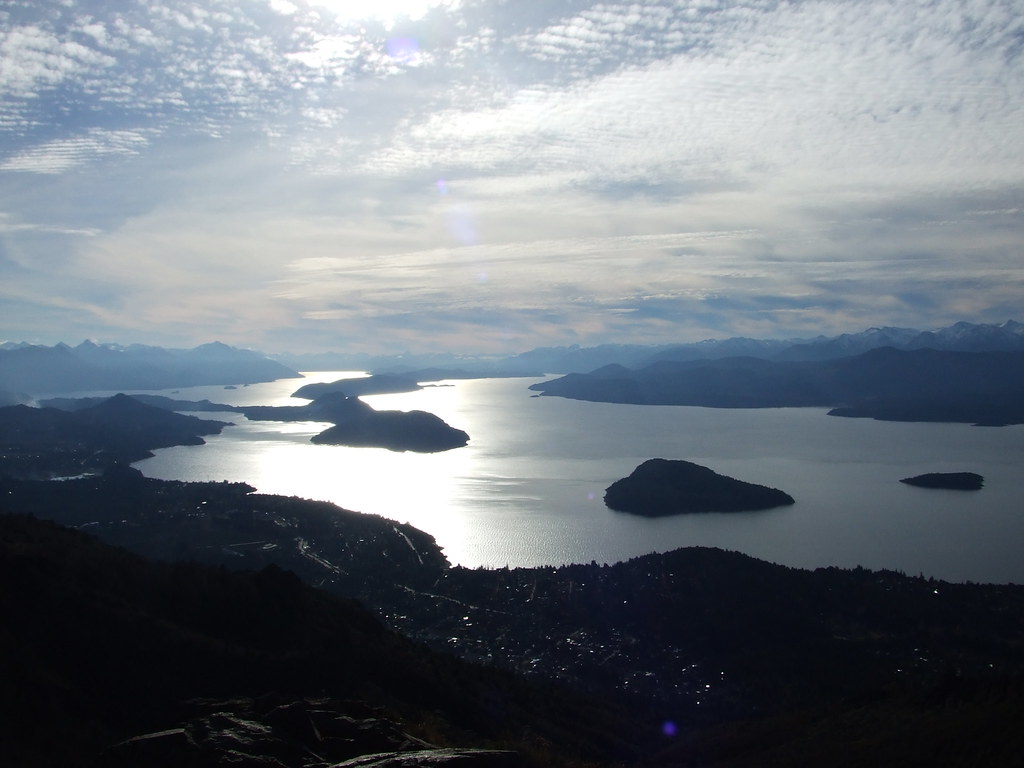
      Judging by stats alone, this award goes to The most beautiful place on earth about our visit to Bariloche in Argentina, before it got covered in ash from Volcan Puyehue. A worthy winner. That said, I never tire of this view has been hanging around at the top of my most visited list since I wrote it way back on 20th October, so I think it deserves a mention too.

      My most controversial post

      I don't really do controversy on this blog, but I guess that Civil unrest is the closest I've come to any kind of political statement, or for that matter, to writing anything negative about my experiences here. 

      My most helpful post
      My very first posts, First impressions and A day of small victories stand out for me simply because various friends I have met here have told me that they felt reassured reading about my rather wobbly experiences in Chile at the beginning. So I'm nominating these for helping people know that they weren't alone in feeling adrift in this strange new place.

      A post whose success surprised me


      New heroes was the first time I received feedback from Chileans about my blog, with many of them in agreement with my admiration for Michele Bachelet. This was a turning point for me, where I discovered that my blog was being read as much by my new friends here as by my old friends back home. The amount of attention my Food post got was also a genuine surprise - it seems eating is what my readers are really interested in!

      A post I feel didn't get the attention it deserved

      Looking through my archives I found it difficult to find a post that didn't get attention, but eventually I opted for Museum of Memory and Human Rights because I don't remember getting much direct feedback on it. Maybe the subject matter was too painful for some, or maybe the history is too distant for others. Either way, I thought this post would get more of a reaction than it did.

      The post that I'm most proud of

      Trying not to sound too cheesy, I can honestly say that I am incredibly proud of my entire blog. I only started writing it because I fancied having a go at blogging and a couple of people had suggested it might be an interesting thing to do. But as I said at the beginning, it's turned into fascinating record of my time here; I love reading it and I hope others do too. Selecting one post, therefore, is pretty hard, but I think I'm going to plump for Immigration. Partly because it made me and a lot of other people laugh, partly because I enjoyed writing it and working on getting the humour across, and partly because I'm really proud of what I achieved that morning!

      So now I have to pass on the tag to five other bloggers. So 7 links on their way to:
      1. Callie Mills - Ruffle Your Feathers
      2. Carolina Leseigneur - GoodCatt's Random Musings
      3. Pepe's Chile Adoration Page

        Next was going to be fellow Chile blogger Angie Clifford with Angie's life, but she's already been tagged so instead we change topic to...

      4. Ruth Lund - Cherry Coloured Twist
      5. Emma Fassio - Emma Fassio Knitting

      Sunday, 15 May 2011

      Civil unrest

      Positive is usually the watchword of this blog, but I want to capture my Chilean Adventures in full, so I'm afraid this post is going to focus on one of its more ugly sides.

      Caveat out of the way, I can tell you that we have spent the last week in the centre of a whirlwind of civil disturbances. As I write, the click of the keyboard is accompanied by the din of saucepans being banged together outside. This is the latest in a string of protests against a hydroelectricity project in Patagonia that will see five mega dams built in one of the most unspoilt regions of the country, billed as essential fuel for a country poised to enter 'developed nation' status very soon.

      On Monday night, I exited the Metro station to the shock of having my nose burned with tear gas. Thursday, after a student protest, I walked home to find traffic lights snapped in two. And on Friday, in the biggest of the demonstrations so far, thousands of protesters marched chanting down our road, before a small minority tipped over a glass recycling bin to arm themselves ready to take aim at the police.

      The location of our building is the equivalent of being a few blocks away from the Houses of Parliament in London, so it is not surprising that we are seeing so much action. That said, the sheer number of both protesters and demonstrations is not something we are accustomed to in the UK. Estimates for Friday were 30,000 people and more civil action is planned over the coming days.

      Before anyone begins to worry, we are fine. By and large, the demonstrations are peaceful; some vandalism happens, but the scenes are little worse than Birmingham's Broad Street on a Saturday night. In fact, the protesters are infinitely better-mannered. Tear gas and water cannons are used, because the police are quick to disperse people at the merest hint of trouble. While staying inside may be the best option, it's interesting to witness a nation so vocal and active in expressing itself, quite a contrast to the 'keep calm and carry on' culture I've come from.

      In case you want to know more:

      Sunday, 17 April 2011

      Autumn leaves

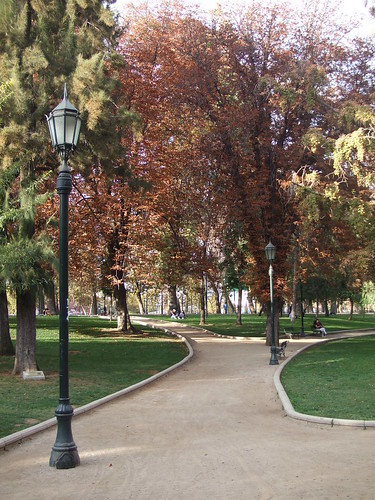
      Autumn leaves in Parque Forestal
      Upside-down seasons are bamboozling. I have to remind myself that we are in April, as the city gradually slips into autumn. This is my favourite time of year; fresh mornings, golden low evening sunlight and leaves turning to vivid orange and reds. What an extra joy it is, therefore, to have all of this plus still warm temperatures! It is happily reaching 20 degrees or more in the daytime, although of course, all the locals have their jumpers and scarves out. It's only the gringos that are still reaching for the shorts.

      Yesterday, we spent a lovely afternoon ambling through some of downtown Santiago's older neighbourhoods. We started out in Londres - the rambling cobbled streets flanked by Victorian-style town houses which I've written about before. Then we moved onto Lastarria - in essence, Moseley, for those of you who know Brum. Winding streets, cool architecture, funky shops, trees, classical street musicians, antique fairs and barely a Chilean accent in earshot. This is the haunt of the (largely British) expats - a slice of home amongst the hustle and dust of the South American city.

      While in the vicinity, we visited Plop! gallery - a small museum of illustration, comic books and graphic art. Basically just a shop with a small room for exhibition space, we saw work from, unusually, a female artist called Marcela Trujillo, who presented some very funny strips about a character in her late teens/early twenties and her very recognisable adventures.

      Churros
      Adjoining the neighbourhood of Lastarria, is Parque Forestal - a luscious slip of shady forest along the Mapocho river. It was planted at the end of the nineteenth century and at the weekend is host to scores of Chilean families. Aside from the hair-raising sight of a Chilean child on a brake-less tricycle haring towards you, it's a tranquil spot. We enjoyed some Spanish churros (fried dough sprinkled with icing sugar) from one of the many food vendors and a pleasant paseo around the park.

      Rosa's ice-cream
      Before we returned home, we stopped off at what is reputed to be the best ice-cream parlour in Santiago - Rosa's emporium. Testimony to this it was heaving, but we managed to get ourselves an ice-cream each, upside-down like the seasons. Sadly the earl grey flavour which I had been keen to try had run out, so I instead opted for chirimoya alegre. Chirimoya being a native fruit that tastes a bit like a banana but with a more juicy and citric tang. (Alegre meaning happy).

      And next time I will try to write about something that doesn't involve food!

      Tuesday, 5 April 2011

      Today's forecast: sunny skies

      Of course I love talking about the weather, I'm British. So I had to share this photo I took this morning. Look at the horizon of smog running across the centre of the picture! A dirty cloud obscuring the mountain and covering everything with black dust.

      A horizon of smog

      This is the first time I've actually been able to see the smog from down here in the thick of it. Usually, everything just looks a little hazy. Apart from the tell tale signs of sore eyes, itchy nose and black tissues. The first time I truly saw the smog was driving down the mountain from the city's most exclusive neighbourhood up in the Andes. I looked down upon a murky city of shiny high rises blanketed in a thick dusty brown cloud.

      Smog is a perennial problem here. Santiago is trapped in a basin between two mountain ranges. There is no wind in the valley and the prevailing weather systems die out before they have a chance to cross the high peaks. It hasn't rained since three freakish days in mid-January when we had spectacularly unseasonable cloud, drizzle and (small) thunder storms. Rain is such an event that everyone can remember when it last happened. Since I arrived, I can count three times.

      Apparently the first rains will fall in May. When they happen, I am told there will be a deluge. Perhaps then, we will be able to bask once more in the glory that is the Andes mountains. A cinematic backdrop that has been hidden for most of the summer.

      But for now, despite the pollution, I shall continue to enjoy waking up every morning, knowing that it will be sunny and that I don't need to carry my umbrella.

      Wednesday, 30 March 2011

      Beautiful barrio, dark secret

      I made a surprise discovery today of a delightfully quaint neighbourhood not more than a stone's throw from our apartment in downtown Santiago.

      Calle Londres (London Street) is a winding cobbled street flanked with picture-perfect Victorian-style mansions; exactly the type of building with patterned tiles, shutters and intricately curved iron-work that I would love to have a top floor flat in.

      Yet despite the visions of cream teas and ice cream that this particular street evoked, my reasons for visiting it were altogether more sinister.

      Londres 38 on first glance looks as charming as all the other houses. It was only when I spotted the names inscribed in black and white tiles amongst the cobbles outside that I realised I was in the right place.

      By now, I'm sure you've grasped where this post is going. Between September 1973 and September 1974, Londres 38 was used as a clandestine detention and torture centre by the military government led by General Augusto Pinochet. It was the first premises to be used in this way by the DINA, the Chilean secret police, to interrogate, torture and ultimately make disappear, 'militants' that actively opposed the military rule.

      The house is empty, its starkness and dilapidated condition giving it a haunting feeling. Designated as a 'memory space', survivors and relatives of those lost have recorded an oral history of the building, recreating its layout, its use and the experiences of those detained inside it.

      Based on these testimonies, my guide, Karen, gave me a knowledgeable tour of the building, with many of the spaces complementing her speech by, quite simply, speaking for themselves.

      Saturday, 5 March 2011

      Museum of Memory and Human Rights

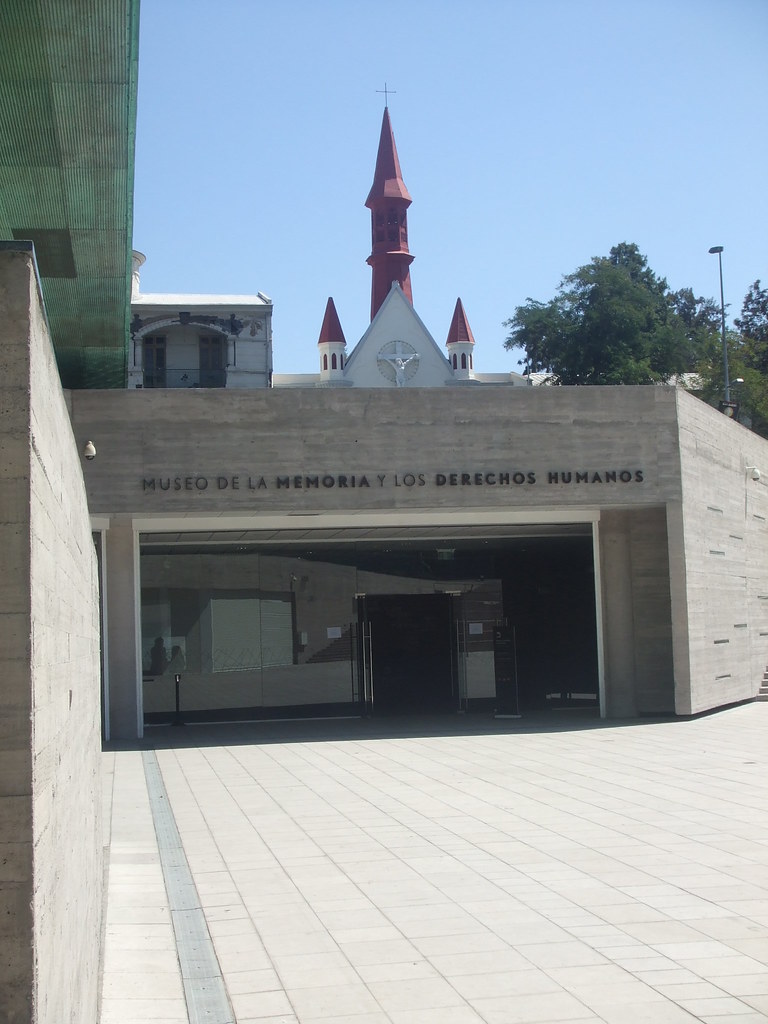
      Entrance to the Museum of Memory
      and Human Rights
      Anyone who travels to Chile, without fail, should visit the Museum of Memory and Human Rights. Opened in January last year, the museum serves as a sensitive but profound record of the atrocities committed in the country under the military dictatorship of General Augusto Pinochet, between 1973 and 1990.

      I had wanted to visit this museum for some time, but each day I had planned to go, I found myself reluctant to leave the house, knowing that it would be an upsetting experience. It was, of course. But it was also a crucially important account of Chile's history, which has given me insight into what makes Chile the country it is today.

      The waters surrounding the museum
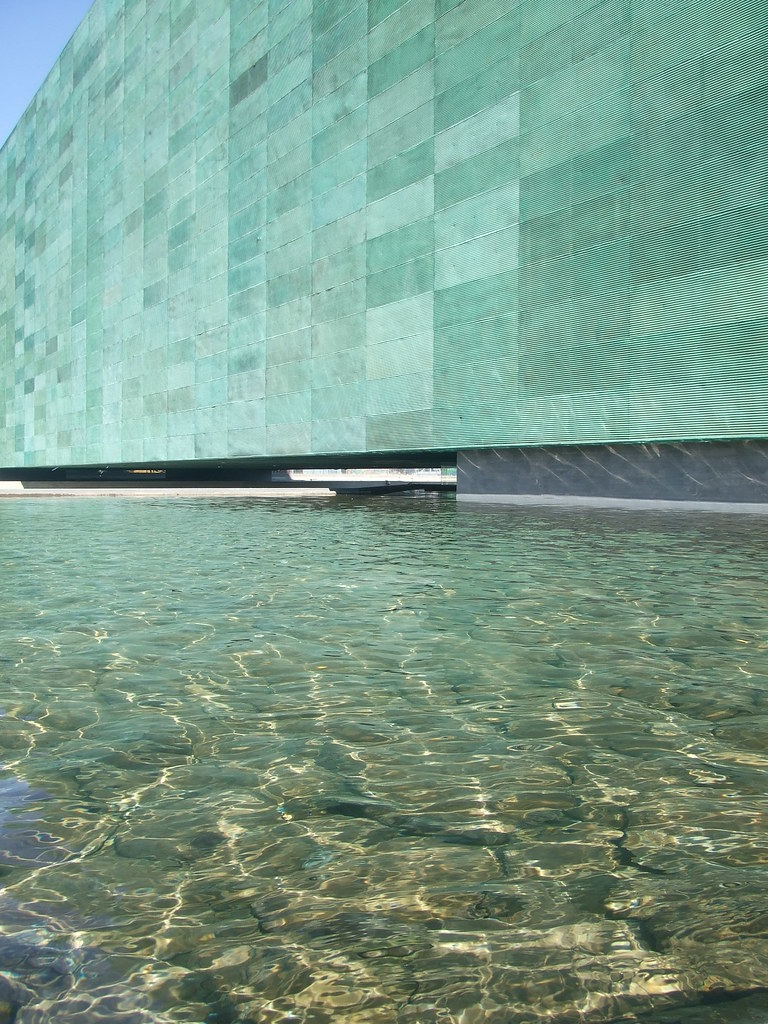
      The modern building uses architectural design at its best to express the different moods housed within the museum. From the outside, the venue looks impregnable; set low in the ground, the concrete entrance, hidden from view, looks like a kind of bunker. Surrounded by a large artificial pond, the rippling water creates a sense of calm. Inside, the country's darkest hour is contained within claustrophobic cubicles of black walls and minimal lighting, a new shock lurking round every corner. By way of contrast, a sun flooded corridor with a wall and ceiling entirely of glass runs the length of the exhibition space, providing a tranquil retreat to draw breath and reflect.

      Stories are told through hard-hitting video footage - both news reports from the time and present day testimonies of those that survived. Seeing these people talk, often close to breaking down, drives home the reality of the situation. This is not just a story from the history books. People the same as you and I were subjected to the most brutal treatment. While I have enjoyed the liberties of education, culture and freedom of expression, people my age - and people who I now know - witnessed family members being taken by force, never to be seen again.

      I would like to tell you more about the museum, and the deeply moving material it contains, but its power lies in being experienced. Please, if you come to Chile, make sure you include this museum in your list of must-sees. We must remember so that we do not forget.

      Sunday, 27 February 2011

      One year on

      I could write about nothing else today other than the first anniversary of the great Chilean earthquake of 2010.

      At 3.34am on February 27th 2010, a massive earthquake measuring 8.8 on the Richter scale hit Chile. Its epicenter was just offshore from Cobquecura, a small town in the central-southern part of the country. Around 30 minutes later, massive tsunami waves triggered by the quake hit Chile's coast, destroying large parts of the country's second city Concepción.

      Here in the capital city of Santiago, where the quake measured around 8.0, there was surprisingly little damage. While lots of buildings suffered some surface damage, there was little in the way of major structural problems. Testament to this, our flat had some sizeable cracks in its central walls and a few tiles that had fallen off when we moved in. And like many people we know, our doors don't close properly and the windows don't open without a fight. But the building is standing and sturdy. Reports in the news say that it was business as usual in Santiago after only a couple of days.

      In total, the earthquake caused the deaths of 524 people, left 31 missing and 800,000 homeless. But what's amazing, is that these numbers are pretty small. Compare it to the Haiti earthquake just six weeks earlier; this measured 7.0 on the Richter scale, but is thought to have killed over 300,000 people, injured a further 300,000 and left 1 million people homeless. This just goes to show how well prepared Chile is. It understands the risks of its location and knows how to deal with them.

      Read my articles about the February 27th earthquake on I Love Chile:

      Sunday, 20 February 2011

      Music

      "We live on the wrong side of the Atlantic". That is the conclusion Carlos and I have reached, at least when it comes to music anyway.

      Marc Anthony
      Since arriving in Chile, we have already had the unique opportunity to see salsa legend Willie Colon - a true honour to be in the presence of one of the founding fathers of salsa music as we know it. Last night, we added modern day latin superstar Marc Anthony to the list. What a show that was; a true performer - theatrical and charismatic - completely at home with hordes of screaming girls, but also a consummate musician with an astonishingly powerful voice and superbly talented band.

      With bachata group Aventura on the cards too, we are enjoying rare opportunities to see artists who just don't cross the Atlantic, or at least, not as far as the UK. For anyone who is into salsa or latin music in general, we are being afforded treats that are hard to come by back home.

      As well as great live performances, something else we'll miss is the mainstream nature of salsa here - or more correctly reggaeton. Reggaeton is massively popular, dominating many radio stations, and is usually the music of choice whenever one of our neighbours wishes to share their record collection with the rest of the building. 4am parties aside, it's great to hear the type of music we can only get in specialist clubs in the UK, whenever we feel like it.


      Video from keka1209 via YouTube

      Sunday, 30 January 2011

      Wool

      An unexpected delight here in Chile is wool. As a self-confessed knitting addict, I'm sadly a little unusual in the UK. Spending my free time listening to the click of the needles is not something most 28 year olds choose to do.

      But here, it's a whole other story. I first had an inkling that my hobby might be a little more conventional when Carlos told me of a conversation he'd overheard between two of his work colleagues, not long after he'd arrived, about the current knitting projects they had on the go. Even more surprisingly, he caught one of the secretaries grabbing a sneaky couple of rows during a quiet moment at the office.

      When the Metro is not packed to the rafters, it's not uncommon to see women whip out their knitting. The idea of donning a ball of wool in public may seem a little cringe-worthy in the UK, but here no-one bats an eyelid.

      The best thing by far though, is wool shops. And I mean proper little wool shops of the kind I used to see as a child in the 80s, that regrettably, almost completely died out. Gorgeous shelves full of brightly-coloured, inexpensive yarns and stocked with all the accoutrements you could need; needles, magazines, patterns and all. They are everywhere: metro stations, big American-style malls, little shopping areas, side streets and main thoroughfares. It really is a dangerous city to live in...

      Photo by Nagamori (cc)
      Footnote for the yarn connoisseur: Knowing that some of my readers are as crafty as I am, I felt I must mention the local yarn here which many of you may be familiar with: Araucania yarns. Araucania yarns are a collective of artisans based in Santiago that hand-dye exquisite alpaca, angora and Patagonian wool, among other fibres. They produce some seriously beautiful variegated yarns.

      Last Monday, I had the joy of seeing the yarns close-up when some of the knitting groups girls and I treated ourselves to a trip to Cuenta Puntos, a local stockist of Araucania. It's a shop that was rather deliciously described by one of the girls as 'yarn porn' - need I say any more?

      Sunday, 23 January 2011

      Sampling all aspects of Chilean life

      Me being me it was going to happen eventually: I was going to wind up in an A&E department and have the opportunity to learn about the Chilean health system first hand. But before anyone panics, nothing serious has happened.

      On Friday morning I noticed I had some insect bites on my arm. Nothing out of the ordinary there, as I seem to be a pretty tasty dish of foreign cuisine to the local nippers. The great thing about Chile though is that there are very few animal-related things that can harm you, especially without you realising it. As far as unidentified bites and stings go, there is no malaria or similar mosquito-carried diseases, no poisonous snakes and no deadly scorpions. All there is, are two poisonous spiders, and only one of these lives in the city.

      The city spider is the araña de rincon or brown recluse. Fortunately for us humans, it's not aggressive and doesn't go biting humans willy-nilly. It hunts at night and has a habit of running away if it gets startled, usually into the nearest nook, frequently a pile of clothes or bedsheets. Herein lies the danger, the spider only bites if it gets attacked - i.e. squashed - so if you roll onto it or put your shoes on without shaking them first you might be in trouble.

      Back to my story, over Friday and Saturday, around the place where I had two bites close together, a red patch had begun growing outwards in a circle and was becoming more and more swollen and itchy. Now, I've had bites similar to this before, which a very well-travelled friend of mine had believed to be spider bites. Knowing what I know about the rincon, I was more than a little concerned.

      So on late Saturday afternoon, after a call to the insurance company and some rather grisly research on the internet (sometimes I wish we didn't have the internet and all the gruesome pictures and tales it provides - not that I'm being much better myself here) I decided I'd better take myself off to Clinica Alemana.

      Still a little confused about how you actually access medical care, from what I can gather, there are a number of super-clinics, which provide A&E, hospital treatment and general GP appointments. Clinica Alemena is one of the three most super-duper of these super clinics and recommended for gringos as they advertise that they speak English (among other languages).

      Nonetheless, I took my trusty translator with me, and thank goodness I did. While I managed to see a doctor who spoke English, the receptionists did not, and were rather less than pleased when we deigned to ask them whether they might. Medical receptionists seem to be the same wherever you go then... (sorry medical receptionists, I'm sure it's only a small minority but I do seem to pick them at times).

      I was seen very swiftly - not even time to sit down in the waiting room - and was ushered into a very clean and modern treatment area. A couple of preliminary heart rate and blood pressure checks (although oddly no medical history questions) and then a short wait until the doctor breezed in, took one look at my arm and told me it wasn't a spider (phew all round) and just a nasty allergic reaction. All that was needed was a mega-dose of antihistamines and anti-inflammatories and I was off again.

      Overall, I think I was in the hospital maybe an hour and a half at most. A far cry from the usual four hours in A&E you can expect to spend in the UK. Although I was paying for the privilege. The building was new, fresh, light and modern, very clean and set in lovely grounds. It had a calm atmosphere and the staff were in general very courteous and nice. The one odd aspect being the branding was very similar to that of Sainsbury's - red, orange and purple banners, the same font and white writing on windows. I was a little confused at one point whether I was actually in a Sainsbury's cafe or a hospital.

      Sunday, 16 January 2011

      Christmas fun: wine

      What's the one thing Chile is probably most famous for in the UK? Ok, apart from its political history and the miners. The answer: wine of course! Chile has had a reputation for a few years now of producing decent wine at affordable prices. So with vineyards aplenty right outside Santiago, what better way to spend an afternoon than sampling the local export?

      Enjoying a nice glass of Chilean red
      Probably the most commercial of the wineries here is Concha y Toro. I'm sure many of you are familiar with its wine, as one of the company's biggest export countries just happens to be the UK. Located on the outskirts of Santiago, in a nice little village called Pirque, Concha y Toro has seen the potential in the tourist market and grabbed it.

      The vineyard is set in some lovely grounds, its administrative base occupying what was once a summer house amid an English country garden of gently undulating hills, a boating lake, mature trees and roses. Beyond the country pile, the landscape gives way to acres of vines, spreading out towards the foothills of the Andes.

      On our tour of the vineyard, we got to sample a beautifully fresh white from the new range 'Trio', which, unsurprisingly, is a blend of three grapes. We learnt how to taste wine properly, swirling the glass to release the flavour, giving it a good old nose, and then taking a sip. And it really did taste of green apples, just as our tour guide said it would! Thankfully, we didn't have to spit it out and were allowed to enjoy the rest of the glass as we ambled through the grounds.

      Our tour concluded at the Casillero del Diablo - another of the company's famous brands - which is actually the cellar where the founder of Concha y Toro, Don Melchor, kept his best wines. Myths and legends abound in this place, but the highlight was the chance to taste one of the premium wines, the Don Melchor, a hearty, beefy red which left me a little wobbly as I tottered round the gift shop.

      Saturday, 8 January 2011

      Christmas fun: celebrations

      As previous posts have explained, Christmas felt pretty weird to me this year. Nonetheless, we did have a fun time, not least because Carlos had a whole week off so we were able to get out and explore a little. More on that later, but to start with, what about the Chilean Christmas celebrations?

      The big day here for celebrations is Christmas Eve. Although not officially a bank holiday, many business wind down at lunch time and nothing really happens after 1 or 2pm. As previously mentioned, I spent the day sweating in the kitchen, as well as doing some last minute present wrapping (nothing changes there). Then it was off across the city for a big family meal.

      A big family meal I hear you say? Well yes! When we first found out we would be moving to Santiago, Carlos' parents mentioned that he had a cousin here too. They had never met as adults, but Carlos got in touch with him when he arrived and he and his family have been very lovely and accommodating to us ever since. So we had a big old family knees up, very traditional, if not a little multinational, as the party included myself and Carlos (representing England and Spain), Carlos' cousin with his wife and three small children (representing Spain and Chile), plus three grandparents (from Spain and Chile) and an uncle (Chile).

      We kicked-off with pisco sours, the national tipple. Then moved on to a seafood starter, with the special dish of octopus. The main was turkey with apple sauce and roast potatoes - an American import I think, but now the staple Christmas dinner here. Although I still can't get used to eating turkey without gravy, it's just wrong! A delicious chocolate sponge came next for dessert. A very common Christmas desert here is pan de pascua, a sweet fruitcake that I guess is a lot like Christmas pudding. Sadly though, it's laced with nuts, so I won't be able to find out any time soon. All of this of course, was washed down with lashings of local red wine.

      Close to midnight, we opened our presents as is the custom here. The children had been too tired to stay-up, although I'm sure they bounced into the living room at some small hour the following morning! Then I brought a little bit of England to the table - some mulled wine that I'd lovingly prepared earlier. It seemed to go down well. Perhaps a new custom introduced to this already very international gathering!

      Finally, as the night drew on, it was time to go home. Impressively, public transport runs all over Christmas (it's not like the UK where everything stops for the day). So we caught the bus at around 2am, along with a host of other people, including lots of small children clutching their freshly-opened presents!

      For more about Chilean Christmas customs, see this interesting post from Pepe's Chile.

      Wednesday, 22 December 2010

      Bringing culture to the masses

      One of the things I'm really starting to love about Santiago is the amount of free cultural events that are on offer. There always seems to be something going on, from ballet, to opera, to classical concerts, as well as outdoor art exhibitions and craft fairs. I guess the lack of rain here makes it easy to rock-up to the nearest public space and put on a show...

      What is interesting, is that these events are packed. And not just with the usual crowd you would expect at an opera or a ballet. All of Santiago is there: families with small children, cool looking guys whose usual domain is reggaeton, girls on their way to a night out and pairs of blokes who on a Saturday night you'd expect to be in the pub. It seems there is a real hunger to experience culture here and it's fantastic that it's made accessible.

      'The Nutcracker' with images projected onto La Moneda

      This weekend it was the turn of festive favourite 'The Nutcracker' (or El Cascanueces). Performed by the amazing Santiago Ballet, accompanied by the equally brilliant Santiago Philharmonic Orchestra (the same team behind last month's production of 'Swan Lake'), it was another marvellous spectacle.

      The setting was Plaza de la Constitucion, the central square in front of La Moneda, the presidential palace. With wondrous effect, this magnificent piece of architecture was used as a backdrop to the ballet - with dazzling images projected onto the white walls of the palace. Each sequence of light was greeted with a tantalized 'oooh' from the crowd.

      The final scenes of 'The Nutcracker'

      Meanwhile the dancing, of course, was superb. I was a long way from the stage, so the twirling figures were minute, but somehow they manage to draw you in, enthralling you with their delicate and intricate movements. The ballerinas displayed their prowess with numerous different styles, from a flamenco-inspired piece, to an almost rumba-esque section, to Russian dancers, a fight scene, puppets and robots. All culminating with the most familiar piece of "Nutcracker music", the lone ballerina pirouetting and leaving the crowd spellbound as if they had just discovered a music box for the first time. A real Christmas treat.

      Thursday, 2 December 2010

      I felt the earth move

      Ok, I've decided to tackle a subject here that I've shied away from previously, because at times when I have mentioned it in the past it has provoked quite a strong reaction. The subject: earthquakes.

      Here in Chile, earthquakes are a fact of life. Most likely, you will have seen in the news that Chile had a major earthquake back in February this year. In that particular case, the magnitude was exceptional. But a gentle shaking of the earth here is a regular occurrence.

      I experienced my first tremor around four days after I arrived. I was sitting on the sofa when I heard an odd creaking noise in the kitchen. My first thought was that something may have fallen down or come in through the window. But then 30 seconds later I felt the floor and the sofa shake. It couldn't have lasted for more than 10 seconds and was nowhere near as strong as those we've had in Birmingham in recent years.

      Since then there have been countless tremors, or rather delightfully 'tremblers' as they are sometimes called. I've been aware of two or three and there have been many more while we've been asleep/on the Metro/out and and about. What prompted this post was another one this morning and I can only describe it as feeling like someone had grabbed hold of the bottom of the sofa and shaken it from side to side.

      So there you have it. Unfortunately, I couldn't write a blog about my time here in Chile without mentioning earthquakes, they are so common that no-one is phased when the earth moves. In fact, some colleagues of a friend of mine simply grinned and said: "Welcome to Chile. Get used to it." (Thanks Emma)

      Tuesday, 30 November 2010

      Santiago's historic centre

      A fascinating and enjoyable Sunday afternoon can be had strolling leisurely around Santiago's historic centre.

      First, there is none of the awful, frenetic, ear-blistering traffic that thunders (well, thunders slowly due to the congestion) through the city, engines droning in the background and the air punctured by repetitious blasts of beeping horns. Second, for a capital city, the streets are more or less deserted, so like a miracle you suddenly notice the wonderful architecture - all grecian columns and colonial arches rising serenely out of the now absent chaos.

      There are some spectacular buildings in this area; from the imposing Ministry of Justice, with two flights of columns and intricately carved stonework, to the extremely well-preserved Museum of Santiago, located in a red-bricked colonial mansion with enormous thick wooden doors, dated from 1769.

      Dancing cueca in Plaza de Armas
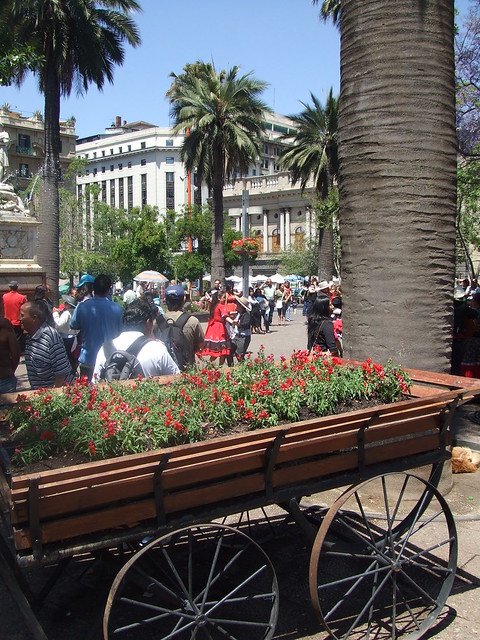
      And then there is Plaza de Armas, as I have said before, the city's beating heart. This square is where the city (and indeed the colony) was founded in 1541 by Spanish conquistador Pedro de Valdivia. It is the place from which all distances are measured in Chile and boasts some fine architecture, including the Metropolitan Cathedral, the former seat of congress and first town hall (both now museums).

      But what these grand monuments enclose is the life and soul of Santiago. The square is brimming with artists, craft stalls, musicians, marching bands, people dancing cueca (the national dance), itinerant preachers, old men playing dominoes and chess, tourists, street sellers, human statues painted copper (a miner, of course), nuns, vagrants, stray dogs sleeping in the shade, migrants sleeping on the benches... To take a moment in Plaza de Armas on a sunny Sunday afternoon is to breathe (downtown) Santiago in all its forms.

      www.flickr.com

      jaynescarman's Plaza de Armas and around photoset jaynescarman's Plaza de Armas and around photoset