Showing posts with label Human Rights. Show all posts

Wednesday, 27 July 2011

My 7 links

A slight digression from my usual posting topics as I appear to have joined the world of the bloggersphere by being tagged in this '7 links' thing that's doing the rounds.

Thanks to Rob W of the South America Blog (this is the chap who runs Woodward language school which brought me up to a passable level of Spanish, Chilenismos and all) I have to rifle through the archives of my blog for 7 posts that are the most beautiful, popular, controversial, helpful, surprisingly successful, lacking the attention they deserved and that I am most proud of.

This actually turned out to be quite a fun task, as I got to rediscover stories I'd forgotten about and I enjoyed feeling incredibly proud of my blog and realising what an interesting historical record it is for me. So without further ado, onto the 7 links.

My most beautiful post
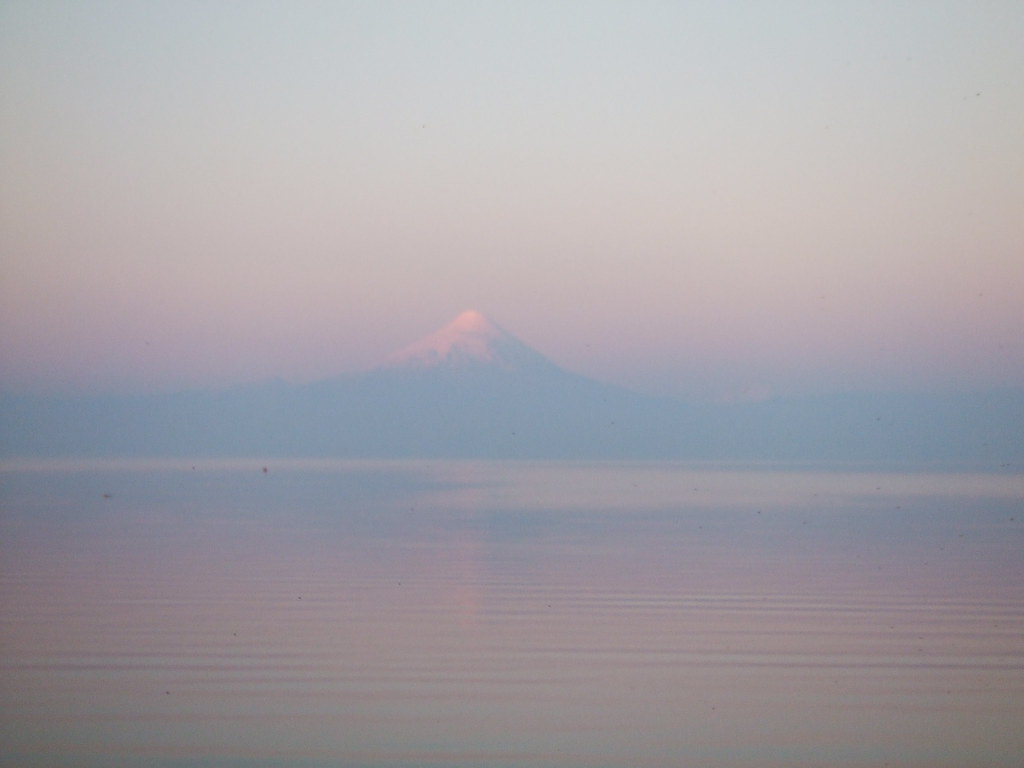
Difficult to define a beautiful blog post. Although on the whole I am pleased with how I write, I'm not sure any of the posts are exquisitely crafted literary masterpieces. So if we take beautiful to mean photography and subject matter, it doesn't get more perfect than A sprinkle of magic - the story of Frutillar and one volcano that made a last minute appearance to give us the most phenomenal setting for a pastel coloured sunset.

My most popular post

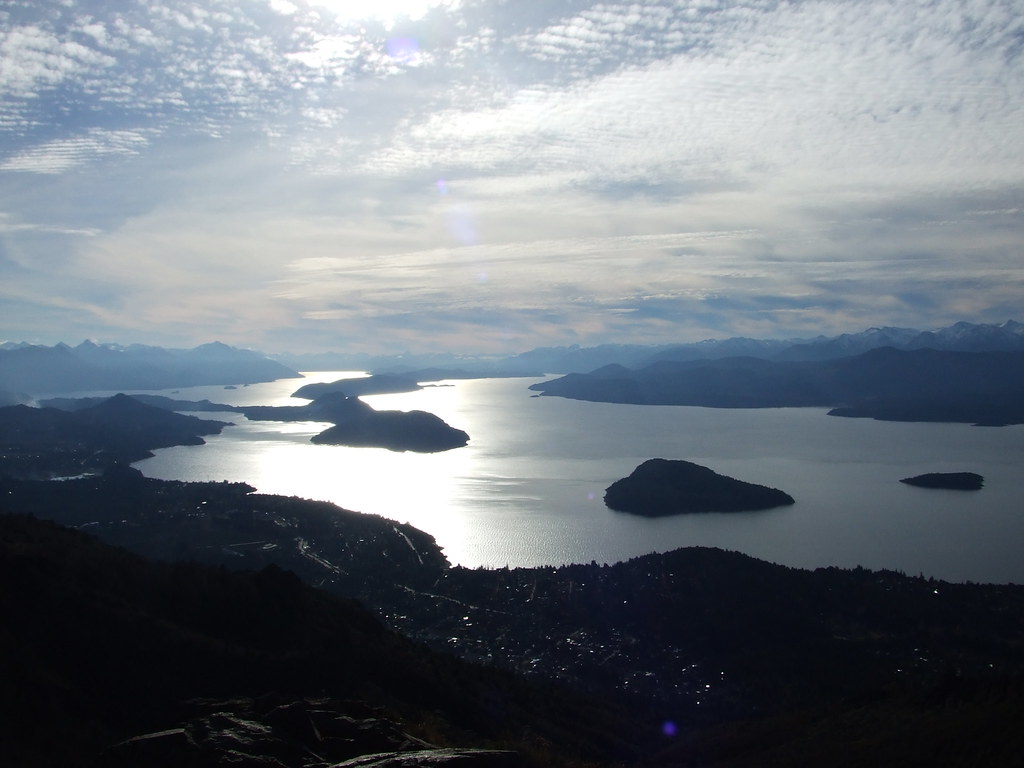
Judging by stats alone, this award goes to The most beautiful place on earth about our visit to Bariloche in Argentina, before it got covered in ash from Volcan Puyehue. A worthy winner. That said, I never tire of this view has been hanging around at the top of my most visited list since I wrote it way back on 20th October, so I think it deserves a mention too.

My most controversial post

I don't really do controversy on this blog, but I guess that Civil unrest is the closest I've come to any kind of political statement, or for that matter, to writing anything negative about my experiences here. 

My most helpful post
My very first posts, First impressions and A day of small victories stand out for me simply because various friends I have met here have told me that they felt reassured reading about my rather wobbly experiences in Chile at the beginning. So I'm nominating these for helping people know that they weren't alone in feeling adrift in this strange new place.

A post whose success surprised me


New heroes was the first time I received feedback from Chileans about my blog, with many of them in agreement with my admiration for Michele Bachelet. This was a turning point for me, where I discovered that my blog was being read as much by my new friends here as by my old friends back home. The amount of attention my Food post got was also a genuine surprise - it seems eating is what my readers are really interested in!

A post I feel didn't get the attention it deserved
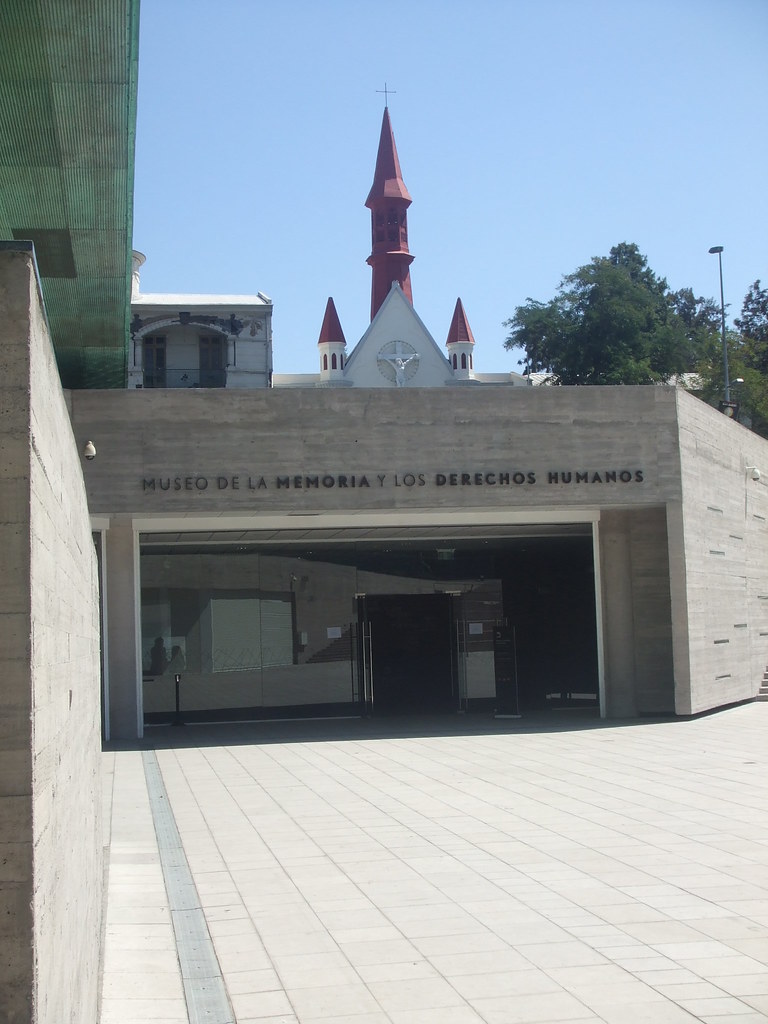
Looking through my archives I found it difficult to find a post that didn't get attention, but eventually I opted for Museum of Memory and Human Rights because I don't remember getting much direct feedback on it. Maybe the subject matter was too painful for some, or maybe the history is too distant for others. Either way, I thought this post would get more of a reaction than it did.

The post that I'm most proud of

Trying not to sound too cheesy, I can honestly say that I am incredibly proud of my entire blog. I only started writing it because I fancied having a go at blogging and a couple of people had suggested it might be an interesting thing to do. But as I said at the beginning, it's turned into fascinating record of my time here; I love reading it and I hope others do too. Selecting one post, therefore, is pretty hard, but I think I'm going to plump for Immigration. Partly because it made me and a lot of other people laugh, partly because I enjoyed writing it and working on getting the humour across, and partly because I'm really proud of what I achieved that morning!

So now I have to pass on the tag to five other bloggers. So 7 links on their way to:
  1. Callie Mills - Ruffle Your Feathers
  2. Carolina Leseigneur - GoodCatt's Random Musings
  3. Pepe's Chile Adoration Page

    Next was going to be fellow Chile blogger Angie Clifford with Angie's life, but she's already been tagged so instead we change topic to...

  4. Ruth Lund - Cherry Coloured Twist
  5. Emma Fassio - Emma Fassio Knitting

Sunday, 15 May 2011

Civil unrest

Positive is usually the watchword of this blog, but I want to capture my Chilean Adventures in full, so I'm afraid this post is going to focus on one of its more ugly sides.

Caveat out of the way, I can tell you that we have spent the last week in the centre of a whirlwind of civil disturbances. As I write, the click of the keyboard is accompanied by the din of saucepans being banged together outside. This is the latest in a string of protests against a hydroelectricity project in Patagonia that will see five mega dams built in one of the most unspoilt regions of the country, billed as essential fuel for a country poised to enter 'developed nation' status very soon.

On Monday night, I exited the Metro station to the shock of having my nose burned with tear gas. Thursday, after a student protest, I walked home to find traffic lights snapped in two. And on Friday, in the biggest of the demonstrations so far, thousands of protesters marched chanting down our road, before a small minority tipped over a glass recycling bin to arm themselves ready to take aim at the police.

The location of our building is the equivalent of being a few blocks away from the Houses of Parliament in London, so it is not surprising that we are seeing so much action. That said, the sheer number of both protesters and demonstrations is not something we are accustomed to in the UK. Estimates for Friday were 30,000 people and more civil action is planned over the coming days.

Before anyone begins to worry, we are fine. By and large, the demonstrations are peaceful; some vandalism happens, but the scenes are little worse than Birmingham's Broad Street on a Saturday night. In fact, the protesters are infinitely better-mannered. Tear gas and water cannons are used, because the police are quick to disperse people at the merest hint of trouble. While staying inside may be the best option, it's interesting to witness a nation so vocal and active in expressing itself, quite a contrast to the 'keep calm and carry on' culture I've come from.

In case you want to know more:

Sunday, 8 May 2011

New heroes

One of the most surprising things about coming to a new country for me, has been discovering people I never knew existed. I don't mean making new friends or learning about historical figures; I mean stumbling upon seriously important and influential people who I hadn't heard the slightest hint of before setting foot in Chile.

Being a self-confessed feminist, I am naturally impressed by strong, successful and aspirational women. Since arriving here, I have discovered two such women who quickly turned into new heroes for me, and both of whom I'm dismayed are not better known outside of these shores. They are Michelle Bachelet and Isabel Allende.

I will return to Allende in my next post, as I recently finished reading her seminal novel 'The House of the Spirits. For now, I want to turn my attentions to Bachelet.

Michelle Bachelet
Photo by Ricardo Stuckert
(Agencia Brasil 1) via Wikimedia
Commons
Michelle Bachelet is Chile's first ever female president, holding the post from March 2006 - March 2010 (see, I bet you didn't know that). She took office with an unprecedented absolute majority in both houses of congress and left with a seriously high 86% approval rating from the populace. Popular woman.

Gender equality was high on her agenda and she appointed a never-seen-before 50/50 cabinet of men and women. Her policies included free daycare for poor children to help women back into work and economic independence and successfully securing free availability of the morning-after pill to all women over 14 (in a country where abortion is illegal...)

Last year, after her presidential term finished, Bachelet was appointed Executive Director of a new international task force on gender equality - UN Women. The body is doing a crucially important job; to improve women's leadership and economic empowerment, to end violence against women, particularly in warfare, and in focusing countries around the world on prioritising gender equality.

Before her presidency, Bachelet was Chile's first female defence minister. Upon entering politics (she had initially trained and worked as a paediatrician) she took herself off to study military strategy. In her personal life, she is a divorced mother of three and an agnostic (did I mention Chile is a very Catholic country?)

But above and beyond all of these phenomenal achievements, for which I am filled with admiration, what makes here even more amazing in my eyes, is that she was imprisoned and tortured under the military dictatorship of General Pinochet. This is what makes her, for me, a shining example of what women can achieve.

In writing this post, I am indebted to the following:
  1. Wikipedia, Michelle Bachelet (25/04/11)
  2. The Guardian, UN Women's head Michelle Bachelet: A new superhero? (22/04/11)
  3. The Guardian, Michelle Bachelet (08/03/11)
  4. The Guardian, The Bachelet factor: the cultural legacy of Chile's first female president (13/12/09)

Wednesday, 30 March 2011

Beautiful barrio, dark secret

I made a surprise discovery today of a delightfully quaint neighbourhood not more than a stone's throw from our apartment in downtown Santiago.

Calle Londres (London Street) is a winding cobbled street flanked with picture-perfect Victorian-style mansions; exactly the type of building with patterned tiles, shutters and intricately curved iron-work that I would love to have a top floor flat in.

Yet despite the visions of cream teas and ice cream that this particular street evoked, my reasons for visiting it were altogether more sinister.

Londres 38 on first glance looks as charming as all the other houses. It was only when I spotted the names inscribed in black and white tiles amongst the cobbles outside that I realised I was in the right place.

By now, I'm sure you've grasped where this post is going. Between September 1973 and September 1974, Londres 38 was used as a clandestine detention and torture centre by the military government led by General Augusto Pinochet. It was the first premises to be used in this way by the DINA, the Chilean secret police, to interrogate, torture and ultimately make disappear, 'militants' that actively opposed the military rule.

The house is empty, its starkness and dilapidated condition giving it a haunting feeling. Designated as a 'memory space', survivors and relatives of those lost have recorded an oral history of the building, recreating its layout, its use and the experiences of those detained inside it.

Based on these testimonies, my guide, Karen, gave me a knowledgeable tour of the building, with many of the spaces complementing her speech by, quite simply, speaking for themselves.

Saturday, 5 March 2011

Museum of Memory and Human Rights

Entrance to the Museum of Memory
and Human Rights
Anyone who travels to Chile, without fail, should visit the Museum of Memory and Human Rights. Opened in January last year, the museum serves as a sensitive but profound record of the atrocities committed in the country under the military dictatorship of General Augusto Pinochet, between 1973 and 1990.

I had wanted to visit this museum for some time, but each day I had planned to go, I found myself reluctant to leave the house, knowing that it would be an upsetting experience. It was, of course. But it was also a crucially important account of Chile's history, which has given me insight into what makes Chile the country it is today.

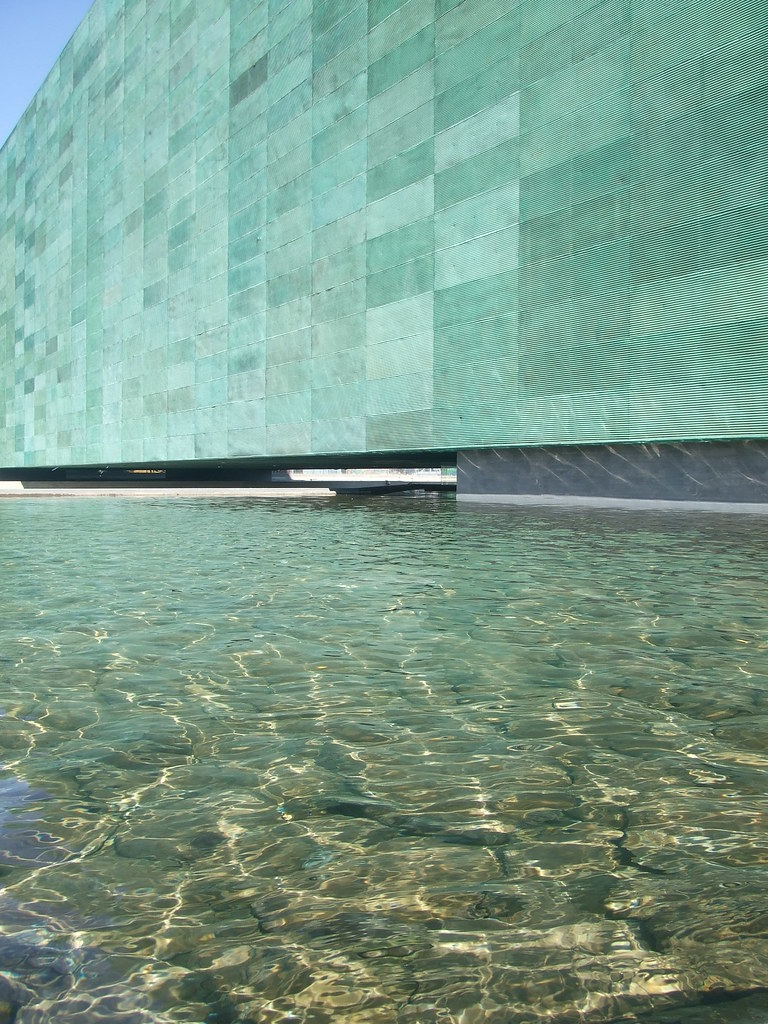
The waters surrounding the museum
The modern building uses architectural design at its best to express the different moods housed within the museum. From the outside, the venue looks impregnable; set low in the ground, the concrete entrance, hidden from view, looks like a kind of bunker. Surrounded by a large artificial pond, the rippling water creates a sense of calm. Inside, the country's darkest hour is contained within claustrophobic cubicles of black walls and minimal lighting, a new shock lurking round every corner. By way of contrast, a sun flooded corridor with a wall and ceiling entirely of glass runs the length of the exhibition space, providing a tranquil retreat to draw breath and reflect.

Stories are told through hard-hitting video footage - both news reports from the time and present day testimonies of those that survived. Seeing these people talk, often close to breaking down, drives home the reality of the situation. This is not just a story from the history books. People the same as you and I were subjected to the most brutal treatment. While I have enjoyed the liberties of education, culture and freedom of expression, people my age - and people who I now know - witnessed family members being taken by force, never to be seen again.

I would like to tell you more about the museum, and the deeply moving material it contains, but its power lies in being experienced. Please, if you come to Chile, make sure you include this museum in your list of must-sees. We must remember so that we do not forget.