Showing posts with label Places. Show all posts

Tuesday, 23 August 2011

Foreign - Familiar - Farewell

As the sliding doors of the Santiago Metro opened at La Moneda, I stepped onto the platform and was struck with recognition. Directly in front of me was Volcan Licancabur as seen from San Pedro de Atacama. To the left, the vineyards of Valle de Elqui. Across the tracks, Volcan Osorno and Lago Llanquihue and an aerial view of the Andes, such as is witnessed on a flight to Buenos Aires.

These enormous paintings have accompanied me on an almost daily basis. I have passed them without thinking since I first set eyes on their unfamiliar landscapes. Filled with trepidation, I marvelled at their beauty as they loomed over me - unknown worlds in a foreign country.

But suddenly, they have become familiar. I feel a rush of memory as I recall the terrain and I feel a little more a part of the world around me.

This is my farewell to Chile; the discovery that a world so alien - that left me without language, without culture, without identity - can become normal. It's been a struggle, I did not have the easiest of starts, and there are things I still find hard to deal with. But my Chilean adventure has taught me that from nothing, new ways of communicating can be learnt, new careers can be forged and wonderful new friends can be made.

And above all, outside of the smoggy metropolis of Santiago, Chile is one astonishingly beautiful country. Of the spectacular landscapes that have provided the backdrop to my daily commute, we are so incredibly lucky to have set eyes on their wonders.

Sunday, 21 August 2011

Places I didn't get to write about

Valparaíso

Oh Valparaíso, I believe you to be an enchanting city by the sea and I was so excited to discover you. But we caught each other on a bad day: fog and rain, wandering around one of your run-down sides, everything shut because it was a public holiday and then the incident with the vicious dog. I'm sorry, perhaps another time I will fall under your spell.


Isla Negra

Home of Chile's most famous poet, Pablo Neruda, and you can see where he drew his inspiration. Perched on a cliff-top with the most fantastic view of the Pacific, Isla Negra is a dream house for anyone with an artistic soul. What a site to make your home and your final resting place.


Pukará de Quitor

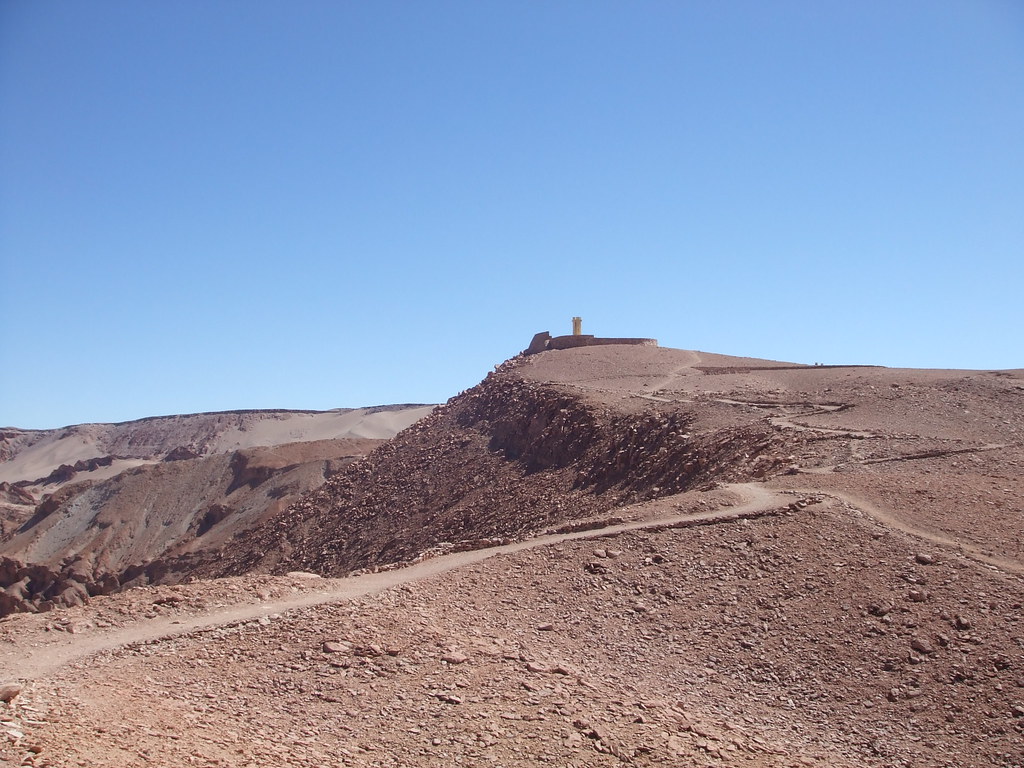
700 year old ruins of a fort built by the Atacameñan people a couple of kilometres bike ride from San Pedro de Atacama. An historic defensive spot with a magnificent view.


La Serena

Lying at the mouth of the Elqui valley, architecturally beautiful La Serena boasts several churches, beaches, tranquil Japanese gardens and an archaeological museum with none other than a Moai statue, direct from Easter Island. La Sereñan president, Gabriel González Videla made sure his home received the best during his time in office.


La Moneda

Chile's presidential palace where the work of government is conducted and right in our barrio (neighbourhood). Tours take place daily and give you an interesting look at some of the working rooms of the building and its chequered history.


Museo Arte de la Luz

An innovative open air museum in the Bellavista/Recoleta neighbourhoods that projects paintings of Chile onto the (usually not very fast flowing) waters of the River Mapoche. It's an interesting idea, and the images are eye-catching, but the lack of water for the majority of the year means you don't really get to experience its full impact.


Precolumbine Museum


Housed in a former mansion close to Santiago's Plaza de Armas, this museum includes various South American artefacts dating from the eras before the arrival of Columbus to the continent. Mainly pottery and stone for functional, decorative and ceremonial uses, along with an extremely interesting textile room.


Sculpture Park


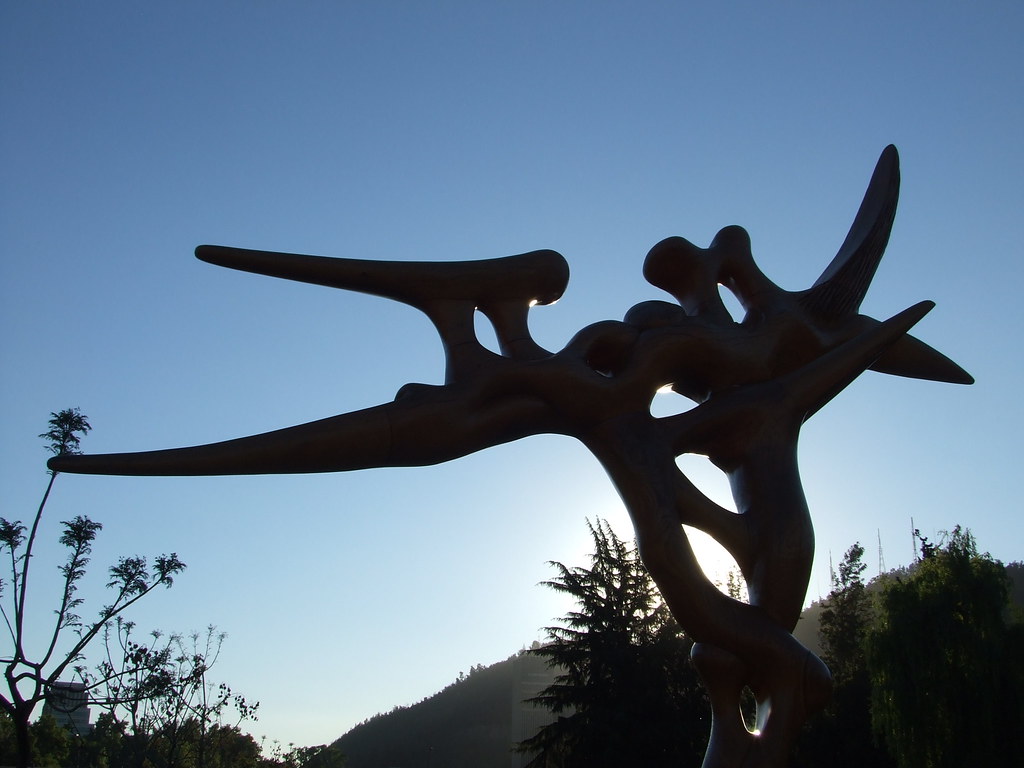
A fun Sunday afternoon meander along the Mapoche river in the Pedro de Valdivia area of Santiago, with sculptures of wood, metal and other materials by a range of local artists.

Friday, 19 August 2011

Truly winter... in August

Yesterday it snowed in Santiago which apparently is a BIG DEAL. For those of you who know the city, it was snowing as far west as Tobalaba, which I'm told very rarely happens. Sadly, the weather wasn't freakish enough to be snowing downtown at La Moneda, but it was nonetheless pouring with rain; unusual enough, in that I had to root around in the back of the wardrobe for my umbrella while Carlos dusted off his waterproofs.

So as today dawned with the sun shining brightly, clear blue skies and the snow-covered Andes strikingly visible thanks to an absence of smog, what better day to enjoy our final sojourn into the mountains, with another trip to Cajon del Maipo.

The Andes, as seen from metro line 4

Attentive readers will remember we last went to the Cajon at the start of autumn. The first snows had just fallen and the leaves were beginning to turn gold. This time around, we arrived in San Jose de Maipo to a backdrop of blanketed hills and dripping water.

San Jose de Maipo
San Jose is the main village in the valley - a cute place to hang out but not loads to do. So after an empanada and an amble, we jumped back on the micro to go a little further into the valley to San Alfonso and the resort of Cascadas de las Animas (cascades of the spirits).

Cascadas de las Animas is a really pretty complex of campsites, cabañas (cabins) and land to explore. We paid the 4000 pesos fee for a two hour-ish walk to the waterfalls and back and set-off accompanied by one of the local dogs, who we nicknamed Ginger once we realised she was in it for the long-haul and we weren't going to shake her off, despite forcibly leaving her outside the gate.

The walk took us along the river and up through the forest to the site of two waterfalls. It was the closest we'd ever been to a waterfall and made us feel like we were in a Robin Hood film. The view looking back at the snow-covered Andes was also, of course, spectacular.

It was a perfectly romantic end to our last chance at sightseeing in Chile before we return to the UK. Well it was, until the slight drama of me taking a rather heavy tumble on our way back down the mountain from the waterfalls. Despite bashing my elbow badly on a rock (which hurts a lots - I wouldn't recommend it), somehow I managed not to break my arm. And so in true Jayne-style, we ending our final day of sightseeing. At least it was memorable!

The Maipo river
Cascadas de las animas

Wednesday, 17 August 2011

Tatio geysers

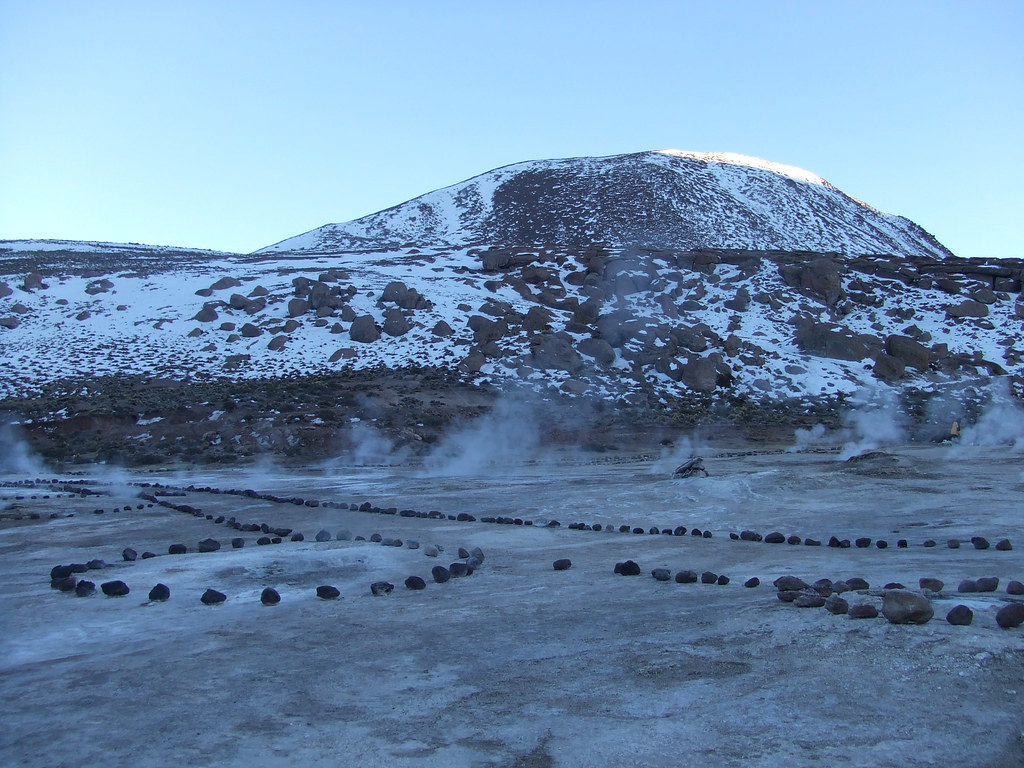
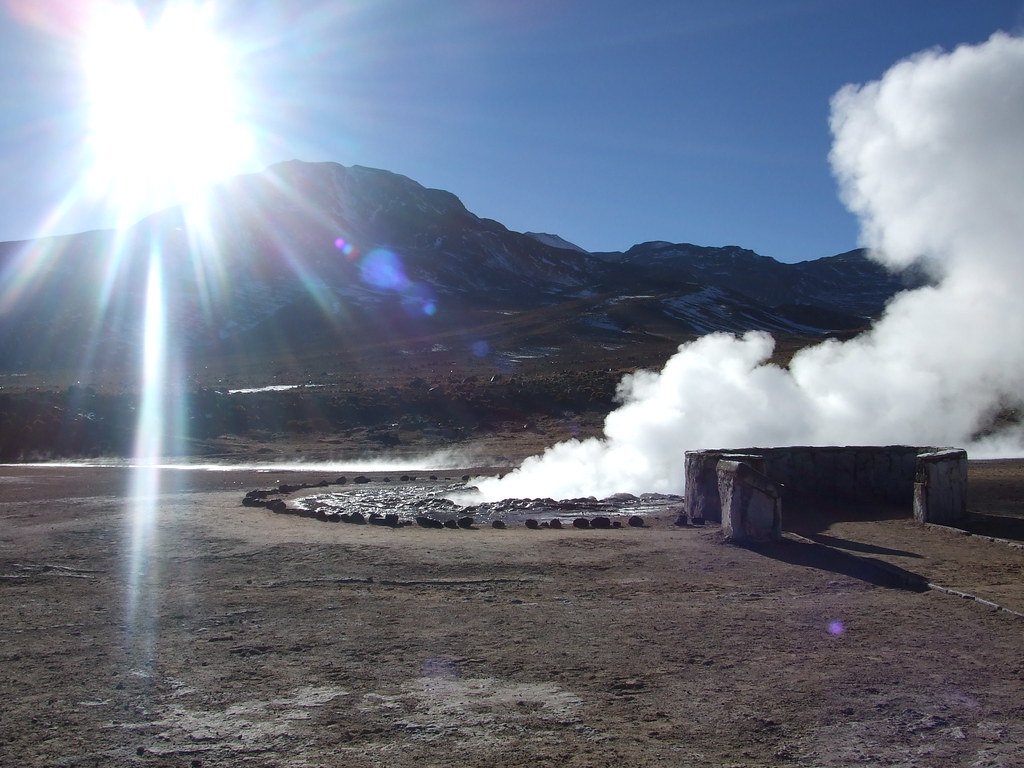
Tatio geysers are one of the 'must-sees' while in the Atacama. Situated right next to the border with Bolivia at a height of 4200 metres above sea-level, Tatio is the third biggest geyser field in the world, with over 80 active geysers (according to Wikipedia).

Tours from San Pedro set out at around 4am to arrive at the geysers just before dawn - the time when there is the greatest difference in temperature between the cold morning air and the hot molten rock below.

Just before dawn

One of the oldest geysers
We arrived as the sun was just starting to come up, with an outside temperature of minus 8 degrees centigrade.

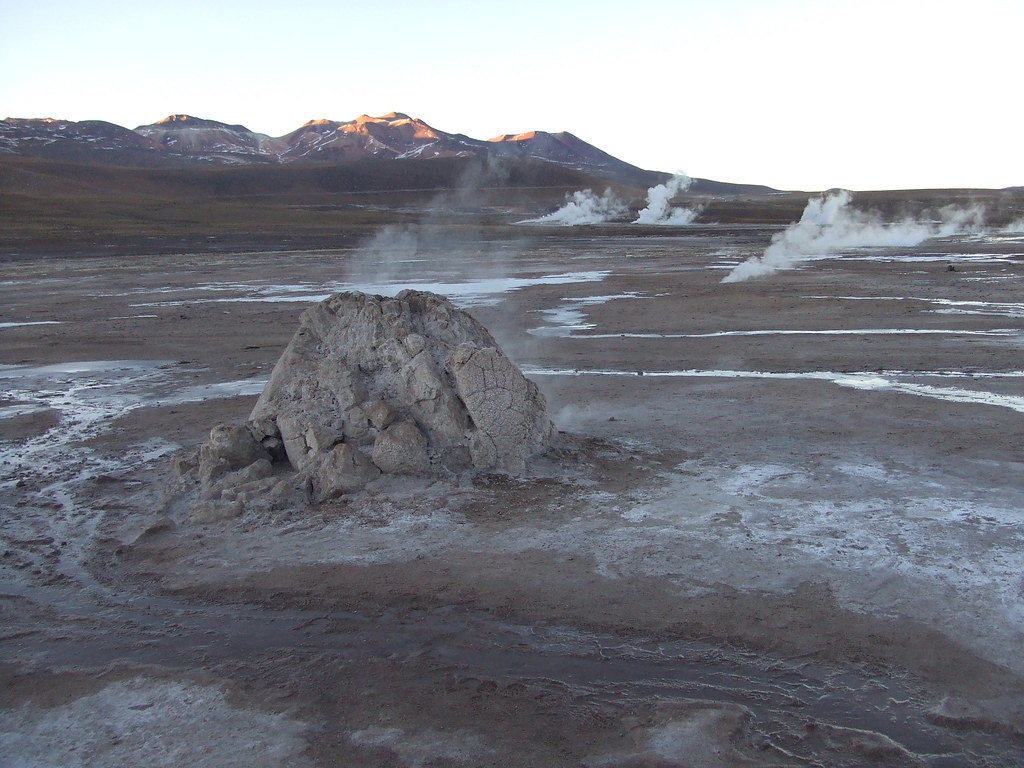
Our guide took us to see different types of geysers - some of the oldest with mini volcanoes around them, others that had become covered and so were trying to find new ways of breaking through the earth's crust.

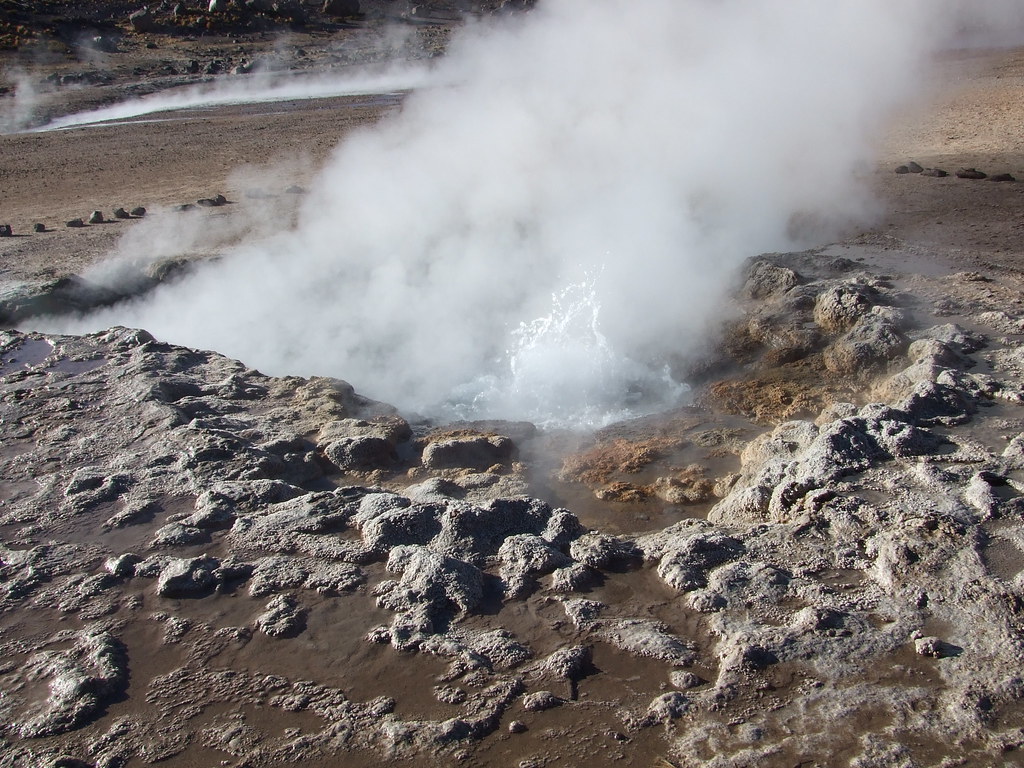
A surprise for me, was that I had expected to see fountains of water shooting up into the air. While it wasn't that dramatic, it was nonetheless a very surreal landscape, of cracks in the earth's surface, steam and sulphuric smoke and water bubbling up out of the ground.

Bubbling geyser

After a brief stroll, we had breakfast; hard boiled eggs and warm milk - both prepared in the steam of one of the geysers. Refreshed, and with the sun now flooding the valley, we moved onto another part of the field where there was a hot spring pool. Carlos took a dip while I ambled slowly around, finding it difficult to breath with the altitude and the cold.

The sun flooded the steam-filled valley

Vicuñas
At around 9.30am, we began our way back down the mountain, this time in full sunlight so we could take in our surroundings. Our first stop on the journey was to see vicuñas - similar to a llama. We saw 36 animals in total made up of two packs - a very rare sight. They were fighting as we drew close, before our bus and the vicuñas entered into a staring match.

Continuing on a wildlife theme, next we tried to spot a large greenish rabbit, which camouflages itself brilliantly amongst the rocky cliffs. Typically, I was the only person on the bus who couldn't spot one, but I've since seen a photo! Then a little further along the valley, we visited some wetlands, with giant coots among other birds.

The village church
Still at around 4000 metres above sea level, we made our final stop at a tiny village that had about 6 houses and an asado (barbecue) on the go for the tourists. Its speciality was llama anticuchos, that's kebab skewers, which were seriously delicious, although that did bring a rather abrupt end to our nature watching!

Monday, 15 August 2011

Flamingos and moonscapes

Returning now to our desert trip, after a brief jaunt to the Elqui Valley (in a literary sense that is).

Sightseeing in the Atacama Desert requires booking tours, of which there are hundreds. That is, there are hundreds of companies (or at least it feels that way) but the tour content of each is much of a muchness. Going by a recommendation, we opted for Desert Adventure and reserved everything before we left Santiago.

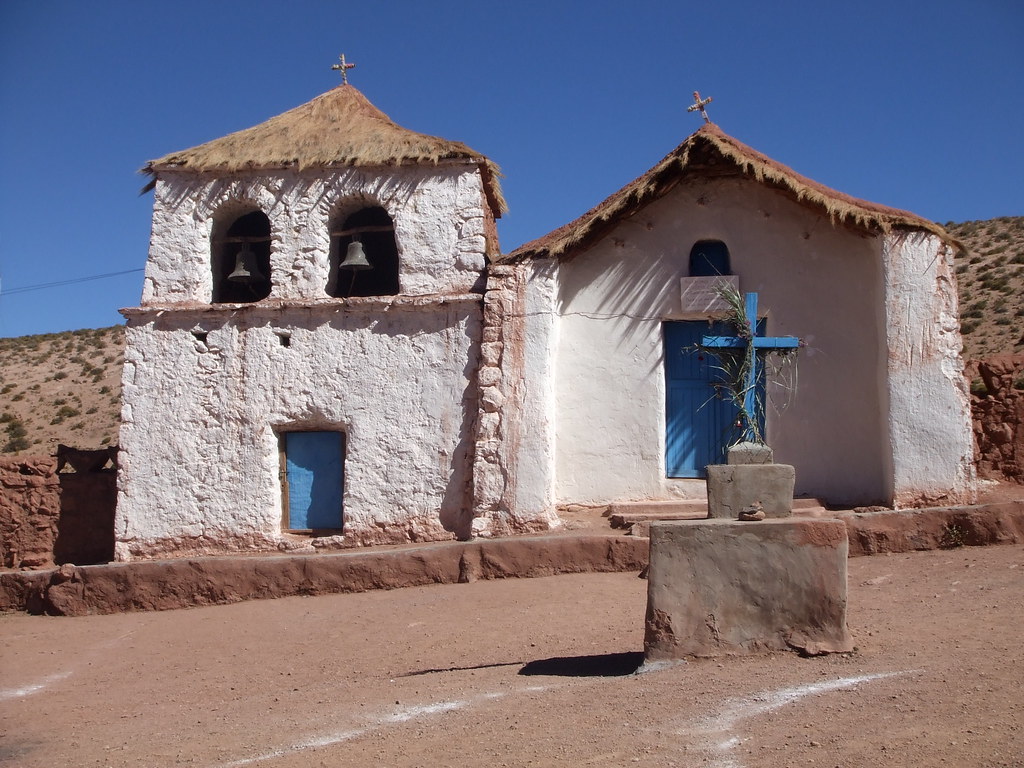
Our first tour of the trip was to the Salar de Atacama to see some flamingos. But we were left dangling tantalised for a while; first we were taken to a nearby river oasis, where fruit grows in the middle of the arid wasteland; second, to the village of Toconao, with an interesting church and bell tower and a handicraft shop. Finally, as the sun began to set, we were taken to the Salar.

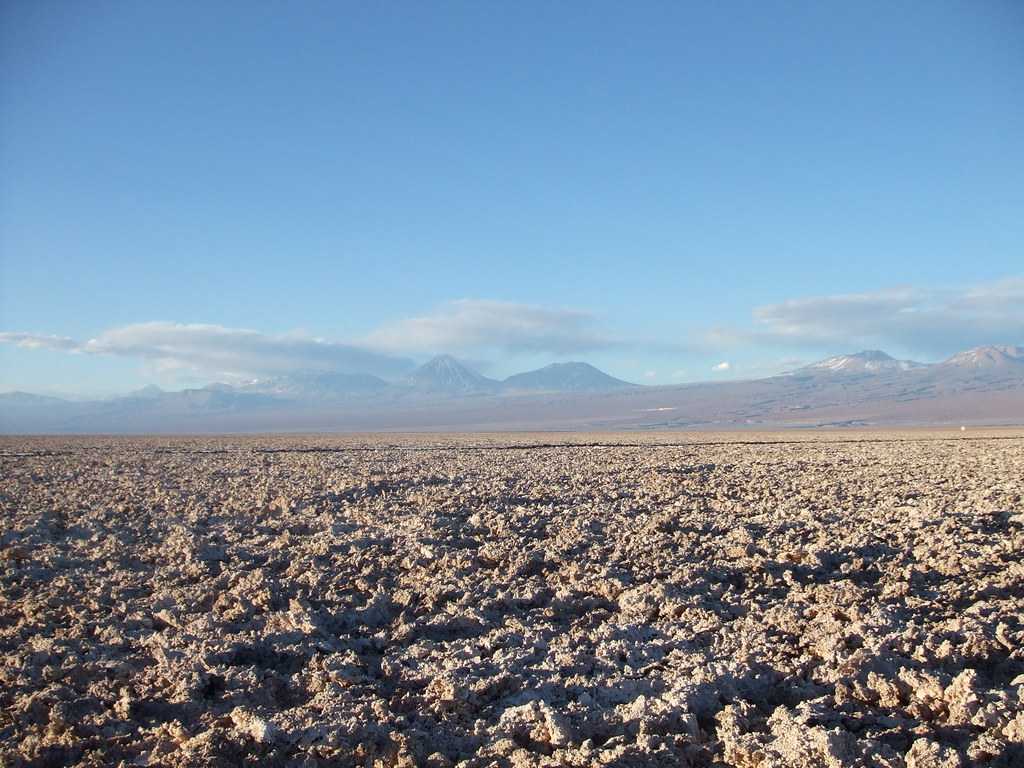
The Salar de Atacama is a vast salt flat, formed when rivers coming down from the mountains simply dry up in the desert heat. We were surprised to discover that the Chilean flats aren't the dazzling white expanses we were expecting; instead, the wind and the sand of the desert churns them up into a brown, knobbly texture - a little like the top of a crumble!


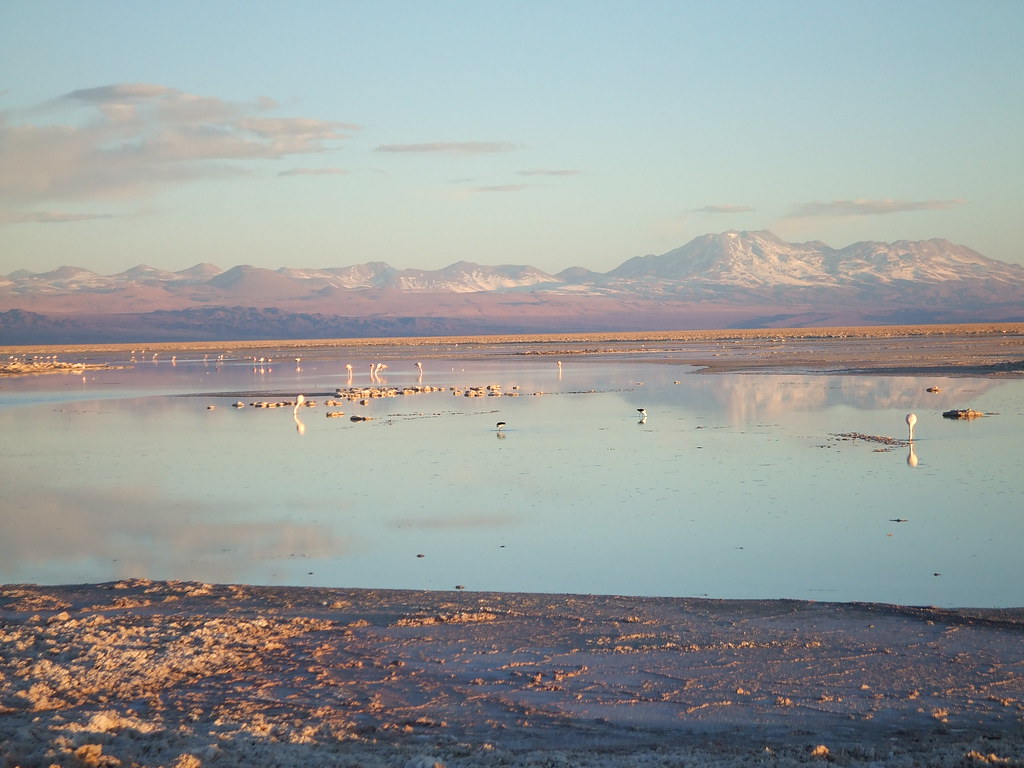
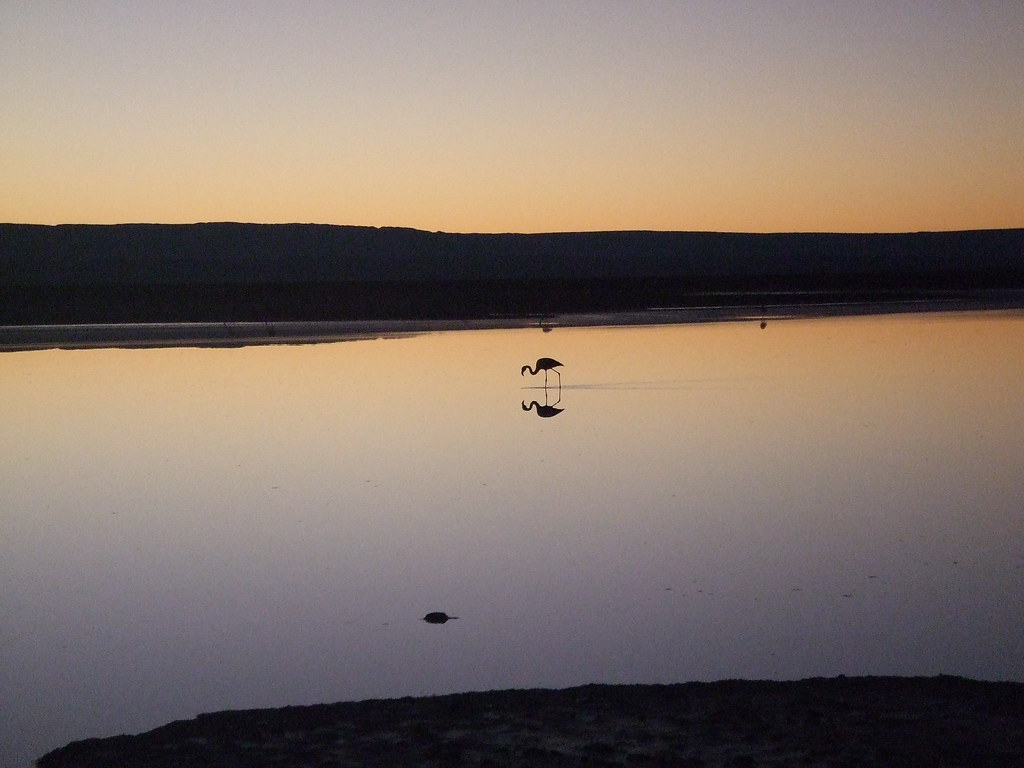
It's a stunning view, with salt and sand as far as the eye can see on one side, and volcanoes on the other. And plonked right in the middle, are a series of lagoons created by underground water sources, on which live the flamingos. 


Showing a surprising lack of timidity, the flamingos continued eating, drinking and roosting as flocks of cooing tourists snapped photo after photo of a sunset flushed with pink.


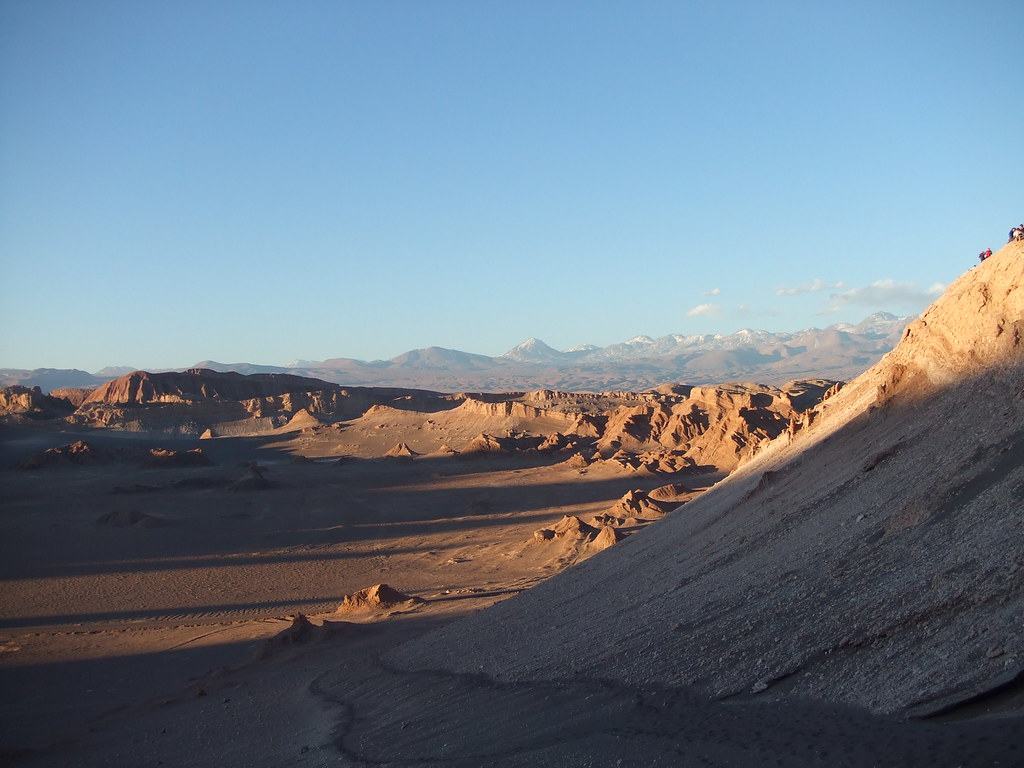
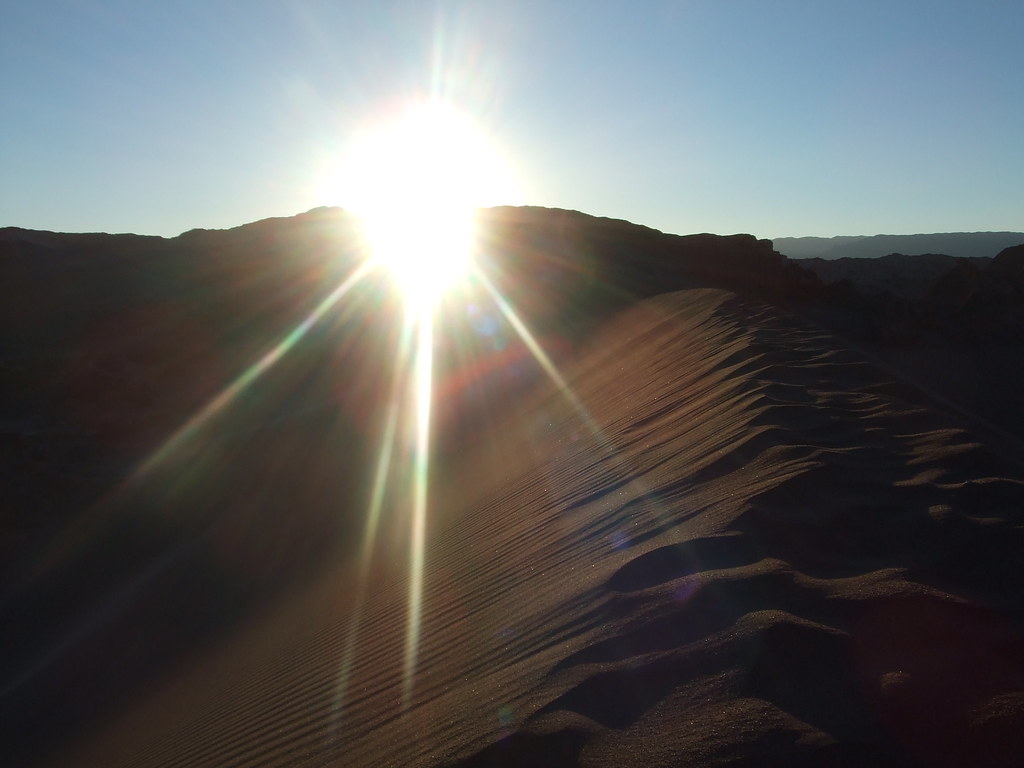
On the second afternoon, we travelled out to the Valle de la Muerte (Valley of Death) and Valle de la Luna (Moon Valley). Both are unreal landscapes, carved into the stone and sand by the constantly eroding force of the wind. In Valle de la Luna, we saw the obligatory Tres Marias rock formation, which is sadly now only two Marias after an unknown culprit knocked part of it down. We also saw an old salt mine and miners refuge now returned to the sands.


The afternoon culminated in another breathtaking sunset, the dry rock awash with soft pinks and oranges and long shadows sliding up the sides of the mountains. We had to be dragged away by our tour guide, or we would have been tumbling back down the sand dunes in the dark.

Sunday, 14 August 2011

Stargazing

This weekend took us to the Elqui Valle (or Valle de Elqui) and the extremely relaxed town of Vicuña; a San Pedro in the making but less touristy and more Chilean.

Having spent the morning in La Serena, we hopped on a micro headed up the valley and were soon treated to some lush green mountainsides under a sparkling clear blue sky. Signs were promising for our evening plans...

We relaxed for a while in our delightful hostel, Donde Rita, run by a German lady with perfect Spanish. A slightly disorientating experience, but in a good way, as the lodging was decorated in a very similar vein to my parents' house and it felt like being back in England! Batteries recharged, we left in search of our night time entertainment as a full moon popped up over the mountains.

Enough teasing, as the title suggests, we were of course headed for an observatory. Chile is famed for its clear skies and Vicuña is blessed with 300 totally clear days (and nights) per year. The Elqui Valley is also somewhat infamous for its high volume of UFO sightings, but maybe that's down to the pisco (more on that to come).

The municipality of Vicuña operates an accessible observatory for anyone interested in learning about the stars. It costs 3500 Chilean pesos to enter plus 1500 for transport if you don't have your own. Tours run every day at 6.30pm and 8.30pm in the winter time and a minibus will take you up to the Mamalluca observatory, located around 9km from Vicuña. There are also tours available in English if you remember to ask (we didn't).

The evening started with a 15 minute or so lecture on the universe. Unfortunately for me, I couldn't understand a thing due to a mixture of terrible sound quality and the presenter's very strong Chilean accent. Neither could Carlos though which made me feel better.

Thankfully, things improved when we were split into a group of around 20 and assigned our very own astronomer who took us to have a look at the telescopes. Felipe, our extremely knowledgeable but easy-to-understand guide, pointed out some of the principle constellations visible to the naked eye - including the Southern Cross (which obviously we don't get to see in the northern hemisphere), the Southern Triangle (probably a dreadful translation of mine but you get the idea) and most excitingly of all, the Scorpio constellation, right above our heads. I was pretty over-the-moon, if you'll excuse the pun, to see my own star sign up there in the sky.

Next, we were allowed to have a go on the telescope to look at a dim, yellow-ish star just above the horizon - which turned out to be Saturn. Although it was tiny, with the assistance of the telescope, it was easy to make out the distinctive rings that characterise the sixth planet from the sun.

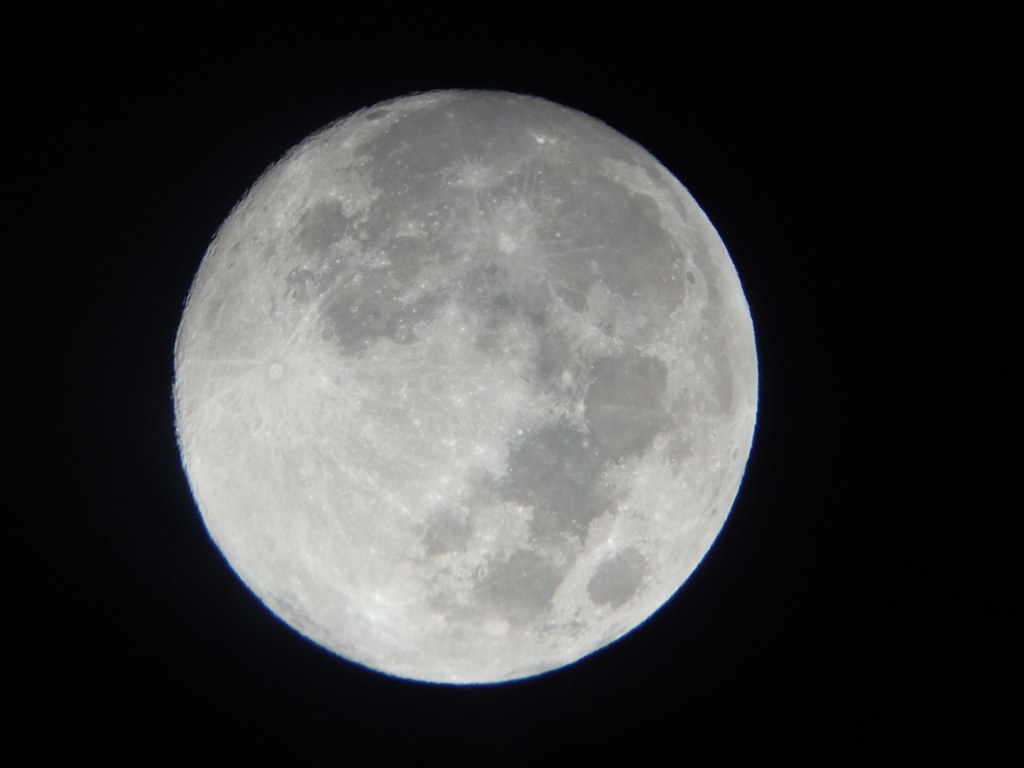
As it was a full moon, our astronomy expert explained, we weren't able to see as much of the sky as at other times due to the amount of light. However, what we were able to do was have a good old look at the surface of the moon through the telescope. A real privilege, as we observed alien seas and mountain ranges, along with having the opportunity to take a spectacular photo.


After this, we were taken to the strongest telescope on the site, housed in one of those circular-roofed buildings which opens and turns depending on where you want to look. Here we were shown a series of very distant stars, one of which was the Jewel Box, a young constellation that has three superbly bright stars in different colours that resemble precious stones. The second constellation was very old, accompanied by the dizzying fact that because it is so far away, the star has probably already died, and what we see today is how it looked many years ago.

Thursday, 11 August 2011

San Pedro de Atacama

The desert oasis of San Pedro de Atacama is located some 24 hours by road from Chile's capital Santiago. Feeling this was a little too long a bus journey for us, we flew to the nearby city of Calama. The flight takes just under two hours, with several connecting transfers via taxi or minibus into San Pedro. All very slick and professional, the transfer takes between one hour and an hour and a half depending on where your hostel is located on the route. We were last to be dropped off, as we were staying at the Sumaj Jallpa - a cute, clean and cosy hostel on the outskirts of the village, but just a 10 minute walk from the centre.

San Pedro itself is tiny and can be walked around in about half an hour. It's a real tourist trap, full of backpackers of all nationalities (although a lot of Brazilians, French and Spanish at this time of year) and its dusty streets are littered with tour operators, souvenir shops and cafes. Despite this, it didn't feel annoyingly touristy like Pucón; it has a nice relaxed feel about it with everyone (including the stray dogs) reposing in the sun and getting along.

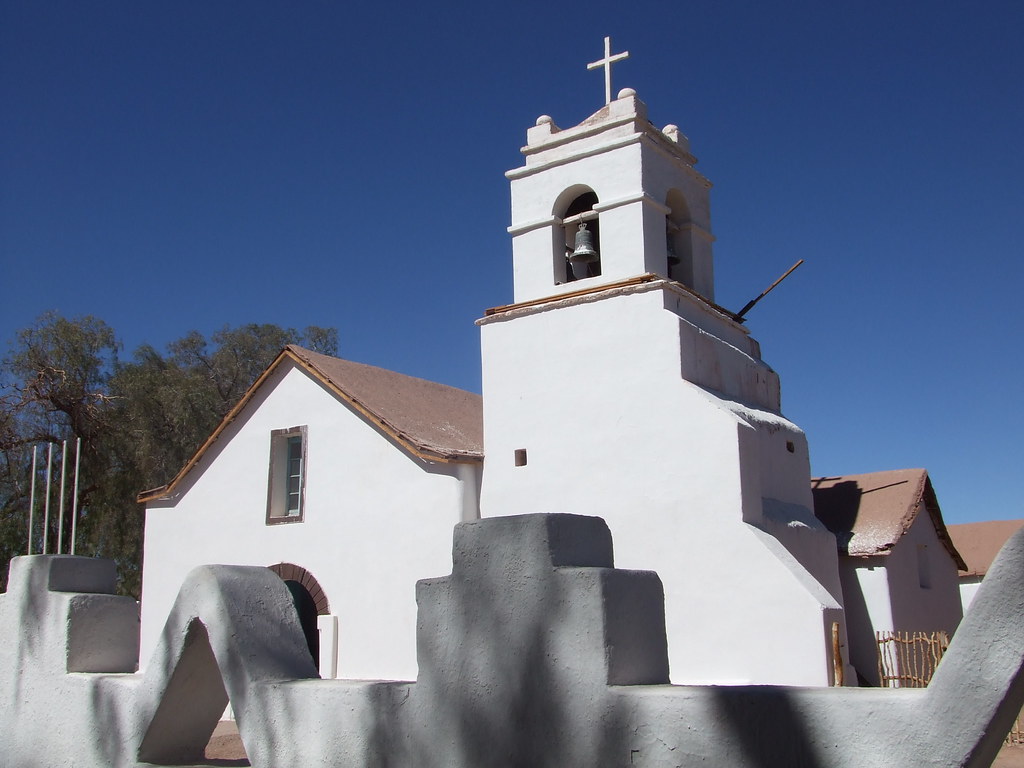
The church of San Pedro

Main sightseeing points include the church, a sparkling white national monument with beautifully adorned statues inside. Also fascinating is the archaeological museum Gustavo Le Paige ($2000 CLP / $1500 CLP for students) which covers the history of the first settlers in the region, through the arrival of the Incan empire and later the Spanish conquistadors, although occasionally in a little too much detail. The museum houses lots of interesting artefacts, including early stone tools, pottery and even textiles, all of which were kept preserved by the desert sands.

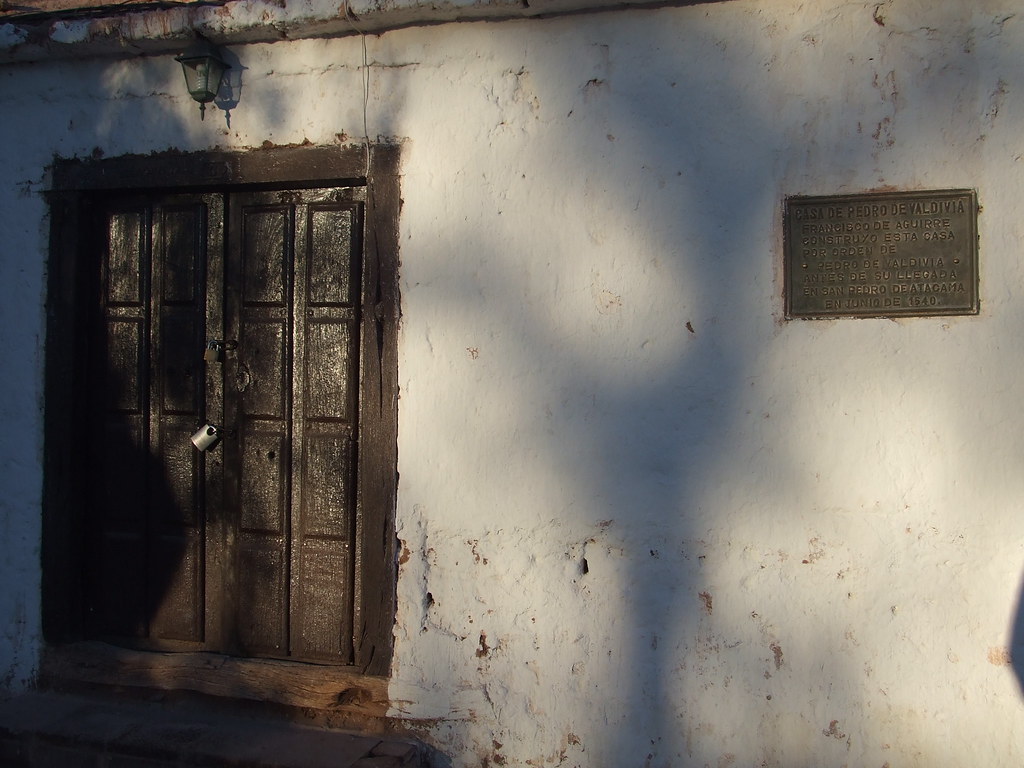
Spending a morning mooching around San Pedro's plentiful souvenir shops was fun, although you'll find that most stock the same items and that (we suspect) the majority are made in China and are not the wares of local artisans. That said, we found a really interesting jewellery shop that had some unique and reasonable priced pieces, such as a copper bangle I picked up for $10000 CLP. Our favourite souvenir shop (which we visited three or four times in our indecisiveness over gifts) turned out to be located within the oldest building in San Pedro, dating from the arrival of conquistador Pedro de Valdivia in the early 16th century. Both shops are on Taconao.

San Pedro's oldest building (now a souvenir shop)

Following the advice of the Rough Guide to Chile, we hunted around the edges of the village for cheaper eats, which was definitely the right thing to do. We frequented a restaurant on Tocopilla with Licanbur, near to the bus terminal, which offered three course meals with lots of choice for just $3500 CLP (that's about a fiver).

Chorillana
Ticking another dish off our 'to eat' list, we shared a chorillana in a bar at the eastern end of Caracoles. Dubbed a 'heart attack on a plate', chorillana consists of chips topped with sausage, beef, chicken, onions and a fried egg. Man it was goood...

Breakfasts were a little overpriced for what you got, but there are various places that offer tea/coffee/chocolate with toast and a glass of juice for an average of $2000 CLP, going up to nearer $3500 if you want eggs, ham or cheese too.

Finally, the best thing of all about San Pedro is that it's surrounded by this view, with unbeatable rosy sunsets on the backdrop of Volcán Licancabur every day.

The view during the walk back to our hostel

Wednesday, 10 August 2011

Just when I thought Chile couldn't get any more amazing

...it went and did just that

Of course I expected amazing things from the Atacama desert. The place has geysers, volcanoes, ancient ruins, salt flats and flamingos. But I wasn't prepared for how breathtakingly beautiful this extremely arid and almost barren part of the world actually is.

I'll be blogging about the different places we visited, but for now, here's a sneak photo preview:

Flamingos at sunset in the Salar de Atacama
Sunset in Valle de la Luna
Geysers de Tatio
Quitor ruins
San Pedro de Atacama

Wednesday, 27 July 2011

My 7 links

A slight digression from my usual posting topics as I appear to have joined the world of the bloggersphere by being tagged in this '7 links' thing that's doing the rounds.

Thanks to Rob W of the South America Blog (this is the chap who runs Woodward language school which brought me up to a passable level of Spanish, Chilenismos and all) I have to rifle through the archives of my blog for 7 posts that are the most beautiful, popular, controversial, helpful, surprisingly successful, lacking the attention they deserved and that I am most proud of.

This actually turned out to be quite a fun task, as I got to rediscover stories I'd forgotten about and I enjoyed feeling incredibly proud of my blog and realising what an interesting historical record it is for me. So without further ado, onto the 7 links.

My most beautiful post

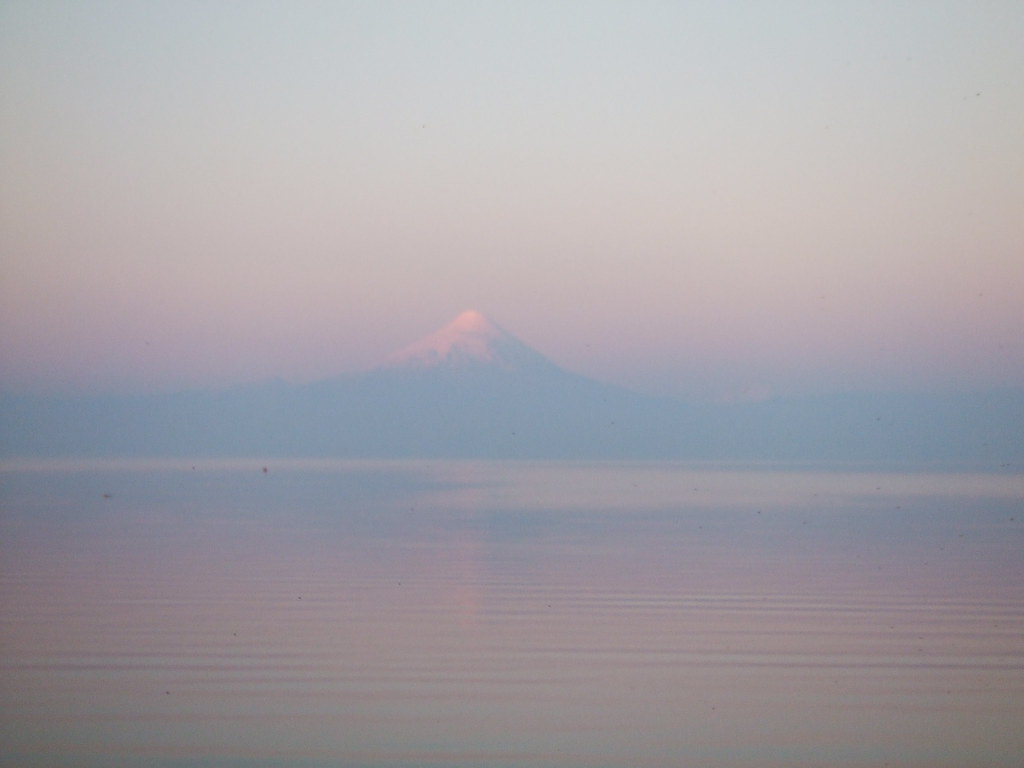
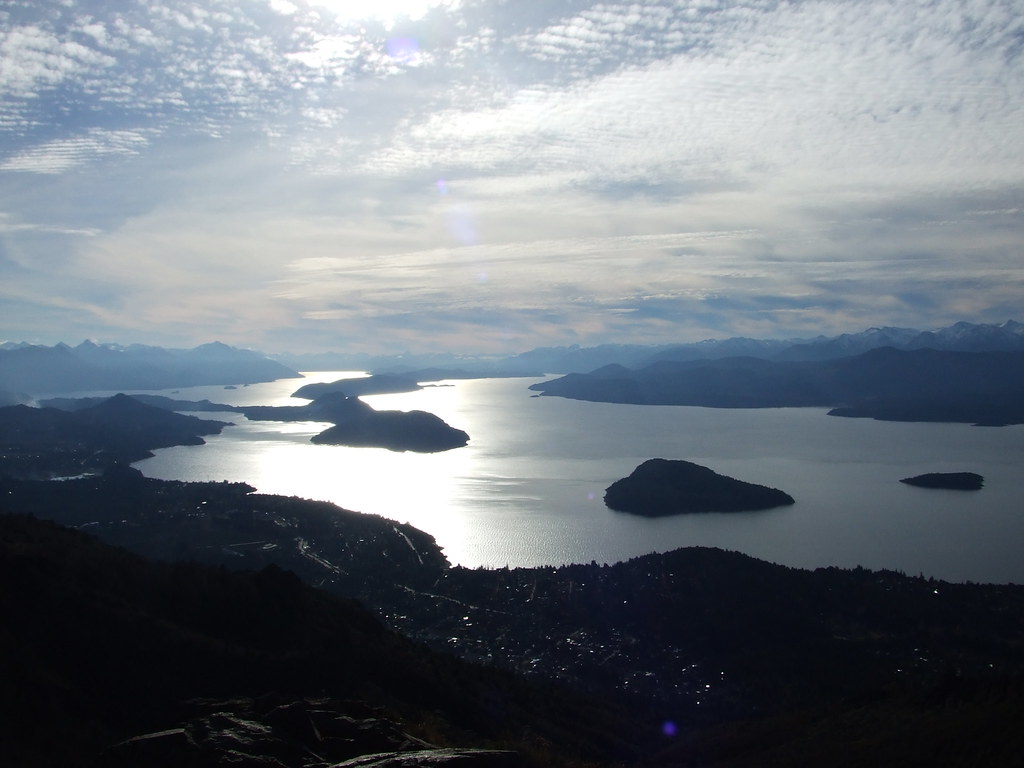
Difficult to define a beautiful blog post. Although on the whole I am pleased with how I write, I'm not sure any of the posts are exquisitely crafted literary masterpieces. So if we take beautiful to mean photography and subject matter, it doesn't get more perfect than A sprinkle of magic - the story of Frutillar and one volcano that made a last minute appearance to give us the most phenomenal setting for a pastel coloured sunset.

My most popular post

Judging by stats alone, this award goes to The most beautiful place on earth about our visit to Bariloche in Argentina, before it got covered in ash from Volcan Puyehue. A worthy winner. That said, I never tire of this view has been hanging around at the top of my most visited list since I wrote it way back on 20th October, so I think it deserves a mention too.

My most controversial post

I don't really do controversy on this blog, but I guess that Civil unrest is the closest I've come to any kind of political statement, or for that matter, to writing anything negative about my experiences here. 

My most helpful post
My very first posts, First impressions and A day of small victories stand out for me simply because various friends I have met here have told me that they felt reassured reading about my rather wobbly experiences in Chile at the beginning. So I'm nominating these for helping people know that they weren't alone in feeling adrift in this strange new place.

A post whose success surprised me


New heroes was the first time I received feedback from Chileans about my blog, with many of them in agreement with my admiration for Michele Bachelet. This was a turning point for me, where I discovered that my blog was being read as much by my new friends here as by my old friends back home. The amount of attention my Food post got was also a genuine surprise - it seems eating is what my readers are really interested in!

A post I feel didn't get the attention it deserved

Looking through my archives I found it difficult to find a post that didn't get attention, but eventually I opted for Museum of Memory and Human Rights because I don't remember getting much direct feedback on it. Maybe the subject matter was too painful for some, or maybe the history is too distant for others. Either way, I thought this post would get more of a reaction than it did.

The post that I'm most proud of

Trying not to sound too cheesy, I can honestly say that I am incredibly proud of my entire blog. I only started writing it because I fancied having a go at blogging and a couple of people had suggested it might be an interesting thing to do. But as I said at the beginning, it's turned into fascinating record of my time here; I love reading it and I hope others do too. Selecting one post, therefore, is pretty hard, but I think I'm going to plump for Immigration. Partly because it made me and a lot of other people laugh, partly because I enjoyed writing it and working on getting the humour across, and partly because I'm really proud of what I achieved that morning!

So now I have to pass on the tag to five other bloggers. So 7 links on their way to:
  1. Callie Mills - Ruffle Your Feathers
  2. Carolina Leseigneur - GoodCatt's Random Musings
  3. Pepe's Chile Adoration Page

    Next was going to be fellow Chile blogger Angie Clifford with Angie's life, but she's already been tagged so instead we change topic to...

  4. Ruth Lund - Cherry Coloured Twist
  5. Emma Fassio - Emma Fassio Knitting

Sunday, 24 July 2011

Tango

Buenos Aires. City of my dreams. You did not disappoint me.

I don't remember when it was exactly, but at some point during my childhood/adolescence I got the idea into my head that I wanted to experience tango in Buenos Aires. Somewhere between seeing the musical Evita and watching the original 'Come Dancing' I imagine it happened. A little seed lodged deep in my brain that as I grew-up I guess I never really thought would grow to fruition.

But this is a time in my life where childhood dreams come true and I finally had the opportunity to visit the Argentine capital. And oh what a magnificent city you are.

Tango 'graffiti'
Tango is simply everywhere in Buenos Aires. It oozes out of window panes, is splashed across walls and sparkles in shop windows adorned with shoes. The city is tango. A red and black sultry haze that burns into life as night descends.
We spent an evening at one of the many tango show and dinner places that litter the city. Taconeando was our bar of choice, located in San Telmo, one of the oldest and most historic barrios or neighbourhoods of Buenos Aires. We entered a small, dimly lit room, furnished with plush antique rose fabrics and tables for dining surrounding a low central stage.

Dining came first. An entrada (starter) of very tasty pate, followed by, of course, a massive steak and chips. Dessert of a choc-ice filled with chocolate, caramel and vanilla ice cream had just been served as the lights went down and the show began.

Tango at Taconeando
The show covered the history of the tango, beginning with two men dancing in a rutting stag-like stand-off, followed by moves through romantic, fun and flirty and seriously sexy moods. The dancing was interspersed with singers performing tango classics (including audience participation) and backed by a brilliant quartet of piano, violin, double-bass and bandoneon - the accordion-like instrument that gives tango its signature sound.

It was an electrifying hour and a half of tango, where we were so close to the action that at times we had to duck to avoid being kicked in the head! A marvellous display of a beautiful dance that was simply a joy to behold.

More tango

But our tango experience did not stop there. Oh no! The next day, I was rather overexcited to discover that the world tango museum, which was on my list of things to do, was actually located within the national tango academy of Argentina! You can imagine my squealing.

We entered the 150 year old building, with its art nouveau style architecture, and found the museum on the first floor. It tells the chronological history of the tango, with various artefacts - from manuscripts, to records, to dancing shoes - to illustrate the different periods in the dance's life. It also demonstrated that tango is very much alive today, with the academy itself offering lessons at 30 Argentine pesos a go (that's about 4 quid) to anyone who wants them. Something for my next visit I think.

The bandoleon
After the museum, we headed on to another of the oldest tango buildings in Buenos Aires - Confiteria Ideal. Dating from 1912, the cafe / ballroom boasts more luscious art nouveau architecture, and judging by its website, seems to have been used for the film version of Evita starring Madonna. We supped a cafecito in the historic surroundings, while the sound of the afternoon milonga drifted downstairs.

More Taconeando tango
And more Taconeando tango

Sunday, 10 July 2011

If there was just one reason to come to Chile...

...it would be hot springs.

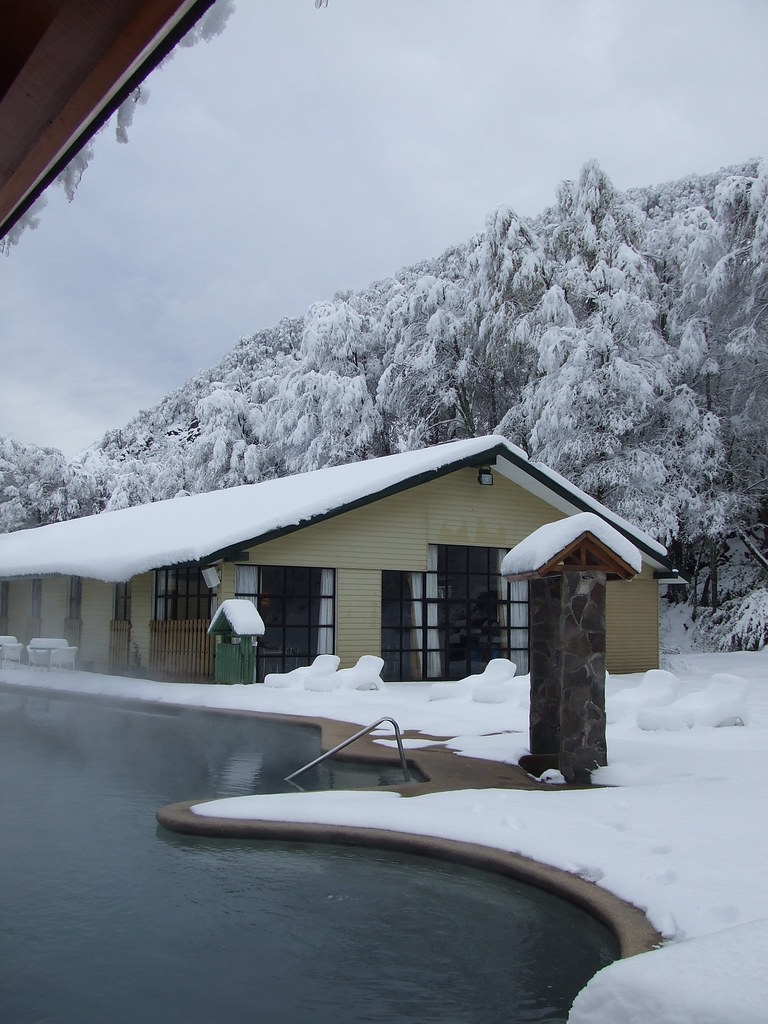
The most incredible thing I have done so far in Chile is to swim in a naturally heated swimming pool, outdoors, up in the mountains, while it was snowing. With an incredible bunch of girlfriends too.

Way, way back before Carlos and I had our southern Chile trip, I had my first taste of life outside of the metropolis at Nevados de Chillan.

Me and the girls exploring the winter wonderland.
Photo thanks to Bárbara Hermosilla
Nevados de Chillan is reported to be one of the best ski resorts in Chile. I wouldn't know because I have no intention of ever trying skiing, wobbly knee and all, but it certainly has a beautiful resort, spa, pool and restaurant complex up in the mountains - much more my style!

Chillan is reached from Santiago in five hours by train, I think still classified as being in Chile's central valley. The countryside is agricultural and apart from the spine of the Andes, very flat. It reminded me a lot of Lincolnshire (in a good way!)

Morning swim in the snow
The I Love Chile girls and I spent four days relaxing (and working a little!) in this paradise. The food was excellent, the jacuzzi was fun and the view was amazing, but by far the best thing was the pool. I'm talking naturally heated water, direct from volcanoes and other geological phenomena, that have been harnessed by man for bathing up in the mountains.

The night-time dip in the falling snow followed by a early morning swim as the sun rose on snow covered mountainsides I don't think can ever be beaten.

Sunday, 26 June 2011

Addendum: Volcán Puyehue

When I moved to Chile, I was aware that there were certain risks involved. Earthquakes for example. And so, I was prepared. I read up on what we needed to do, I made sure we had a stock cupboard full of emergency supplies, and I practised running under the table to make sure I'd fit. With time, I've become accustomed to feeling the ground shake and to hearing our apartment building go bang now and again.

What I wasn't prepared for, was volcanoes. Volcanoes to me are the stuff of legend. They happen in Pompeii, in ancient times, or in Iceland, where the whole landscape is volcanic. Of course I know that Chile is located on the Pacific ring of fire. That's why it has earthquakes, right? But duh, it also means it has volcanoes. Active ones.

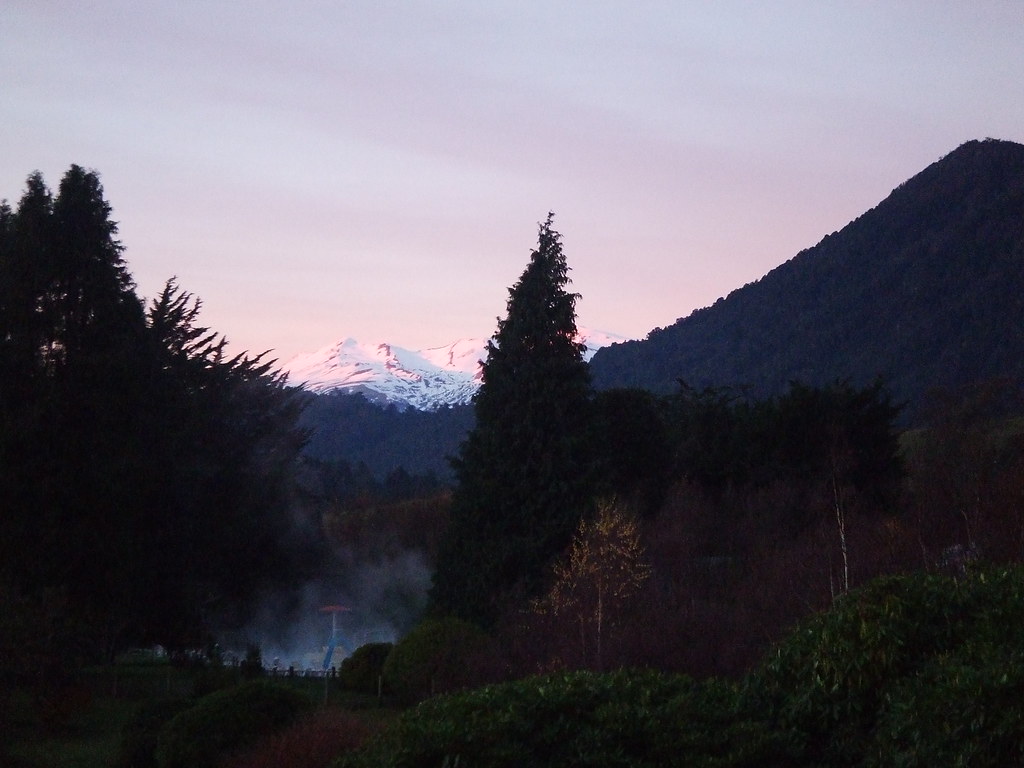
So there we are, happily living the high life in Termas de Puyehue. From our balcony window we can see the snow-covered Volcán Puyehue, sitting in the Caulle volcanic range. It hasn't erupted in more than five decades. Carlos casually tells me that he saw a puff of smoke from the range during his cabalgata. This, he was told, is quite normal, especially in winter, where obviously the difference between the air temperature and that of the volcanic crater means more steam gets produced. It's when there's smoke in the heat of summer, or no smoke for days, that the locals start to worry.

 Volcán Puyehue, before it erupted

A couple of days later in Valdivia, we see on the morning news predictions of a seismic swarm for Puyehue - a series of smallish earthquakes in close succession. How exciting we think, and how funny that we were there just a few days before.

In Pucón, we giggle at a volcano warning system, joking to ourselves that we wouldn't be hanging around to watch the light change to red if there was smoke billowing from the crater of Volcán Villarrica. I lament that I've spent the whole week around volcanoes and have yet to see any smoke, annoyed but in good humour that Carlos has and I haven't.

Happily we return home from our holiday, go to sleep for a few hours before hooking ourselves back up to the internet to see what we've missed during the previous 9 days. It's then that I see the messages on Facebook. Where are you? Have you left Puyehue? Are you stuck waiting for a flight? It's then that I discover that as we were sitting in Pucón bus terminal, that volcano that from the hot volcanic springs of Puyehue we'd watch turn pink with the sunset, had exploded.

Over the coming days, as I return to my day job and start writing news stories about it, we discover that large parts of the region we had been staying in days before had been evacuated. The pass over the mountains to Argentina is closed. And the most beautiful place on earth is covered with ash, Bariloche's crystal blue waters grey with sediment.

It's then that I realise we've had a lucky escape, and that with a landscape of such great beauty, must come respect for the earth that created it.

Some of my stories about the Puyehue volcano:

And finally: Pucón

Leaving behind Valdivia, we arrived in tourist-central Pucón around midnight. We were met at the bus station by a man who claimed to be the owner of the hostel we were staying at. A little suspicious, as we weren't expecting anyone, we cautiously followed him into what did appear to be our hostel and onto a very windy cabaña-style annex.

Pucón, as I mentioned, is super-touristy, and the jury is still out as to whether I like it or not. A small town on the side of a lake, its grid-pattern streets are lined with picture-perfect log-cabin style buildings, most of which house tour and adventure companies. The main draw to Pucón is the looming Volcán Villarrica, which can be climbed (with a guide and special equipment). As we're not particularly fit, and it was late on in the season, we had decided before arriving against doing this.

The crater of Volcán Villarrica

Preferring to explore by ourselves, we had hoped to walk around the skirts of the volcano in the surrounding Villarrica national park. So, avoiding the ever-zealous sales reps, we enquired at the main tourist office about where we could go under our own steam. This was a mistake. We discovered to our dismay that the only way way to access the reserve on your own was with a car. Otherwise, you needed to join one of the many tours leaving Pucón (did I mention those?), all of which we'd missed as we didn't exactly wake up very early.

We were left then with two options - staying in Pucón (which would have ultimately meant hanging around in a bar with loads of other gringo backpackers) or heading out to a different national park which was accessible by public transport. We chose the latter.

Lago Villarrica, from Pucón

The bus to Parque Huerquehue took around an hour and was an exciting journey traversing a pretty steep hillside. Once there, we consulted the park ranger about routes we could complete in the three hours we had before the last bus left the site. Mildly ticked off by the ranger for not arriving early enough for a decent length walk, I handed over my extranjero (foreigner) entrance fee of 4000 pesos, while Carlos got away with the local fee of 2500 pesos thanks to his Chilean ID card, despite a comment from the ranger about his Spanish accent.

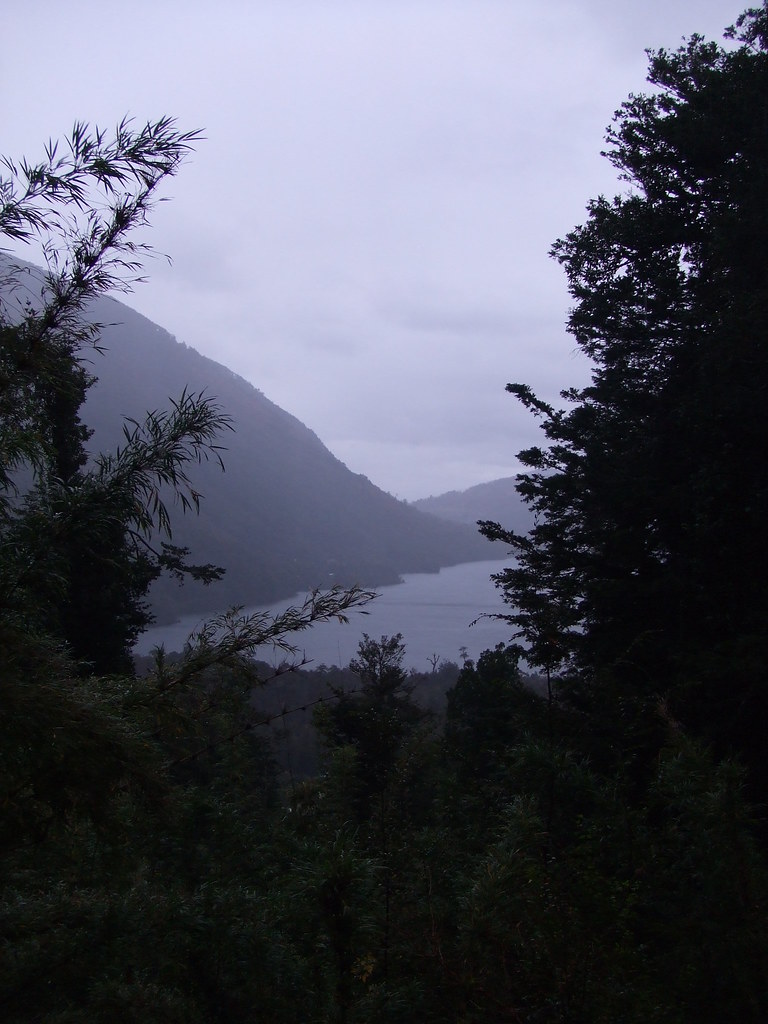
Parque Huerquehue, as the rain started to fall
As the rain started to fall, we set off on a walk through the native forest. It was lovely, but the increasing rain and time constraints meant that we indeed did not get very far at all before we had to turn back and slosh our way through the mud to be counted back on the bus.

Returning to Pucón, we finally had the chance to sample some local trout, which Carlos had been dreaming of ever since we noticed it on a menu in our first five minutes in Bariloche. We also had a starter of seafood soup (again local) which was just delicious.

And that was that, bar an hour or so knitting in the bus station while we awaited the ten hour return trip back to the smoggy city of Santiago. Thank you to the regions of Los Ríos, Los Lagos and La Araucanía, you definitely prove the saying here that "Santiago no es Chile" (Santiago isn't Chile).