Showing posts with label Weather. Show all posts

Sunday, 21 August 2011

Hiking the cordillera

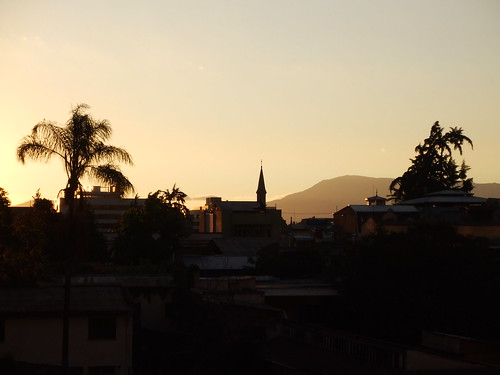
With the Andes as such a magnificent backdrop to the everyday city of Santiago (below is the view from my office, just to rub it in), we have often wondered if it was possible to get out and enjoy a day amongst them, without the need for loads of mountaineering equipment or being particularly in shape.


Delightfully, the answer is yes! There are 5 or 6 national parks dotted along the east of the city which are easily accessible, including via public transport.

Meeting our criteria of:
  1. An easy to follow waymarked route without the need for a map;
  2. A fairly easy-going hike that wouldn't see us hanging onto craggy outcrops for dear life; and,
  3. Not requiring a succession of ever complicated bus routes (especially those scary-looking orange micros)
was a park to the east of Ñuñoa, the details for which have now disappeared off the Park Association's website. But here's what we did:
  • From the Alameda, we took bus number 403 east - staying on it almost to the end after Vicuña Mackenna, Irarrázabal and Larraín
  • We alighted a few moments after the aerodrome and military hospital, when the bus makes a right turn
  • Back onto Larraín, we started walking towards the mountains - a slow incline that was a little tiring on the legs, for about 15 minutes until we reached the entrance to the park
The entrance fee to the park was 600 Chilean pesos each and we had to leave our details with the security hut at the entrance. From there (alongside various adventurous looking outdoor activities) were a series of trails going up into the mountains.

Our plotted route took us on paths labelled as senderismo and trekking; the first supposedly being just normal walking, while the second would have some pretty steep parts. Exhaustingly, we did nothing but go up and up and up (although I suppose we should have figured that out, it being a mountain range and all).

The first part of the walk took us through a picnic area and then onto an access road which wound its way up the mountain. Then the second part, which was trekking, involved more climbing than we were expecting. It was a dry day so scrambling in between rocks wasn't too bad, but it meant we didn't get as far as we'd hoped.

What we did get though was an awesome view of the Santiago smog in all its glory! Although I think I would have preferred to be in the thick of it and not know...

Friday, 19 August 2011

Truly winter... in August

Yesterday it snowed in Santiago which apparently is a BIG DEAL. For those of you who know the city, it was snowing as far west as Tobalaba, which I'm told very rarely happens. Sadly, the weather wasn't freakish enough to be snowing downtown at La Moneda, but it was nonetheless pouring with rain; unusual enough, in that I had to root around in the back of the wardrobe for my umbrella while Carlos dusted off his waterproofs.

So as today dawned with the sun shining brightly, clear blue skies and the snow-covered Andes strikingly visible thanks to an absence of smog, what better day to enjoy our final sojourn into the mountains, with another trip to Cajon del Maipo.

The Andes, as seen from metro line 4

Attentive readers will remember we last went to the Cajon at the start of autumn. The first snows had just fallen and the leaves were beginning to turn gold. This time around, we arrived in San Jose de Maipo to a backdrop of blanketed hills and dripping water.

San Jose de Maipo
San Jose is the main village in the valley - a cute place to hang out but not loads to do. So after an empanada and an amble, we jumped back on the micro to go a little further into the valley to San Alfonso and the resort of Cascadas de las Animas (cascades of the spirits).

Cascadas de las Animas is a really pretty complex of campsites, cabañas (cabins) and land to explore. We paid the 4000 pesos fee for a two hour-ish walk to the waterfalls and back and set-off accompanied by one of the local dogs, who we nicknamed Ginger once we realised she was in it for the long-haul and we weren't going to shake her off, despite forcibly leaving her outside the gate.

The walk took us along the river and up through the forest to the site of two waterfalls. It was the closest we'd ever been to a waterfall and made us feel like we were in a Robin Hood film. The view looking back at the snow-covered Andes was also, of course, spectacular.

It was a perfectly romantic end to our last chance at sightseeing in Chile before we return to the UK. Well it was, until the slight drama of me taking a rather heavy tumble on our way back down the mountain from the waterfalls. Despite bashing my elbow badly on a rock (which hurts a lots - I wouldn't recommend it), somehow I managed not to break my arm. And so in true Jayne-style, we ending our final day of sightseeing. At least it was memorable!

The Maipo river
Cascadas de las animas

Sunday, 14 August 2011

Stargazing

This weekend took us to the Elqui Valle (or Valle de Elqui) and the extremely relaxed town of Vicuña; a San Pedro in the making but less touristy and more Chilean.

Having spent the morning in La Serena, we hopped on a micro headed up the valley and were soon treated to some lush green mountainsides under a sparkling clear blue sky. Signs were promising for our evening plans...

We relaxed for a while in our delightful hostel, Donde Rita, run by a German lady with perfect Spanish. A slightly disorientating experience, but in a good way, as the lodging was decorated in a very similar vein to my parents' house and it felt like being back in England! Batteries recharged, we left in search of our night time entertainment as a full moon popped up over the mountains.

Enough teasing, as the title suggests, we were of course headed for an observatory. Chile is famed for its clear skies and Vicuña is blessed with 300 totally clear days (and nights) per year. The Elqui Valley is also somewhat infamous for its high volume of UFO sightings, but maybe that's down to the pisco (more on that to come).

The municipality of Vicuña operates an accessible observatory for anyone interested in learning about the stars. It costs 3500 Chilean pesos to enter plus 1500 for transport if you don't have your own. Tours run every day at 6.30pm and 8.30pm in the winter time and a minibus will take you up to the Mamalluca observatory, located around 9km from Vicuña. There are also tours available in English if you remember to ask (we didn't).

The evening started with a 15 minute or so lecture on the universe. Unfortunately for me, I couldn't understand a thing due to a mixture of terrible sound quality and the presenter's very strong Chilean accent. Neither could Carlos though which made me feel better.

Thankfully, things improved when we were split into a group of around 20 and assigned our very own astronomer who took us to have a look at the telescopes. Felipe, our extremely knowledgeable but easy-to-understand guide, pointed out some of the principle constellations visible to the naked eye - including the Southern Cross (which obviously we don't get to see in the northern hemisphere), the Southern Triangle (probably a dreadful translation of mine but you get the idea) and most excitingly of all, the Scorpio constellation, right above our heads. I was pretty over-the-moon, if you'll excuse the pun, to see my own star sign up there in the sky.

Next, we were allowed to have a go on the telescope to look at a dim, yellow-ish star just above the horizon - which turned out to be Saturn. Although it was tiny, with the assistance of the telescope, it was easy to make out the distinctive rings that characterise the sixth planet from the sun.

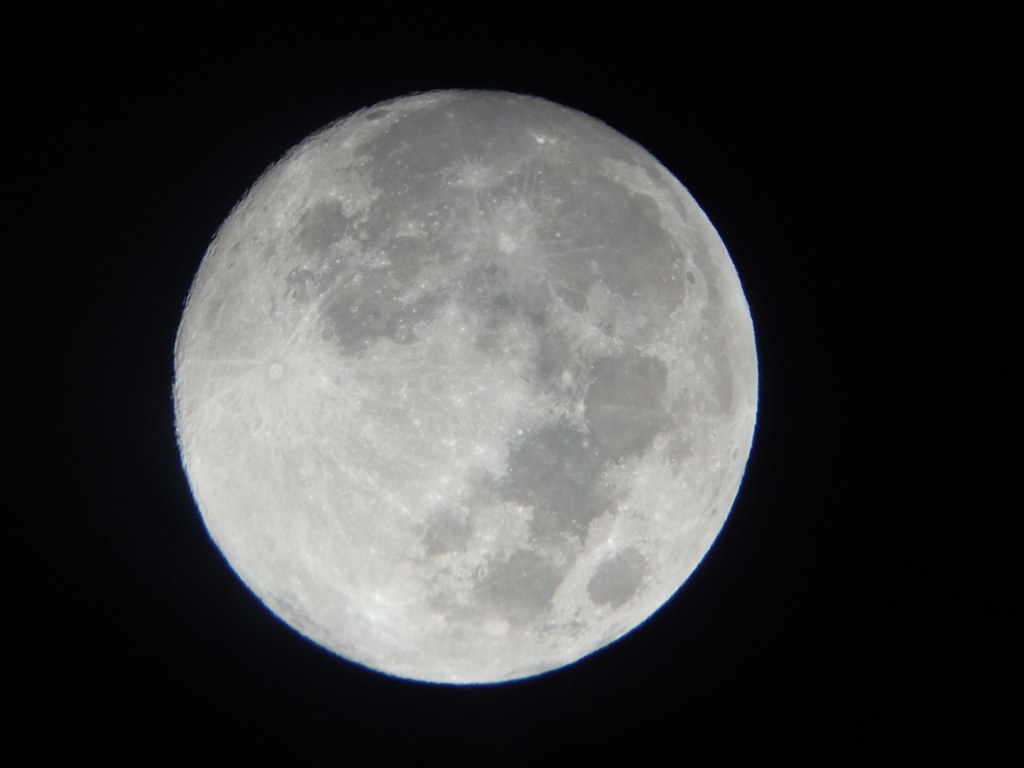
As it was a full moon, our astronomy expert explained, we weren't able to see as much of the sky as at other times due to the amount of light. However, what we were able to do was have a good old look at the surface of the moon through the telescope. A real privilege, as we observed alien seas and mountain ranges, along with having the opportunity to take a spectacular photo.


After this, we were taken to the strongest telescope on the site, housed in one of those circular-roofed buildings which opens and turns depending on where you want to look. Here we were shown a series of very distant stars, one of which was the Jewel Box, a young constellation that has three superbly bright stars in different colours that resemble precious stones. The second constellation was very old, accompanied by the dizzying fact that because it is so far away, the star has probably already died, and what we see today is how it looked many years ago.

Sunday, 26 June 2011

And finally: Pucón

Leaving behind Valdivia, we arrived in tourist-central Pucón around midnight. We were met at the bus station by a man who claimed to be the owner of the hostel we were staying at. A little suspicious, as we weren't expecting anyone, we cautiously followed him into what did appear to be our hostel and onto a very windy cabaña-style annex.

Pucón, as I mentioned, is super-touristy, and the jury is still out as to whether I like it or not. A small town on the side of a lake, its grid-pattern streets are lined with picture-perfect log-cabin style buildings, most of which house tour and adventure companies. The main draw to Pucón is the looming Volcán Villarrica, which can be climbed (with a guide and special equipment). As we're not particularly fit, and it was late on in the season, we had decided before arriving against doing this.

The crater of Volcán Villarrica

Preferring to explore by ourselves, we had hoped to walk around the skirts of the volcano in the surrounding Villarrica national park. So, avoiding the ever-zealous sales reps, we enquired at the main tourist office about where we could go under our own steam. This was a mistake. We discovered to our dismay that the only way way to access the reserve on your own was with a car. Otherwise, you needed to join one of the many tours leaving Pucón (did I mention those?), all of which we'd missed as we didn't exactly wake up very early.

We were left then with two options - staying in Pucón (which would have ultimately meant hanging around in a bar with loads of other gringo backpackers) or heading out to a different national park which was accessible by public transport. We chose the latter.

Lago Villarrica, from Pucón

The bus to Parque Huerquehue took around an hour and was an exciting journey traversing a pretty steep hillside. Once there, we consulted the park ranger about routes we could complete in the three hours we had before the last bus left the site. Mildly ticked off by the ranger for not arriving early enough for a decent length walk, I handed over my extranjero (foreigner) entrance fee of 4000 pesos, while Carlos got away with the local fee of 2500 pesos thanks to his Chilean ID card, despite a comment from the ranger about his Spanish accent.

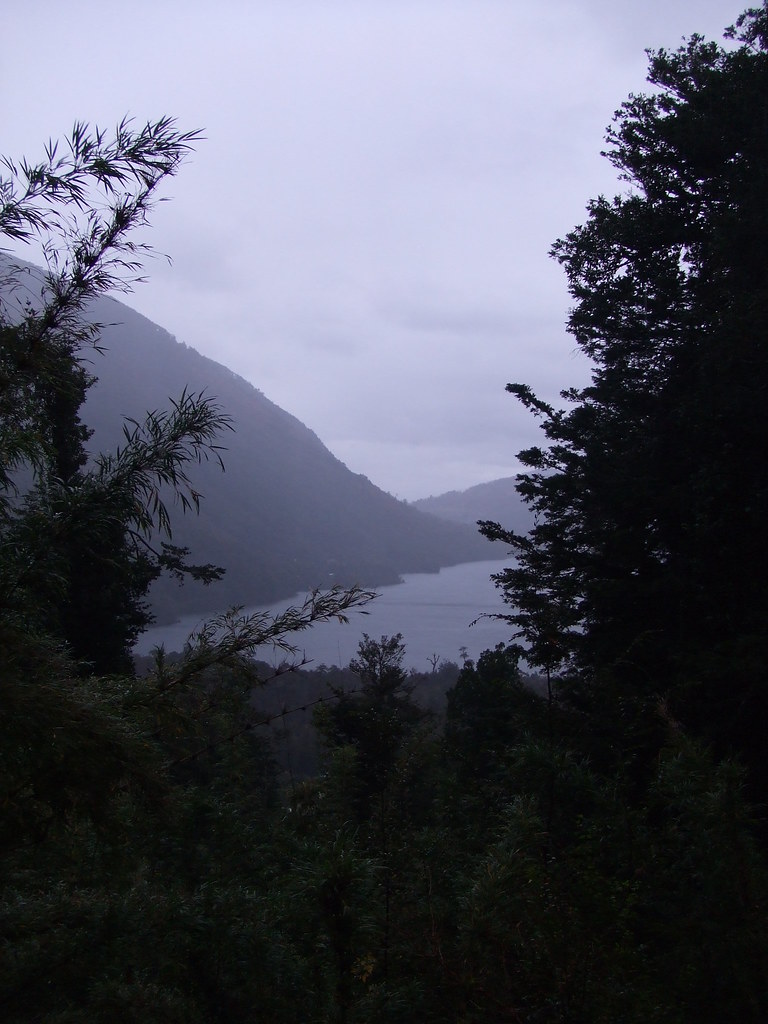
Parque Huerquehue, as the rain started to fall
As the rain started to fall, we set off on a walk through the native forest. It was lovely, but the increasing rain and time constraints meant that we indeed did not get very far at all before we had to turn back and slosh our way through the mud to be counted back on the bus.

Returning to Pucón, we finally had the chance to sample some local trout, which Carlos had been dreaming of ever since we noticed it on a menu in our first five minutes in Bariloche. We also had a starter of seafood soup (again local) which was just delicious.

And that was that, bar an hour or so knitting in the bus station while we awaited the ten hour return trip back to the smoggy city of Santiago. Thank you to the regions of Los Ríos, Los Lagos and La Araucanía, you definitely prove the saying here that "Santiago no es Chile" (Santiago isn't Chile).

Sunday, 19 June 2011

City of rivers

Pinnacle of the holiday finally achieved, we moved onto Valdivia - the urban centre and capital of Los Rios region. Valdivia is famous for being the location of the world's biggest ever recorded earthquake - a huge 9.5 on the Richter scale in 1960. It's also famous for its German influences, beer, fish market, rivers and sea lions!

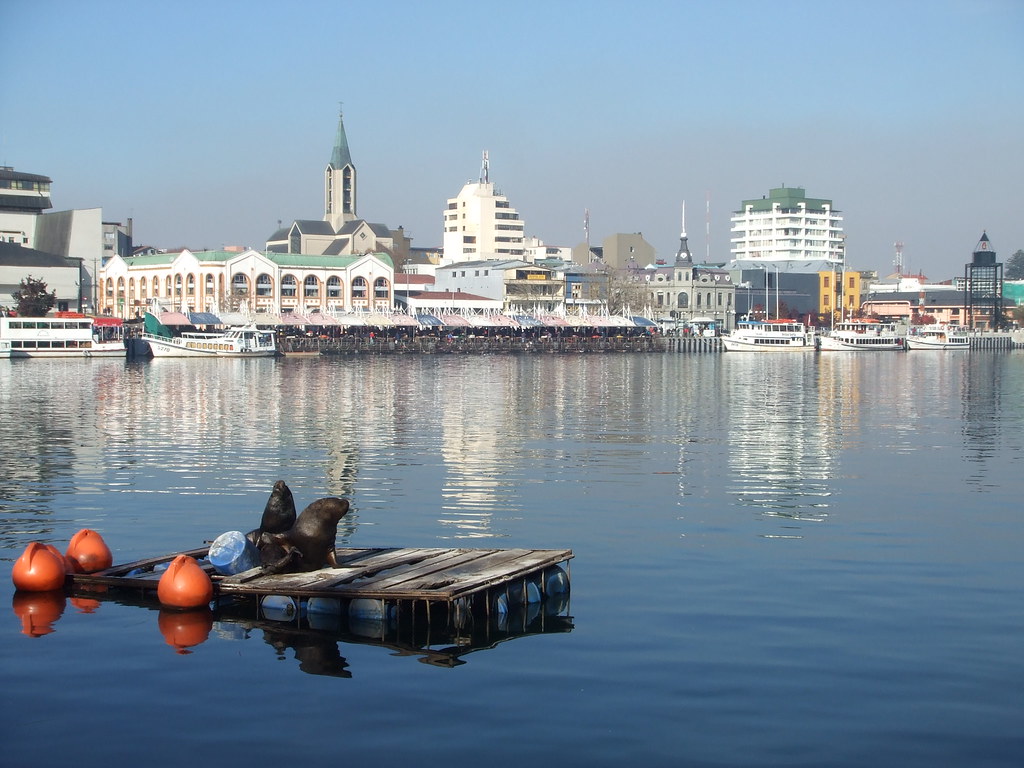
The day began shrouded in dense fog as we ambled along the waterfront trying to avoid the grasp of the plethora of pleasure boat trip sellers keen to seize on a couple of tourists. In addition to the rather yummy looking fish market (a pity we couldn't cook that night), the waterfront also boasts a massive submarine and a pendulum clock that tells the time based on the curvature of the earth. And how could I forget? The waterfront is also home to loads of (rather smelly) sea lions, who lounge around all day except for when the market clears up at night...

My picture postcard of Valdivia's waterfront (and sea lions)

While we were waiting for the skies to clear, we decided to take in a few museums. The first was the Kunstmann brewery (cerveceria) - which we took a short micro trip to get to. Now, we were expecting something on the scale of the Guinness Storehouse in Dublin. Not to be I'm afraid; the brewery has a small museum and shop and a large restaurant. Still, it was interesting to learn about this family business, started by German immigrants who first arrived in the mid 1800s, which now competes on a global sale. The honey ale is particularly nice.

Philippi (right) and friend.
I love this photo, nothing says 'Victorian
explorer' more.
Back in the town centre, the sun had broken through so we enjoyed our sandwiches on the riverside - at a safe distance away from the hungry lobos marinos (sea lions). Afterwards, we crossed the river to the university side of town (Valdivia is an important student city) and visited two more museums. The first was an historical and anthropological museum that contained artefacts from the region's various colonisers, from the Mapuches to the Spanish to the Germans.

The second was the Philippi museum of exploration. The observant amongst you will remember I mentioned Philippi in my post about Puerto Varas. Despite the sound of the name, Philippi was a German explorer who 'discovered' a large part of the regions of Los Rios and Los Lagos. A palaeontologist and zoologist, he worked extensively to categorise and document life in this exotic land, which at the time consisted mainly of dense forest.

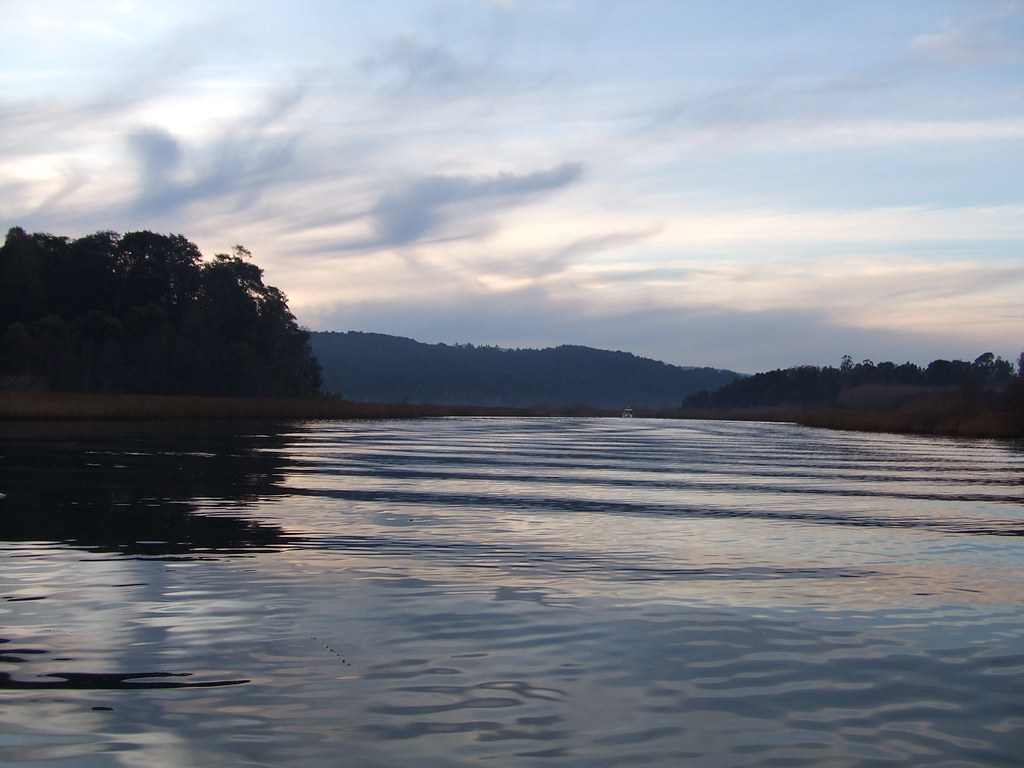
Full of information, we decided to finish off the day with one of the riverboat tours we had an initially been avoiding. Thankfully, we made a good choice - a sturdy boat, a very informative guide and a decent long tour along the Valdivia, Cau Cau and Cruces rivers. Another sunset in another romantic place.

Valdivia, city of rivers

More Valdivia photos on Flickr:

www.flickr.com

jaynescarman's Valdivia photoset jaynescarman's Valdivia photoset

Friday, 17 June 2011

A sprinkle of magic

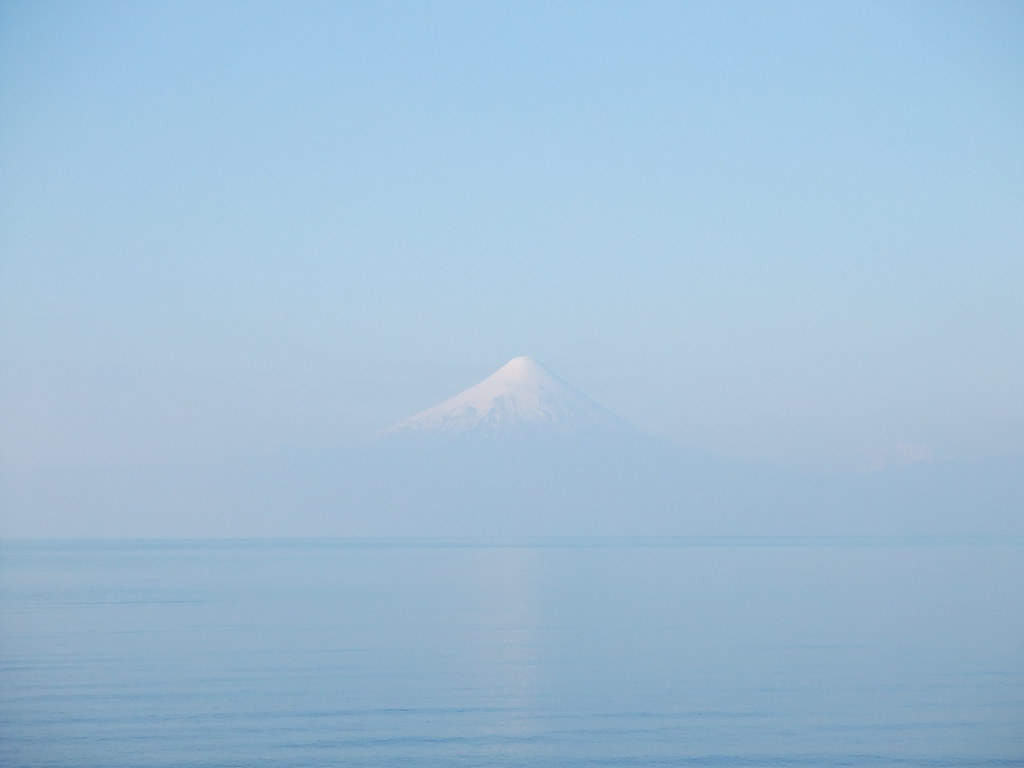
By the time we reached Frutillar I was desperate to see Volcan Osorno. We'd spent the previous day on the shore of Lago Llanquihue under a damp blanket of low cloud and had woken up to hazy mist shimmering over the surface of the lake.

Frutillar
Having caught the micro (small bus) around the lake to Frutillar (a mere $900 pesos / £1.20 each), we alighted at Frutillar Bajo, on the lake side (Frutillar Alto being the main town slightly inland). We were presented with a beautiful view: a wide bay, lake waters lapping on a stretch of beach, an elegant wooden pier, tidy houses, more Germanic churches and the modern Teatro del Lago stretching out on stilts into the water. Still no volcano though.

So we sat down to have our lunch on the pier. Amusingly, we were joined by various other couples who divided into two clear groups. Chileans, dressed in normal daytime clothing, who walked straight to the end to take pictures of themselves with the view and partake in various public displays of affection. Then there were the internationals, dressed in their outdoor gear, who settled down on one of the side benches, opened up their backpacks and started assembling sandwiches from the various supplies stored within.

Ham and cheese hallulla (that's a bap to you and me) halfway to my mouth, I turned my head. "Mira!" I cried, "el volcán!" (Carlos and I spoke in Spanish the whole time we were on holiday in case you were wondering). Suddenly, the clouds began to part and, like a mirage, the shape of the volcano began to slowly appear out of the mist. It was a magical sight, and as the clouds rolled away and the sun shone brightly, we just sat and relaxed and admired this astonishing view of a perfectly symmetrical, snow-capped volcano seeming to rise out of the lake.

Thrilled that Volcan Osorno has appeared behind me


Volcan Osorno

Kuchen and hot chocolate
Of course, no blog post of mine would be complete without mentioning food. In Frutillar, we had been recommended a place to sample kuchen, which is German for cake. At "Duendes del Lago" (goblins of the lake) we had something similar to apple crumble and a hot chocolate - mine mint flavoured and Carlos' caramel. Plus some biscuits. Yum!

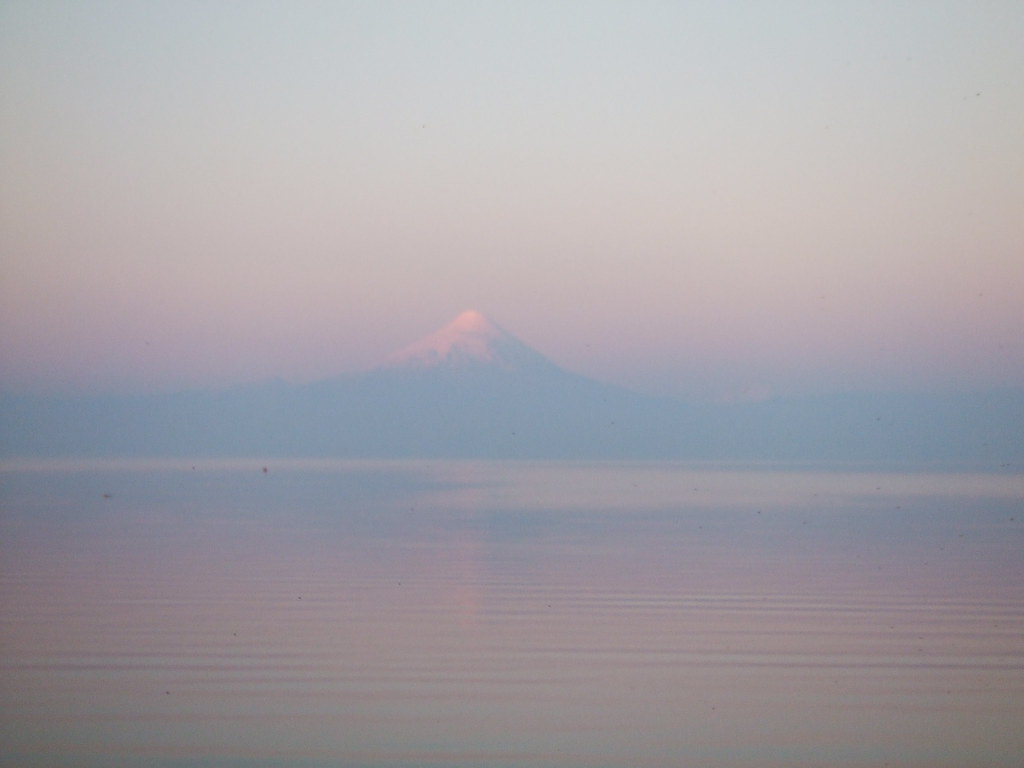
Afterwards, we were treated to another sunset. This time, with the mist and haze, the sky and sea turned shades of dusty pink and blue, like a pastel picture. Truly a sprinkle of magic.


Volcan Osorno at sunset

More Frutillar photos on Flickr:

www.flickr.com

jaynescarman's Frutillar photoset jaynescarman's Frutillar photoset

Thursday, 16 June 2011

A flavour of Germany

Moving on from a life of luxury, at our next stop, Puerto Varas, we returned to earth with a bit of a bump. Unfortunately, the owner of the hostel we had booked didn't know we were arriving; neither did he have the double room we had reserved available; and neither was his hostel in the best of states, being as it was low season and the hostel was (I think) technically closed. That said, he let us stay in a dorm room on our own, dropped the price and was keen to make us feel welcome. But sadly, it wasn't the best of starts to a day that continued to be a bit of a let down.

I had been told marvellous things about Puerto Varas; about its quaint German architecture and stunning view of the near-perfect Volcan Osorno. The one thing you can't organise though is the weather. And this was the view:

Believe it or not, there's a massive volcano behind those ships


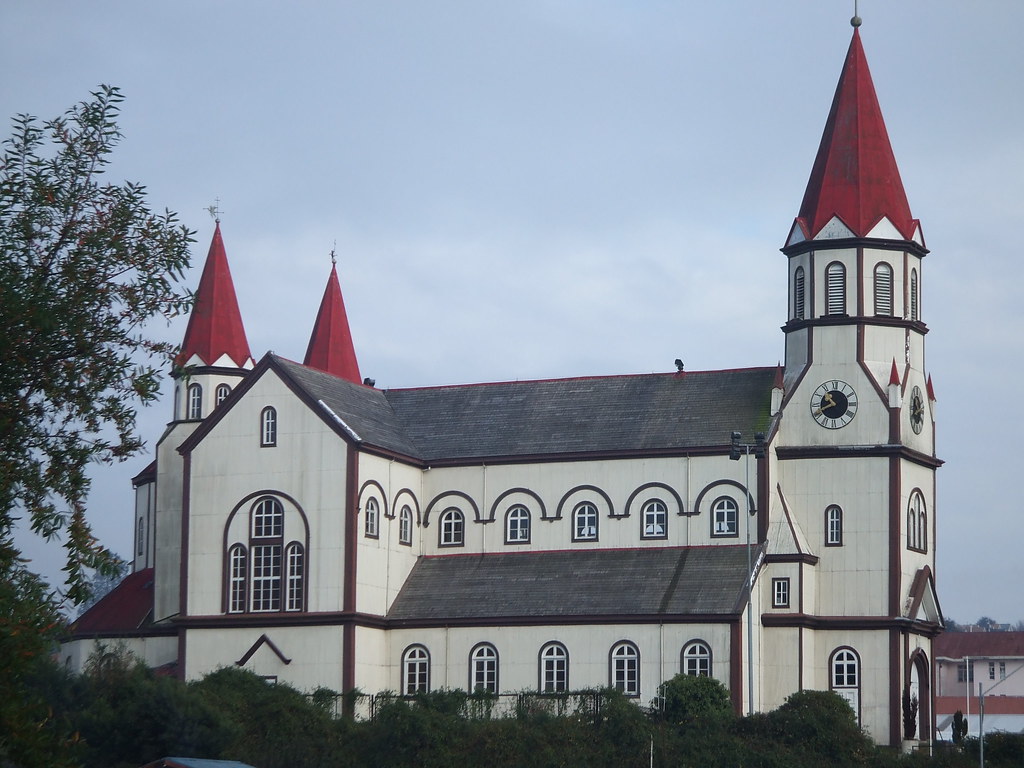
Nonetheless, we ploughed on through a freezing cold afternoon/evening to take in a walking tour of the town. Starting off by scaling Cerro Philippi (you'll find out who he was once we get to Valdivia) and then navigating the town via the tourist circuit marked into the pavements. This took us past various Germanic churches and wooden-structure houses built by German immigrants at the end of the 19th century.

Sacred heart church, Puerto Varas


Darkness had fallen before we finished and the air was thick with wood smoke. Shivering, we went in search of dinner and came across a funky cafe with the most awesome food - Cafe el barrista. Tempted inside by the $5000 peso (£6.50) deal, we enjoyed squash soup, the most delicious salmon and roasties soaked in wine, plus mineral water from Puyehue. It was that good we went back the next night.

The following morning, the skies looked promising and in the early morning light and with the hazy sunshine beginning to break through the fog, my spirits lifted. We finished off the circuit and popped into the artisan marketing before hopping on a micro to nearby Frutillar...

Comes the light, the spirit lifts

Sunday, 24 April 2011

First snows

The seasons seems to be racing along now as on Saturday the aforementioned deluge broke loose and it rained all day and was really cold (around 12 degrees centigrade - how quickly we forget).

So that meant only one thing yesterday for our planned walk in the mountains... there was snow!

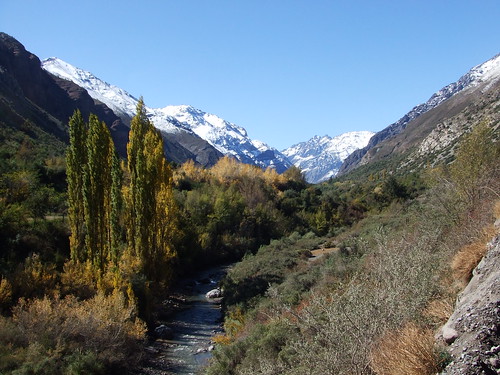
In fact we were treated to three seasons in one; imagine, clear blue sky, hot beaming sun, yellow and golden leaves and snowcapped mountains. Simply breathtaking.


Our destination was Cajon del Maipo, a gorge or canyon up in the Andes around an hour south-east of the city. It's a favourite weekend haunt of Santiaguinos, and as you would expect on Easter weekend, there were a lot of cars.

Funnily enough, we were the only ones walking and on a couple of occasions, drivers stopped to ask us directions. We were a little surprised, as we don't exactly look like outdoorsy types, but I guess the fact that we were exploring the valley on the power of two legs (and without the guide which seems to be mandatory here) suggested otherwise.

We barely scratched the surface of the cajon, covering around 10 miles in total, but the views were amazing and it will be interesting to go back in the winter to see how it changes.

Sunday, 17 April 2011

Autumn leaves

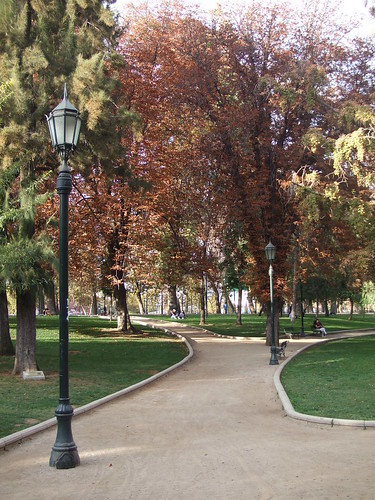
Autumn leaves in Parque Forestal
Upside-down seasons are bamboozling. I have to remind myself that we are in April, as the city gradually slips into autumn. This is my favourite time of year; fresh mornings, golden low evening sunlight and leaves turning to vivid orange and reds. What an extra joy it is, therefore, to have all of this plus still warm temperatures! It is happily reaching 20 degrees or more in the daytime, although of course, all the locals have their jumpers and scarves out. It's only the gringos that are still reaching for the shorts.

Yesterday, we spent a lovely afternoon ambling through some of downtown Santiago's older neighbourhoods. We started out in Londres - the rambling cobbled streets flanked by Victorian-style town houses which I've written about before. Then we moved onto Lastarria - in essence, Moseley, for those of you who know Brum. Winding streets, cool architecture, funky shops, trees, classical street musicians, antique fairs and barely a Chilean accent in earshot. This is the haunt of the (largely British) expats - a slice of home amongst the hustle and dust of the South American city.

While in the vicinity, we visited Plop! gallery - a small museum of illustration, comic books and graphic art. Basically just a shop with a small room for exhibition space, we saw work from, unusually, a female artist called Marcela Trujillo, who presented some very funny strips about a character in her late teens/early twenties and her very recognisable adventures.

Churros
Adjoining the neighbourhood of Lastarria, is Parque Forestal - a luscious slip of shady forest along the Mapocho river. It was planted at the end of the nineteenth century and at the weekend is host to scores of Chilean families. Aside from the hair-raising sight of a Chilean child on a brake-less tricycle haring towards you, it's a tranquil spot. We enjoyed some Spanish churros (fried dough sprinkled with icing sugar) from one of the many food vendors and a pleasant paseo around the park.

Rosa's ice-cream
Before we returned home, we stopped off at what is reputed to be the best ice-cream parlour in Santiago - Rosa's emporium. Testimony to this it was heaving, but we managed to get ourselves an ice-cream each, upside-down like the seasons. Sadly the earl grey flavour which I had been keen to try had run out, so I instead opted for chirimoya alegre. Chirimoya being a native fruit that tastes a bit like a banana but with a more juicy and citric tang. (Alegre meaning happy).

And next time I will try to write about something that doesn't involve food!

Tuesday, 5 April 2011

Today's forecast: sunny skies

Of course I love talking about the weather, I'm British. So I had to share this photo I took this morning. Look at the horizon of smog running across the centre of the picture! A dirty cloud obscuring the mountain and covering everything with black dust.

A horizon of smog

This is the first time I've actually been able to see the smog from down here in the thick of it. Usually, everything just looks a little hazy. Apart from the tell tale signs of sore eyes, itchy nose and black tissues. The first time I truly saw the smog was driving down the mountain from the city's most exclusive neighbourhood up in the Andes. I looked down upon a murky city of shiny high rises blanketed in a thick dusty brown cloud.

Smog is a perennial problem here. Santiago is trapped in a basin between two mountain ranges. There is no wind in the valley and the prevailing weather systems die out before they have a chance to cross the high peaks. It hasn't rained since three freakish days in mid-January when we had spectacularly unseasonable cloud, drizzle and (small) thunder storms. Rain is such an event that everyone can remember when it last happened. Since I arrived, I can count three times.

Apparently the first rains will fall in May. When they happen, I am told there will be a deluge. Perhaps then, we will be able to bask once more in the glory that is the Andes mountains. A cinematic backdrop that has been hidden for most of the summer.

But for now, despite the pollution, I shall continue to enjoy waking up every morning, knowing that it will be sunny and that I don't need to carry my umbrella.

Wednesday, 27 October 2010

Sunsets and smog

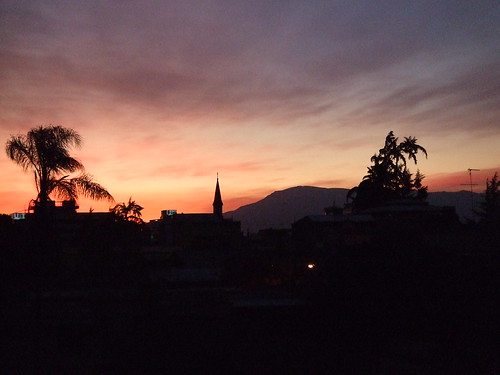
Those of you who are friends with me on Facebook will already be familiar with my 'first sunset' photo - the magnificent sight that greeted me on my first day in Chile. For anyone who hasn't seen it, this is what I saw when I looked out of our bedroom window on my first evening in this new country.


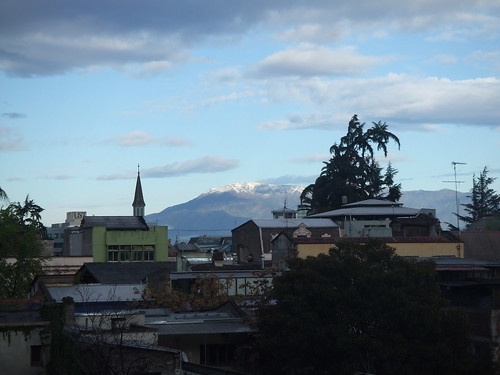
It really is a tremendous sight; and a week or so later, I took this picture which shows-off the mountain in all its snow-capped splendour.


However, Santiago is not all sparkling skies and dramatic panoramas. Unfortunately, a lot of the time (in winter especially) the city is covered with a thick blanket of smog. Nestling as it does between two mountain ranges, while providing an unbeatable backdrop, does, however, create a trap for all the pollution characteristic of a capital city. Sadly, the mountains are often obscured, as the photo I took at sunset today shows.