Monday, 15 August 2011

Flamingos and moonscapes

Returning now to our desert trip, after a brief jaunt to the Elqui Valley (in a literary sense that is).

Sightseeing in the Atacama Desert requires booking tours, of which there are hundreds. That is, there are hundreds of companies (or at least it feels that way) but the tour content of each is much of a muchness. Going by a recommendation, we opted for Desert Adventure and reserved everything before we left Santiago.

Our first tour of the trip was to the Salar de Atacama to see some flamingos. But we were left dangling tantalised for a while; first we were taken to a nearby river oasis, where fruit grows in the middle of the arid wasteland; second, to the village of Toconao, with an interesting church and bell tower and a handicraft shop. Finally, as the sun began to set, we were taken to the Salar.

The Salar de Atacama is a vast salt flat, formed when rivers coming down from the mountains simply dry up in the desert heat. We were surprised to discover that the Chilean flats aren't the dazzling white expanses we were expecting; instead, the wind and the sand of the desert churns them up into a brown, knobbly texture - a little like the top of a crumble!
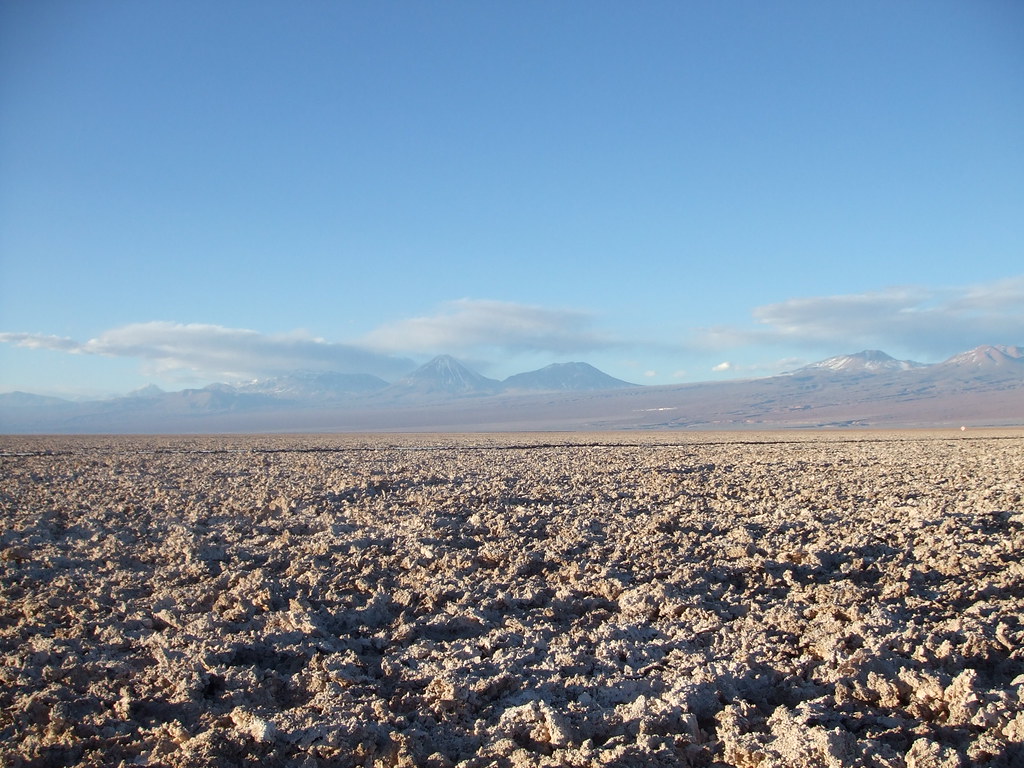

It's a stunning view, with salt and sand as far as the eye can see on one side, and volcanoes on the other. And plonked right in the middle, are a series of lagoons created by underground water sources, on which live the flamingos. 
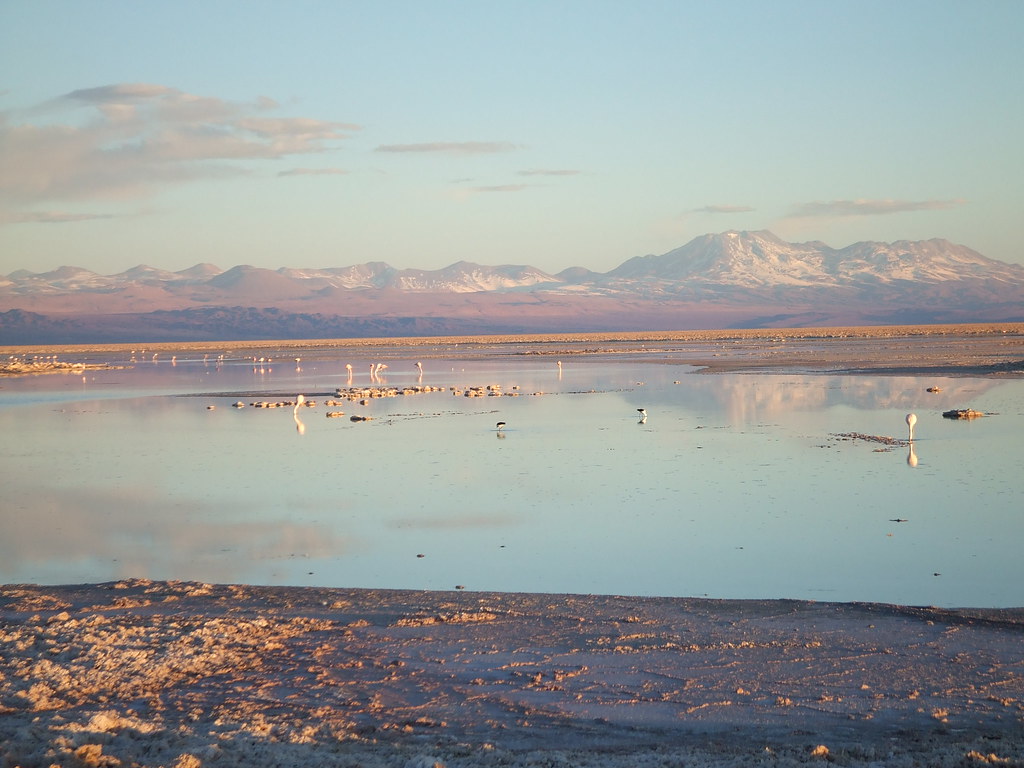

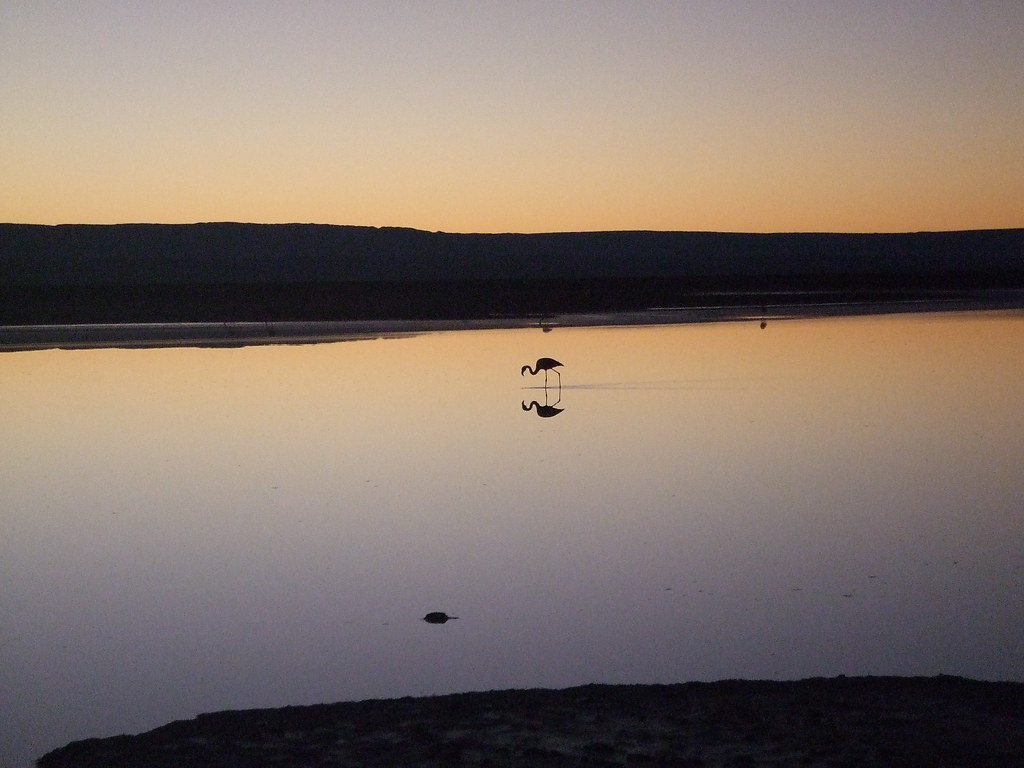
Showing a surprising lack of timidity, the flamingos continued eating, drinking and roosting as flocks of cooing tourists snapped photo after photo of a sunset flushed with pink.

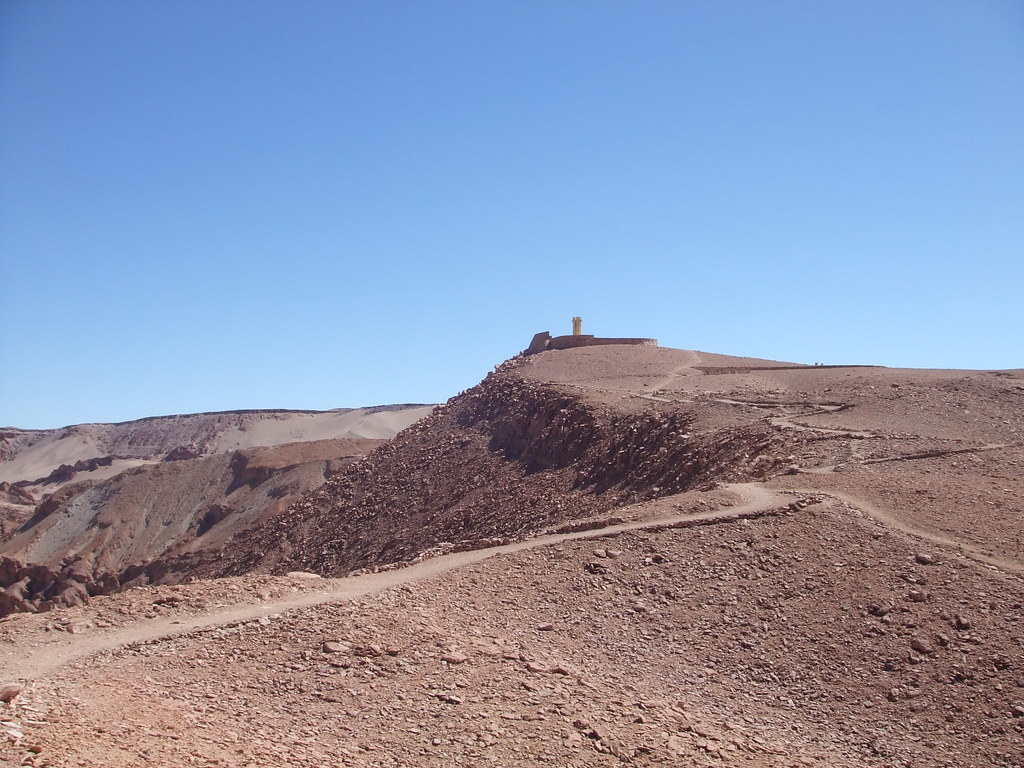
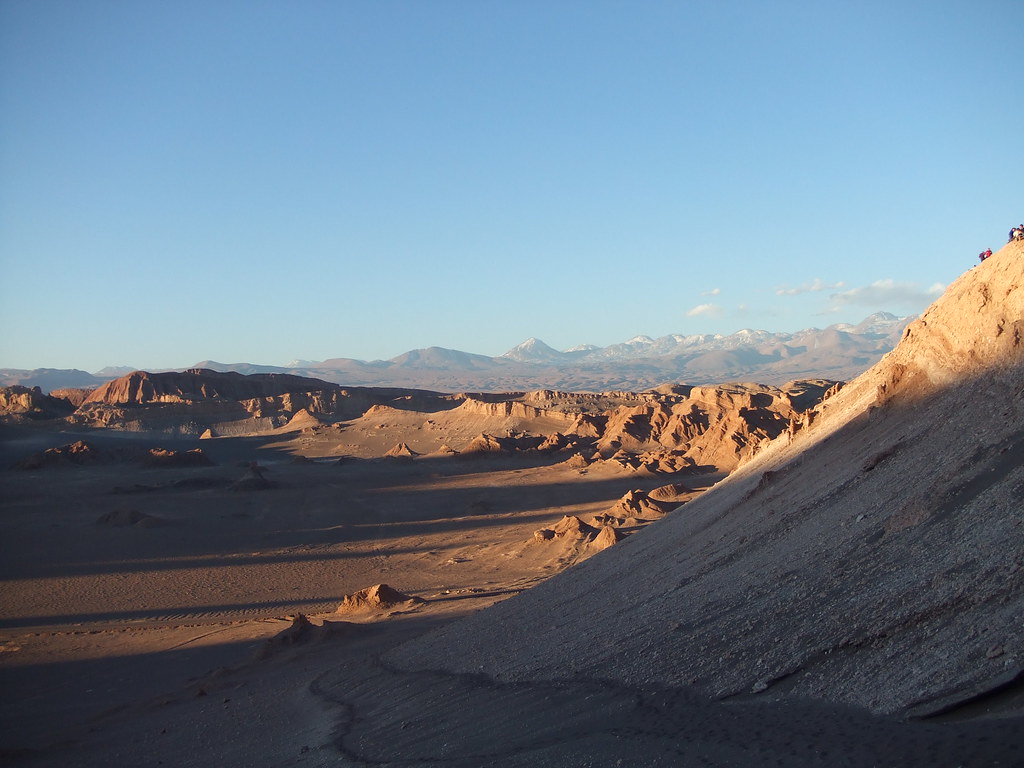
On the second afternoon, we travelled out to the Valle de la Muerte (Valley of Death) and Valle de la Luna (Moon Valley). Both are unreal landscapes, carved into the stone and sand by the constantly eroding force of the wind. In Valle de la Luna, we saw the obligatory Tres Marias rock formation, which is sadly now only two Marias after an unknown culprit knocked part of it down. We also saw an old salt mine and miners refuge now returned to the sands.


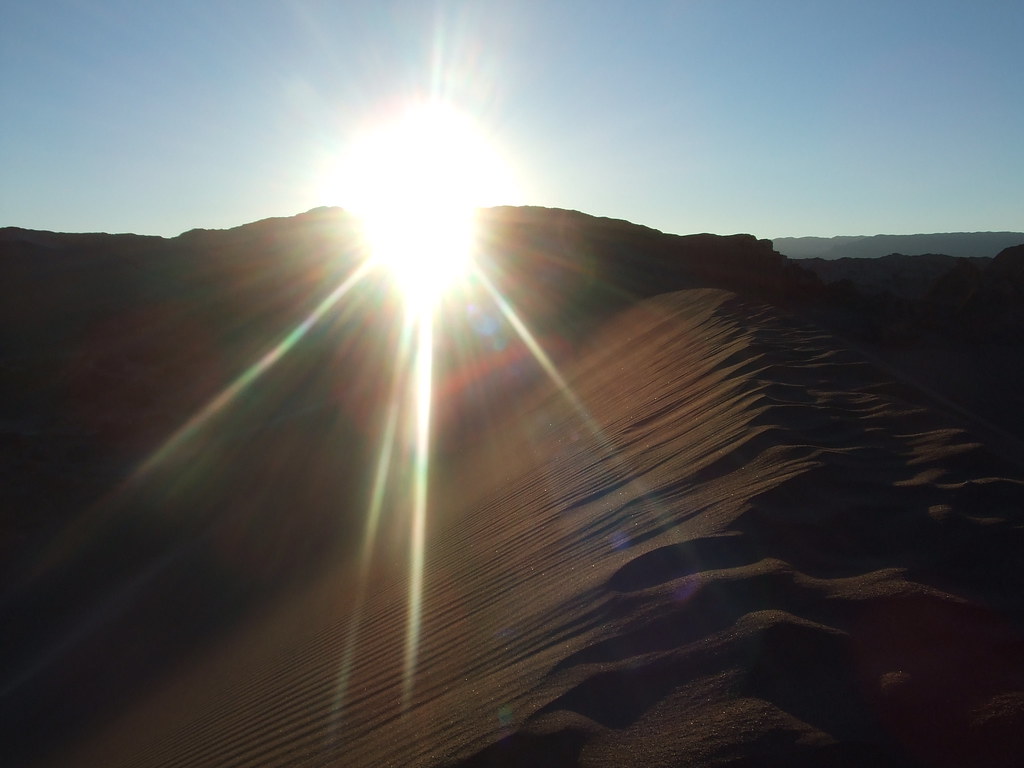
The afternoon culminated in another breathtaking sunset, the dry rock awash with soft pinks and oranges and long shadows sliding up the sides of the mountains. We had to be dragged away by our tour guide, or we would have been tumbling back down the sand dunes in the dark.
Sunday, 14 August 2011

Stargazing

This weekend took us to the Elqui Valle (or Valle de Elqui) and the extremely relaxed town of Vicuña; a San Pedro in the making but less touristy and more Chilean.

Having spent the morning in La Serena, we hopped on a micro headed up the valley and were soon treated to some lush green mountainsides under a sparkling clear blue sky. Signs were promising for our evening plans...

We relaxed for a while in our delightful hostel, Donde Rita, run by a German lady with perfect Spanish. A slightly disorientating experience, but in a good way, as the lodging was decorated in a very similar vein to my parents' house and it felt like being back in England! Batteries recharged, we left in search of our night time entertainment as a full moon popped up over the mountains.

Enough teasing, as the title suggests, we were of course headed for an observatory. Chile is famed for its clear skies and Vicuña is blessed with 300 totally clear days (and nights) per year. The Elqui Valley is also somewhat infamous for its high volume of UFO sightings, but maybe that's down to the pisco (more on that to come).

The municipality of Vicuña operates an accessible observatory for anyone interested in learning about the stars. It costs 3500 Chilean pesos to enter plus 1500 for transport if you don't have your own. Tours run every day at 6.30pm and 8.30pm in the winter time and a minibus will take you up to the Mamalluca observatory, located around 9km from Vicuña. There are also tours available in English if you remember to ask (we didn't).

The evening started with a 15 minute or so lecture on the universe. Unfortunately for me, I couldn't understand a thing due to a mixture of terrible sound quality and the presenter's very strong Chilean accent. Neither could Carlos though which made me feel better.

Thankfully, things improved when we were split into a group of around 20 and assigned our very own astronomer who took us to have a look at the telescopes. Felipe, our extremely knowledgeable but easy-to-understand guide, pointed out some of the principle constellations visible to the naked eye - including the Southern Cross (which obviously we don't get to see in the northern hemisphere), the Southern Triangle (probably a dreadful translation of mine but you get the idea) and most excitingly of all, the Scorpio constellation, right above our heads. I was pretty over-the-moon, if you'll excuse the pun, to see my own star sign up there in the sky.

Next, we were allowed to have a go on the telescope to look at a dim, yellow-ish star just above the horizon - which turned out to be Saturn. Although it was tiny, with the assistance of the telescope, it was easy to make out the distinctive rings that characterise the sixth planet from the sun.

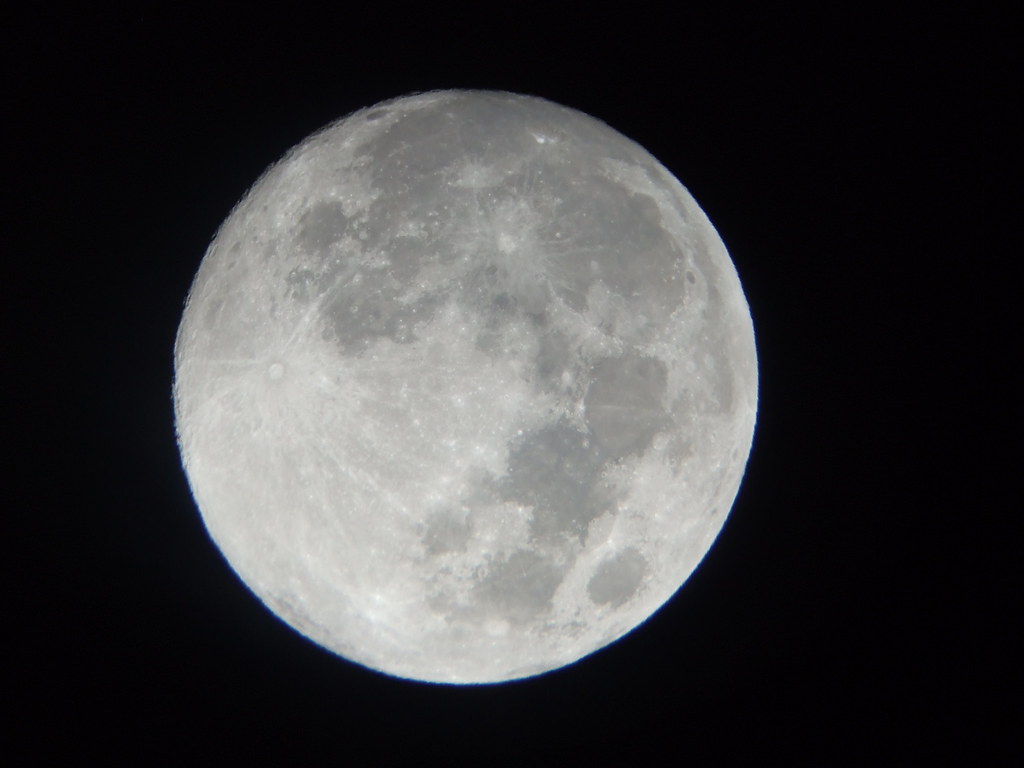
As it was a full moon, our astronomy expert explained, we weren't able to see as much of the sky as at other times due to the amount of light. However, what we were able to do was have a good old look at the surface of the moon through the telescope. A real privilege, as we observed alien seas and mountain ranges, along with having the opportunity to take a spectacular photo.


After this, we were taken to the strongest telescope on the site, housed in one of those circular-roofed buildings which opens and turns depending on where you want to look. Here we were shown a series of very distant stars, one of which was the Jewel Box, a young constellation that has three superbly bright stars in different colours that resemble precious stones. The second constellation was very old, accompanied by the dizzying fact that because it is so far away, the star has probably already died, and what we see today is how it looked many years ago.

Thursday, 11 August 2011

San Pedro de Atacama

The desert oasis of San Pedro de Atacama is located some 24 hours by road from Chile's capital Santiago. Feeling this was a little too long a bus journey for us, we flew to the nearby city of Calama. The flight takes just under two hours, with several connecting transfers via taxi or minibus into San Pedro. All very slick and professional, the transfer takes between one hour and an hour and a half depending on where your hostel is located on the route. We were last to be dropped off, as we were staying at the Sumaj Jallpa - a cute, clean and cosy hostel on the outskirts of the village, but just a 10 minute walk from the centre.

San Pedro itself is tiny and can be walked around in about half an hour. It's a real tourist trap, full of backpackers of all nationalities (although a lot of Brazilians, French and Spanish at this time of year) and its dusty streets are littered with tour operators, souvenir shops and cafes. Despite this, it didn't feel annoyingly touristy like Pucón; it has a nice relaxed feel about it with everyone (including the stray dogs) reposing in the sun and getting along.

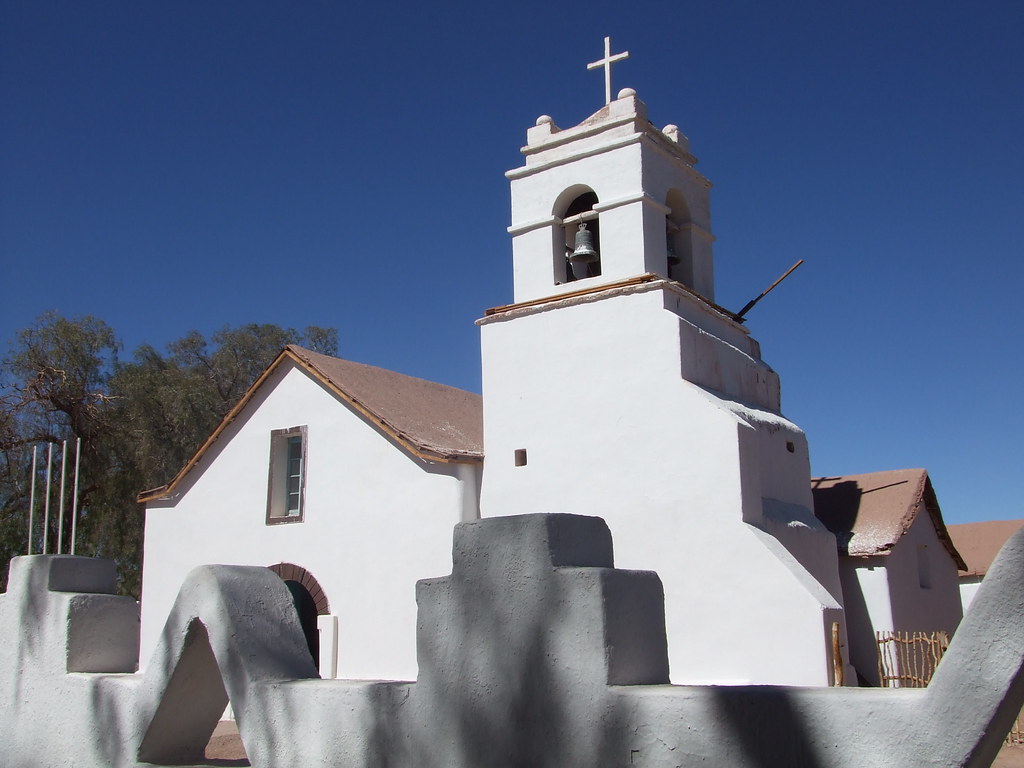
The church of San Pedro

Main sightseeing points include the church, a sparkling white national monument with beautifully adorned statues inside. Also fascinating is the archaeological museum Gustavo Le Paige ($2000 CLP / $1500 CLP for students) which covers the history of the first settlers in the region, through the arrival of the Incan empire and later the Spanish conquistadors, although occasionally in a little too much detail. The museum houses lots of interesting artefacts, including early stone tools, pottery and even textiles, all of which were kept preserved by the desert sands.

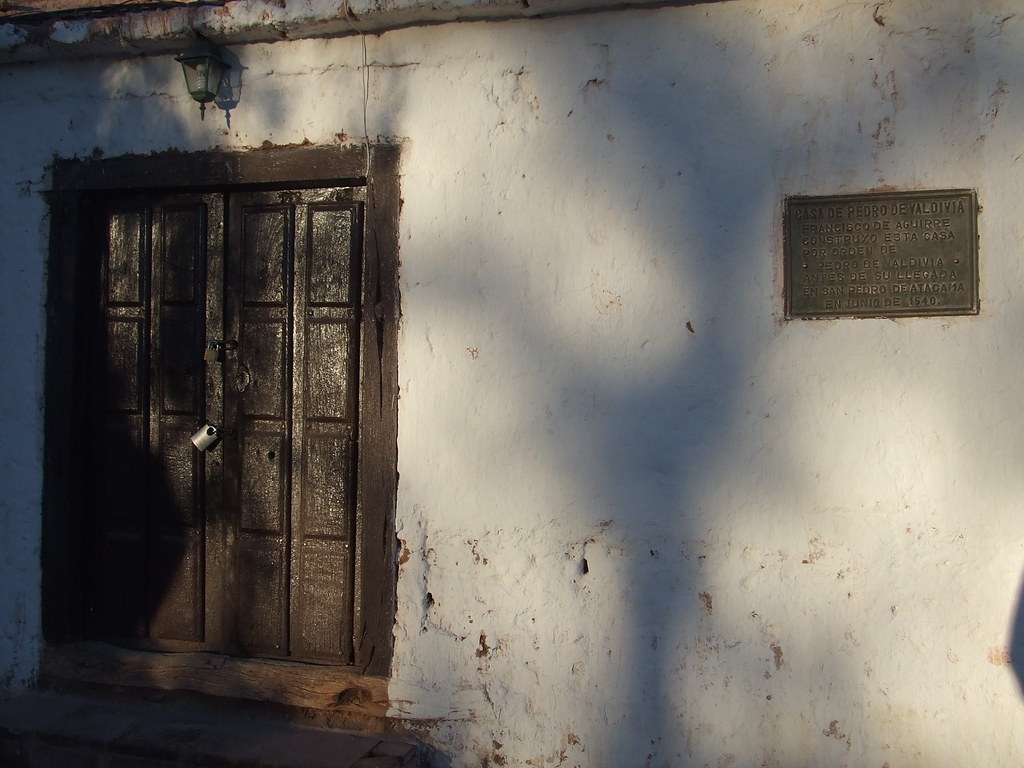
Spending a morning mooching around San Pedro's plentiful souvenir shops was fun, although you'll find that most stock the same items and that (we suspect) the majority are made in China and are not the wares of local artisans. That said, we found a really interesting jewellery shop that had some unique and reasonable priced pieces, such as a copper bangle I picked up for $10000 CLP. Our favourite souvenir shop (which we visited three or four times in our indecisiveness over gifts) turned out to be located within the oldest building in San Pedro, dating from the arrival of conquistador Pedro de Valdivia in the early 16th century. Both shops are on Taconao.

San Pedro's oldest building (now a souvenir shop)

Following the advice of the Rough Guide to Chile, we hunted around the edges of the village for cheaper eats, which was definitely the right thing to do. We frequented a restaurant on Tocopilla with Licanbur, near to the bus terminal, which offered three course meals with lots of choice for just $3500 CLP (that's about a fiver).

Chorillana
Ticking another dish off our 'to eat' list, we shared a chorillana in a bar at the eastern end of Caracoles. Dubbed a 'heart attack on a plate', chorillana consists of chips topped with sausage, beef, chicken, onions and a fried egg. Man it was goood...

Breakfasts were a little overpriced for what you got, but there are various places that offer tea/coffee/chocolate with toast and a glass of juice for an average of $2000 CLP, going up to nearer $3500 if you want eggs, ham or cheese too.

Finally, the best thing of all about San Pedro is that it's surrounded by this view, with unbeatable rosy sunsets on the backdrop of Volcán Licancabur every day.

The view during the walk back to our hostel

Wednesday, 10 August 2011

Just when I thought Chile couldn't get any more amazing

...it went and did just that

Of course I expected amazing things from the Atacama desert. The place has geysers, volcanoes, ancient ruins, salt flats and flamingos. But I wasn't prepared for how breathtakingly beautiful this extremely arid and almost barren part of the world actually is.

I'll be blogging about the different places we visited, but for now, here's a sneak photo preview:

Flamingos at sunset in the Salar de Atacama
Sunset in Valle de la Luna
Geysers de Tatio
Quitor ruins
San Pedro de Atacama

Tuesday, 2 August 2011

Evita

As one of the reasons my interest in Buenos Aires was piqued all those years ago was Evita the musical, we decided to pay a visit to the Evita museum. I realised as I entered, that my knowledge of one of Argentina's most famous figures was based almost entirely on the musical - a portrait which, during the two hours I spent in the museum, I came to understand was neither that accurate nor did it do her justice.

The museum is located in a spectacular building on Lafinur, just on the edge of the upmarket Recoleta district. Originally a hotel dating from the turn of the 20th century, the building was taken over by the María Eva Duarte de Perón Social Aid Foundation in 1948 as a temporary home for women and children. The entrance hall boasts parquet flooring, a grand sweeping staircase and huge chandeliers. I felt like a princess when I descended the stairs to leave the building.

The exhibition is organised into moments of Eva Perón's life; which in a way was our over-riding criticism, as it was difficult to get a full idea of the pattern of events without a chronology. But for me, a minor point.

Starting with an introduction to the myths surrounding Evita - the rather predictable saintly mother figure versus power-hungry strumpet - the first stop was her death: a wall-sized projection of the scenes from her wake and funeral, with the abundant throwing of flowers and outpouring of public grief somewhat reminiscent of Princess Diana.

Next, we started to unlock her past: a look at her childhood brought up out of wedlock, her move to the city with her mother and subsequent minor success as an actress, before an earthquake relief event crossed her path with Perón's.

Upstairs focused on her relationship and marriage to the future president as well as her political career. The room of her good will tour immediately caught my attention. Here's why:


Throughout the museum were numerous outfits, many accompanied by photographs of them in use. Exquisite 1940s tailoring and design and a very interesting spotlight on the era's fashion.

The next rooms were what really took me by surprise: Eva Perón's political career. I had (wrongly) assumed that she was simply famous for being the wife of an important man - albeit she from very low birth who rose to one of the most powerful positions in the country. What I didn't know was how active she had been in social issues in her country. Her charitable foundation built schools, housing for workers, holiday camps for poor children and health clinics. It ran temporary shelters for women and children, orphanages, homes for senior citizens, nursing schools and a plan for agrarian reform. Need I go on? Well yes, she was a leading voice in the campaign for suffrage, helping to secure the vote for women in Argentina.

To me this was a perfect testimony; that aside from the myths, the speculations around her death and the slurs on her character, she was a woman who achieved, and who used her new found position and power to help other women, and those most in need in her society. Stripping everything else away, for this, Eva Perón deserves to be recognised and applauded.


"I seize this opportunity to tell all Peronist fellow workers ("compañeros") that in the women's party we are organizing there are no divisions, we are trying to collaborate [...] I want you to see in General Perón's wife not an old-style feminist, but a modern, constructive one aware of men's importance and women's potential. We are not struggling for group domination. We are struggling to leave a greater, fairer and merrier Motherland than the one we encountered in the past." Eva Perón, 'The Reason for my Life' (Chap. 53)

Wednesday, 27 July 2011

My 7 links

A slight digression from my usual posting topics as I appear to have joined the world of the bloggersphere by being tagged in this '7 links' thing that's doing the rounds.

Thanks to Rob W of the South America Blog (this is the chap who runs Woodward language school which brought me up to a passable level of Spanish, Chilenismos and all) I have to rifle through the archives of my blog for 7 posts that are the most beautiful, popular, controversial, helpful, surprisingly successful, lacking the attention they deserved and that I am most proud of.

This actually turned out to be quite a fun task, as I got to rediscover stories I'd forgotten about and I enjoyed feeling incredibly proud of my blog and realising what an interesting historical record it is for me. So without further ado, onto the 7 links.

My most beautiful post

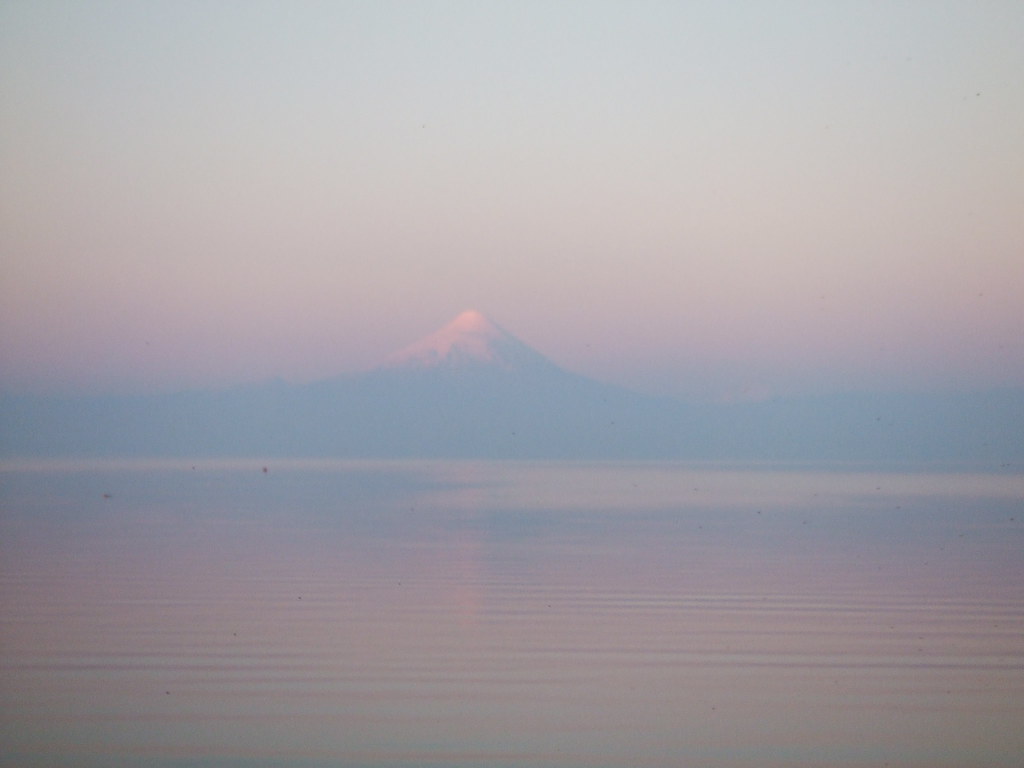
Difficult to define a beautiful blog post. Although on the whole I am pleased with how I write, I'm not sure any of the posts are exquisitely crafted literary masterpieces. So if we take beautiful to mean photography and subject matter, it doesn't get more perfect than A sprinkle of magic - the story of Frutillar and one volcano that made a last minute appearance to give us the most phenomenal setting for a pastel coloured sunset.

My most popular post

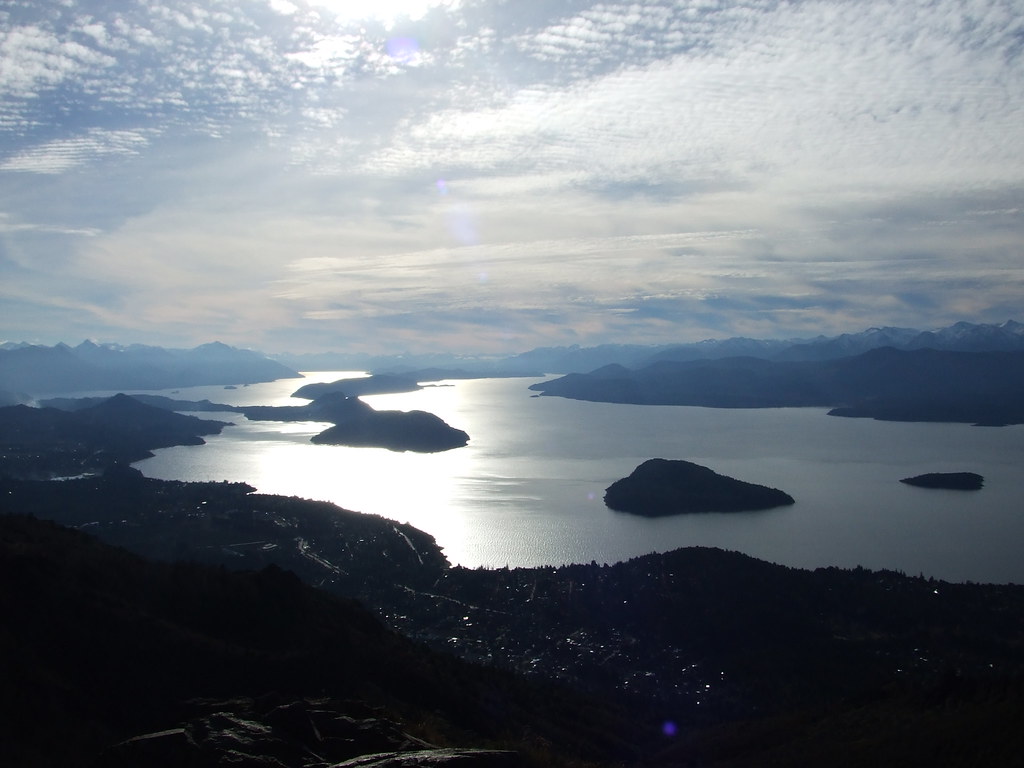
Judging by stats alone, this award goes to The most beautiful place on earth about our visit to Bariloche in Argentina, before it got covered in ash from Volcan Puyehue. A worthy winner. That said, I never tire of this view has been hanging around at the top of my most visited list since I wrote it way back on 20th October, so I think it deserves a mention too.

My most controversial post

I don't really do controversy on this blog, but I guess that Civil unrest is the closest I've come to any kind of political statement, or for that matter, to writing anything negative about my experiences here. 

My most helpful post
My very first posts, First impressions and A day of small victories stand out for me simply because various friends I have met here have told me that they felt reassured reading about my rather wobbly experiences in Chile at the beginning. So I'm nominating these for helping people know that they weren't alone in feeling adrift in this strange new place.

A post whose success surprised me


New heroes was the first time I received feedback from Chileans about my blog, with many of them in agreement with my admiration for Michele Bachelet. This was a turning point for me, where I discovered that my blog was being read as much by my new friends here as by my old friends back home. The amount of attention my Food post got was also a genuine surprise - it seems eating is what my readers are really interested in!

A post I feel didn't get the attention it deserved

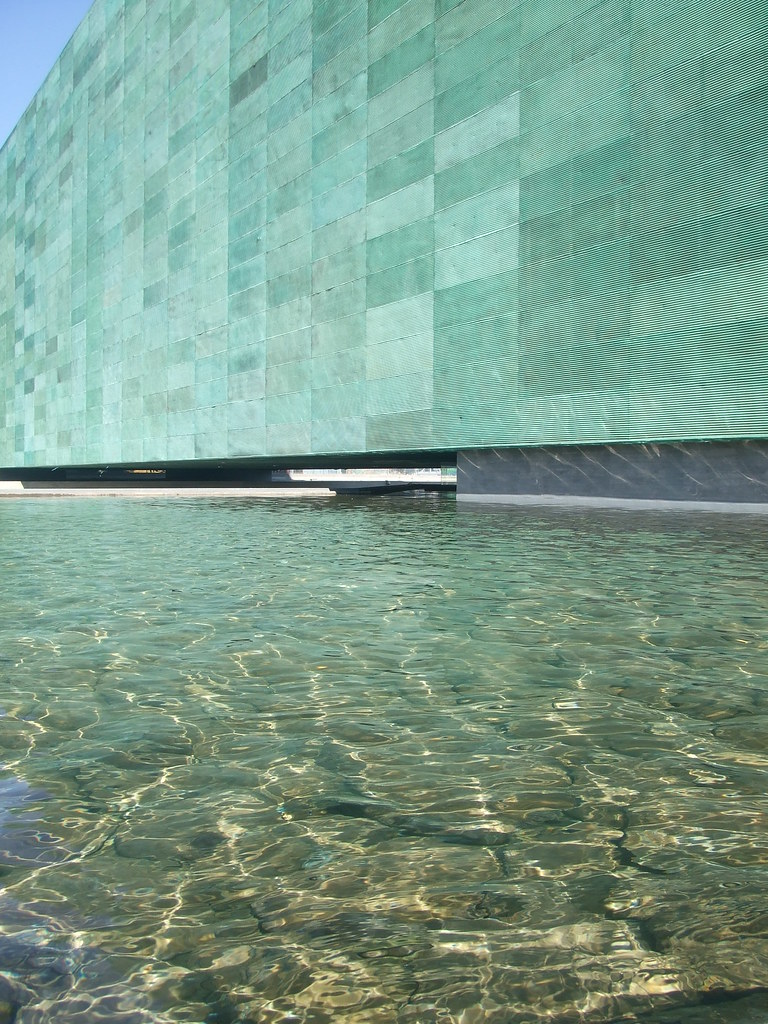
Looking through my archives I found it difficult to find a post that didn't get attention, but eventually I opted for Museum of Memory and Human Rights because I don't remember getting much direct feedback on it. Maybe the subject matter was too painful for some, or maybe the history is too distant for others. Either way, I thought this post would get more of a reaction than it did.

The post that I'm most proud of

Trying not to sound too cheesy, I can honestly say that I am incredibly proud of my entire blog. I only started writing it because I fancied having a go at blogging and a couple of people had suggested it might be an interesting thing to do. But as I said at the beginning, it's turned into fascinating record of my time here; I love reading it and I hope others do too. Selecting one post, therefore, is pretty hard, but I think I'm going to plump for Immigration. Partly because it made me and a lot of other people laugh, partly because I enjoyed writing it and working on getting the humour across, and partly because I'm really proud of what I achieved that morning!

So now I have to pass on the tag to five other bloggers. So 7 links on their way to:
  1. Callie Mills - Ruffle Your Feathers
  2. Carolina Leseigneur - GoodCatt's Random Musings
  3. Pepe's Chile Adoration Page

    Next was going to be fellow Chile blogger Angie Clifford with Angie's life, but she's already been tagged so instead we change topic to...

  4. Ruth Lund - Cherry Coloured Twist
  5. Emma Fassio - Emma Fassio Knitting

Sunday, 24 July 2011

Tango

Buenos Aires. City of my dreams. You did not disappoint me.

I don't remember when it was exactly, but at some point during my childhood/adolescence I got the idea into my head that I wanted to experience tango in Buenos Aires. Somewhere between seeing the musical Evita and watching the original 'Come Dancing' I imagine it happened. A little seed lodged deep in my brain that as I grew-up I guess I never really thought would grow to fruition.

But this is a time in my life where childhood dreams come true and I finally had the opportunity to visit the Argentine capital. And oh what a magnificent city you are.

Tango 'graffiti'
Tango is simply everywhere in Buenos Aires. It oozes out of window panes, is splashed across walls and sparkles in shop windows adorned with shoes. The city is tango. A red and black sultry haze that burns into life as night descends.

We spent an evening at one of the many tango show and dinner places that litter the city. Taconeando was our bar of choice, located in San Telmo, one of the oldest and most historic barrios or neighbourhoods of Buenos Aires. We entered a small, dimly lit room, furnished with plush antique rose fabrics and tables for dining surrounding a low central stage.

Dining came first. An entrada (starter) of very tasty pate, followed by, of course, a massive steak and chips. Dessert of a choc-ice filled with chocolate, caramel and vanilla ice cream had just been served as the lights went down and the show began.

Tango at Taconeando
The show covered the history of the tango, beginning with two men dancing in a rutting stag-like stand-off, followed by moves through romantic, fun and flirty and seriously sexy moods. The dancing was interspersed with singers performing tango classics (including audience participation) and backed by a brilliant quartet of piano, violin, double-bass and bandoneon - the accordion-like instrument that gives tango its signature sound.

It was an electrifying hour and a half of tango, where we were so close to the action that at times we had to duck to avoid being kicked in the head! A marvellous display of a beautiful dance that was simply a joy to behold.

More tango

But our tango experience did not stop there. Oh no! The next day, I was rather overexcited to discover that the world tango museum, which was on my list of things to do, was actually located within the national tango academy of Argentina! You can imagine my squealing.

We entered the 150 year old building, with its art nouveau style architecture, and found the museum on the first floor. It tells the chronological history of the tango, with various artefacts - from manuscripts, to records, to dancing shoes - to illustrate the different periods in the dance's life. It also demonstrated that tango is very much alive today, with the academy itself offering lessons at 30 Argentine pesos a go (that's about 4 quid) to anyone who wants them. Something for my next visit I think.

The bandoleon
After the museum, we headed on to another of the oldest tango buildings in Buenos Aires - Confiteria Ideal. Dating from 1912, the cafe / ballroom boasts more luscious art nouveau architecture, and judging by its website, seems to have been used for the film version of Evita starring Madonna. We supped a cafecito in the historic surroundings, while the sound of the afternoon milonga drifted downstairs.

More Taconeando tango
And more Taconeando tango